-
Mortgaged energy
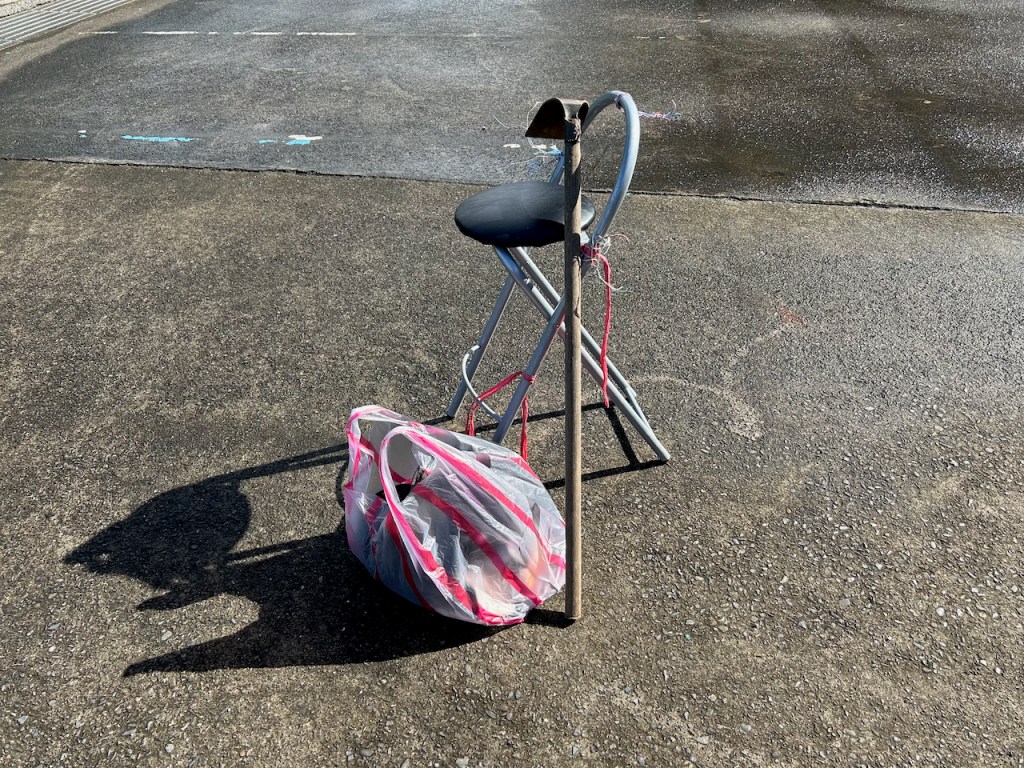
December 30, 2023 @ 10.37am – Gongliao District, Taiwan Without the pause of the seventh day (or sabbath), life simply becomes an indistinguishable blur and monotony rules.
Robert Johnson
There’s a guy in my swimming group with a loud stroke. He’s fast, but there’s a lot of splashing, extra movement and wasted energy to get him from one side of the pool to the other.
My coach catches me shaking my head after losing another 50m sprint to him. “It doesn’t work” he says. “The only way he can swim like that is by keeping up a ridiculous level of fitness. And in a race, even if he comes out of the water first, he’s not going to last.”
I can’t blame him. Who has time to save energy with good form and efficient strokes? Whether it’s in the pool or on the weekend or on the job, we go hard, crush coffees, and smoke ‘em while you got ‘em. We burn up the natural energy we have, and try to catch a breath when we can or recharge on the odd long weekend or infrequent vacation.
This works for short-term goals but backfires when we burn out. And after time, energy is really all we’ve got. You want to make the most of your strengths and abilities? You want to be happy? You want to be a good dad, a good citizen, a good teammate? You need energy for all of those things. “It’s the most valuable quantity of human life.”1
Money is a good metaphor for energy. Don’t spend too much. Save a little for a rainy day. We’ve all heard this basic financial advice yet “we like to spend more than we have. Just as we owe for home mortgages, car payments, and consumer debt, we also push our own energy beyond reasonable human limits.”2
The Substance, directed by Coralie Fargeat, is a graphic example of how we abuse our energy.
Demi Moore plays an aging Hollywood star who accepts a risky but attractive proposal. Every other week she gains access to a young, fit and beautiful body, so she can keep hold of the success, fame and attention she craves and has grown accustomed to. But of course, a week is not enough. Soon, she’s abusing the system, spending more than her allotted time and leaving her older body to literally rot, causing irrevocable damage.
It’s an extreme, satirical metaphor, but this is a pattern we should all be familiar with. Our body is made up all the food we have ever eaten, yet we eat too much, and don’t get enough of the nutrition we need. And like Demi Moore’s character who consistently ignores warnings about the consequences of her actions, we discount the future in favor of what’s near and close. Inhale a cheeseburger in a few minutes, and then spend the rest of the hour complaining of indigestion and ‘meat sweats’. Coast on a Tequila high for a few hours and then spend the next day catching up. We want to live forever, yet we eat and drink in ways that make it unlikely we’ll enjoy an energy-rich 30 or 40 years.
There are countless ways to rest, recharge, recover, and replenish our natural energy. It still amazes me that a 10 minute nap will always restore my brain back to a functioning level. However, if we don’t recognize that it’s not a limitless resource (and yes, we are all aging too), we’re going to be stuck in energy debt. And we’re not living in a way that will ever dig us out.
Also published on Substack
- https://www.youtube.com/watch?v=pbF_C-i-0Lk ↩︎
- Contentment – Robert Johnson ↩︎
-
The dose makes the poison

August 28, 2024 @ 5:56pm – Mount Martha, Australia Reality is always far nobler than any projection. – Robert A. Johnson
The other day I saw a cyclist speed past a dog walker, almost hitting the dog. I wanted to yell out. How could someone ride so recklessly? Couldn’t he see how close he was? That’s anger. Like a strong tonic, one sip focuses your attention and fills you with energy and motivation to act.
I’d know. It’s very easy to make me frustrated. When I run late for a meeting, I can melt down over the most minor inconveniences. I find myself smoldering at a friendly colleague who wants to chat in the hallway. I’m even angry at the guy waiting behind me as I make my coffee. Interrupt me at your peril.
I think frustration tends to be more of a problem for those of us who need everything to be fair, good and orderly. When you place high standards on yourself and on others, you’re setting yourself up for disappointment. If you’re sensitive to fairness and justice, you’ll easily feel wronged all the time.
Putting a lid on it
It’s challenging to handle anger. Most of us can’t get a grip on it because we avoid looking at it directly. It gets habituated; we react to the same things over and over again. And like a deranged law officer, we justify our actions as righteous. They deserved it. They were wrong. They were out of line. The more we try and control anger with rules and regulations, the more likely it is to explode unexpectedly.
That’s because like fear, sadness, joy or any other emotion, anger has to get out.
When you shove anger away, it has an uncanny ability to find its way back to you. It grinds in your jaw, pulses in your skull or creaks your neck. It leaps out of your throat in a snarky, hurtful comment. It ricochets through your conscious mind with sounds and images or leaps out at you as a snarling dog or cocked gun in your dreams.
Anger can also present itself as reality itself, as a projection. Unconscious of how angry you’ve become, you feel certain that someone is trying to push your buttons, or purposely avoiding you. Like a bad hallucination, a friendly smile appears to be mocking. “While we are caught up in a maelstrom of anger… everything seems confusing, out of control, overwhelming, and unpredictable.” 1In this state, we are essentially possessed by the emotion. This is painful for you, who feels as if the whole world is angry and everyone around you too, who has to deal with your responses. “You have no choice, you’ll be angry as long as you’re angry and the people around you, who don’t like it, just have to figure out some way to put up with you.”2
Don’t just do something, stand there3
Any action we take in a confused, frustrated, disordered state is unlikely to help much. Instead, it’s more useful to take stock and question what’s actually happening:
- Look inside: Instead of blaming the people around you, what’s the flavor, the temperament and general attitude of your thoughts? If you notice anger there, it’s worth it wait until that passes. Grandma was right – Walk it off
- Get specific: What or who exactly is making you angry?
- Take some responsibility: What’s the likelihood that every single person in the office is annoying you? Is it more likely that it’s something that you’re doing?
Anger and frustration are powerful, useful emotions. They give us energy and agency to stand up to unfairness, fight injustice and protect our personal boundaries. But the dose make the poison. Too much anger, too quickly, for too long, makes it literally dangerous.
-
The power of negative thinking

August 15, 2024 @ 5:03pm – Hawthorn, Australia Tranquility is nothing less than the good ordering of the mind
Marcus Aurelius
Thoughts like to be believed
You’re staring at a computer screen. There’s an important task you need to do, but you’ve been avoiding it. It needs to get done. And you should have finished it yesterday.
Thoughts, images and sounds, rush through your head.
This is just like the last time I did something like this, you think, remembering something you’d rather forget.
It’s normal to think about the future. But it’s a shame that doing so can makes us feel bad.
Many of the thoughts we have can be negative and self-referential. “I can’t do this” or “I always do badly when I do things like this.” These might feel like truths, but usually are vague, black and white generalizations. The words always, nobody, never are good tells someone is generalizing.
And if you believe these thoughts, ta-da, you’ve magically created a belief.
If you start to look out for them, you’ll hear this sort of thing everywhere. Here are a couple I overheard at my local triathlon club:
- I can’t run that fast anymore.
- That’s it, I’ve done my hour.
- I can’t go fast, it’s all moderate.
- I couldn’t help but swim butterfly, now I’m dead.
- I’m done.
Beliefs drive behavior
If you know the belief, it doesn’t take a lot of imagination to figure out what the behavior will be.
For example, if you’re absolutely certain you’re bad at public speaking, you might decline invitations to speak or present. You’ll make up all sorts of intelligent excuses and stories to avoid doing it. You might speak less in meetings, even if you have good ideas. You might depend more on notes. If there’s no way out of this ‘unpleasant’ task, you might get stressed, sad, angry. Hours before the presentation you get more and more irritated until you need to ‘take a walk and clear your head’.
Now there’s nothing inherently wrong with preparation, organization, or de-stressing. And maybe you really do need more time. But these sorts of thoughts tend to get whisked into the foamy, fearful feeling of dread that has been generated by an unconscious, negative belief: ‘this is not going to go well.’
In comparison, someone without that belief, might approach the same task calmly, cooly and confidently. They might not be smarter, or any better at doing the job, they’re simply not talking to themselves in such a negative way.
A task is easier if you’re not thinking ‘this is going to be a pain’ or ‘I have no time to do this.’
- There’s no rushing around, because who’s telling them to rush?
- There’s no endless revisions and re-work, because who’s telling them it’s not good enough?
- There’s no impatience when they are interrupted, because who’s telling them they ‘can’t stop working’?
If belief does seem to drive our behavior, should we all try to be more positive? It likely doesn’t hurt. And since it was popularized by Norman Vincent Peale in the 50’s, positive thinking has been claimed to solve everything from shyness to world peace.
We can also practice challenging beliefs. Pronouncing that you’re ‘ugly’, might sound and feel like a truth, but with some light challenges we can uncover that it’s just a transient opinion.
- Are you always ugly?
- Who says? According to whom?
- Compared to who?
- How do you know?
- What do you mean by that?
But to do a good job, we don’t need to be filled with positivity. We just need to stop telling ourselves it’s going to be bad.
-
Seeing through a blind spot

July 6, 2024 @ 8:36am – Petaluma, California Left-brained…analytical mind…The person who thinks they’re going to solve all their life’s problems by thinking.”
Think of your mind like an extremely powerful computer. It’s great at analyzing, abstracting and reasoning. Next time you are looking through a spreadsheet or a to-do list, notice how it effortlessly orders information, matches patterns and makes snap decisions.
Yet there’s a big limitation. A blind spot. When we solve a problem consciously, we tend to shut down other alternative ways a problem can get solved. Our mind doesn’t like to admit that there’s potentially a lot of other ways to solve a problem that it is not aware/conscious of.
This week I needed to create a prototype that threaded a few disparate ideas together. I didn’t exactly know what this was going to look like, or how I would get this done. But I had done a similar task many times before. My conscious mind expected that I would sit down, think about it, and we’d reach some sort of happy conclusion. In other words, I’d use all the things I was conscious of and throw it at the problem and hope something sticks.
When I reflected on the completed prototype, I realized it had benefitted from several things that I wasn’t previously aware of. I had short conversations with several other people who had worked on similar things, and got ideas from them. I received a last minute change in requirements, that changed the focus of the prototype. These previously unknown inputs helped to create a better solution.
To allow novel solutions, we need to give up control and to some degree authorship. And that can be really, really uncomfortable. Let’s say we are really concerned about a friend who is drinking too much. We’re concerned about their physical and mental health and we’re worried something bad will happen. To help solve this problem we’ve talked to them. We’ve thought deeply about it. We’ve come up with ideas. We’ve tried all sorts of interventions, but nothing has worked. In other words, we’ve done lots of things to solve this problem for them. But one day, they drink way too much and get hospitalized from poisoning. It’s scary but they recover, and more than that, they stop drinking. They’re healthy and happy – all because they drank too much. Maybe not the most elegant solution (or the best example – don’t do this), but it worked didn’t it? In fact, problems are solved all the time without your conscious involvement.
We can also invite our subconscious mind to help out, the part of you that solves problems when you are in the shower, sleeping, walking the dogs or any other time you’re not trying to ‘crack’ the problem with sheer willpower. Another word for this would be relying on intuition over intellect. I’ve written a little more about the power of intuition here and talked about it here.
This is nothing new. And there are a million lateral problem solving methods and frameworks for you to pick and choose from. But it’s helpful to remind ourselves that we don’t always need to think our way out of a problem alone.
-
Exercise as exercise
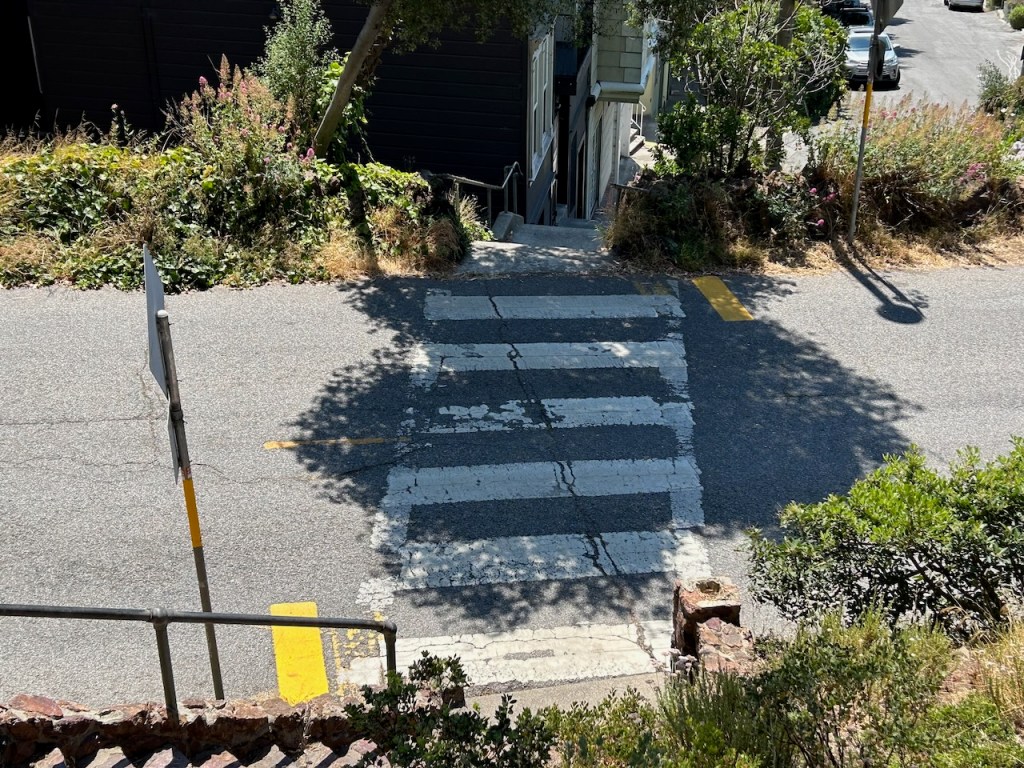
July 14, 2024 @ 2:41pm – Pioneer Park, San Francisco He felt athletic, he felt strong. In the gym, he could squat 400 pounds for multiple repetitions, he said, and he could bench-press close to the same amount. Plus, he loved how he looked.
People move their bodies for a number of reasons.
Losing weight, of course. But also to look good and feel strong. Reduce the risk of diseases. Stress relief. Mood enhancement. Cognitive function. Community. Improved sleep.
The list goes on, and is well backed by science.
I’ve used exercise for lots of things. Escape, staving off boredom and loneliness, procrastination. Helping me to both think and think less. It’s endlessly useful.
The benefits of exercise also provide motivation for us. We desire that feeling of extra muscle, of hitting an impressive PR or how we look in the mirror. And that helps us to be self-disciplined and go out there and do the thing. When we have a very clear goal and we are seeing progress towards it, it’s easier to control old habits and inhibit ‘bad behaviour’.
Movement itself is obviously important. Not only does it remind us that we have a body but it keeps it functioning properly. If you don’t move it, you lose it.
But does exercise need to do everything?
Does it have to be our pharmacy? Our primary care doctor? Our social group? A platform for social media and/or fame? Are we burdening it with too many jobs?
We like to turn things into tools. Eating becomes a tool. Sleeping becomes a tool. Don’t make exercise a tool.
Let a run be a run. Let a deadlift be a deadlift.
Let exercise be exercise.
-
Painting into corners

August 2, 2024 @ 12:54pm – Hawthorn, Australia The problem with the world is that fools and fanatics are so certain of themselves and wiser people so full of doubts.
Bertrand Russell
Three great lies that nearly all of us tell ourselves: I’m a good driver; I have a good sense of humor; I’m a good judge of character.
Gordon Livingston
I’m certain about lots of things.
The movement of the sun.
Water freezing at 0 degrees.
The hardness of a brick.
When I drop a tennis ball, it falls out of my hand.
Every
time.
Stable.
Certain.
Lots of things are very stable and certain.I’ve never seen a germ but I have little doubt that they exist.
Same goes with ancient cities, black holes and the damage we are doing to the earth with pollution.
I don’t know these are true in the same way as direct experience.
But I don’t spend any energy in doubting them.
There are books.
Test results.
Consensus.
We are certain about these things, for good reason.Germans have a word for a different kind of knowing – “Kennen“
This is a knowledge different than remembering names of cities or birds.
I know that noise at a certain level becomes uncomfortable.
I know what it feels like to drink a lot of alcohol.
I know what a dream feels like.
I’ve been there. I’ve done that.
But usually, subjective stuff is slippery.
There’s more uncertainty than how light refracts through water.
Whether or not my job is ‘right for me’.
If I should ask her out on another date.
If I should buy this cereal or that.
Or like, what is anger?
What is love?
I’m less certain about those things.Certainty about uncertain things is very common.
Religious people are certain that some people are going to hell.
War mongers are certain they are saving their country.
Vegetarians are convinced eating meat is wrong.
Many people are convinced they have bad judgement.
Or that they are better than average drivers.
Or that they can’t speak in public.
Or that they are not good enough.
Dangerously, we tend to mix up these certainties with our sense of self.
We hear a voice that says you can’t do that.
You don’t belong here.
They don’t like you.
You’re required to do this, in this certain way.
You deserve it.
I have to.
I’ve got to.
I can’t. It’s impossible for me to do that.
And we usually listen, without thinking twice.But when examined closely, these certainties are not very clever.
Simple.
Shabby.
Black and white.
They might point to reality, or some facts, but they aren’t true.
Like google maps.
The roads are all the same colour.
The buildings don’t look like buildings, they are simple squares and rectangles.
There’s missing details.We get blinded by certainty.
We can’t see straight.
We’ve already decided, so we stop thinking.
We stop learning.
We have less options.
We lose flexibility.
We lose choice.
Because no matter how accurate our map is, it’s still just a map.By all means, keep your certainties.
They’ve built up over a long period of time.
They’ve served you.
Maybe they have been passed down from your parents, and their parents and so on.
They give your life structure.
But examine them.
Maybe not the maths, engineering and medicine.
But the certainties about you.
Open up.
Think of a stream.
Place a rock in the stream.
See how the water can barely flow around it.
Now, remove the rock.
See how the water flows faster.
It doesn’t really matter if the rock is there or not. But the water can’t flow well if it’s there. Can it?
The same goes with how certain we get about ourselves.
It’s really got nothing to do with who you are.
It’s just more practical to be open minded.
Certainty limits.
Open-mindedness allows.
If you are convinced you are wrong, you are.
If you are convinced you are right, good, bad.
If you are convinced you can’t do it. Or shouldn’t do it.
It’s very hard to do something different.
When we are certain, we’ve painted ourselves into a corner.That’s why we keep doing the same things.
Over and over.
Making the same mistakes.
Even if we try something new.
The old way comes back.
Because we haven’t changed our minds. -
For the love of money
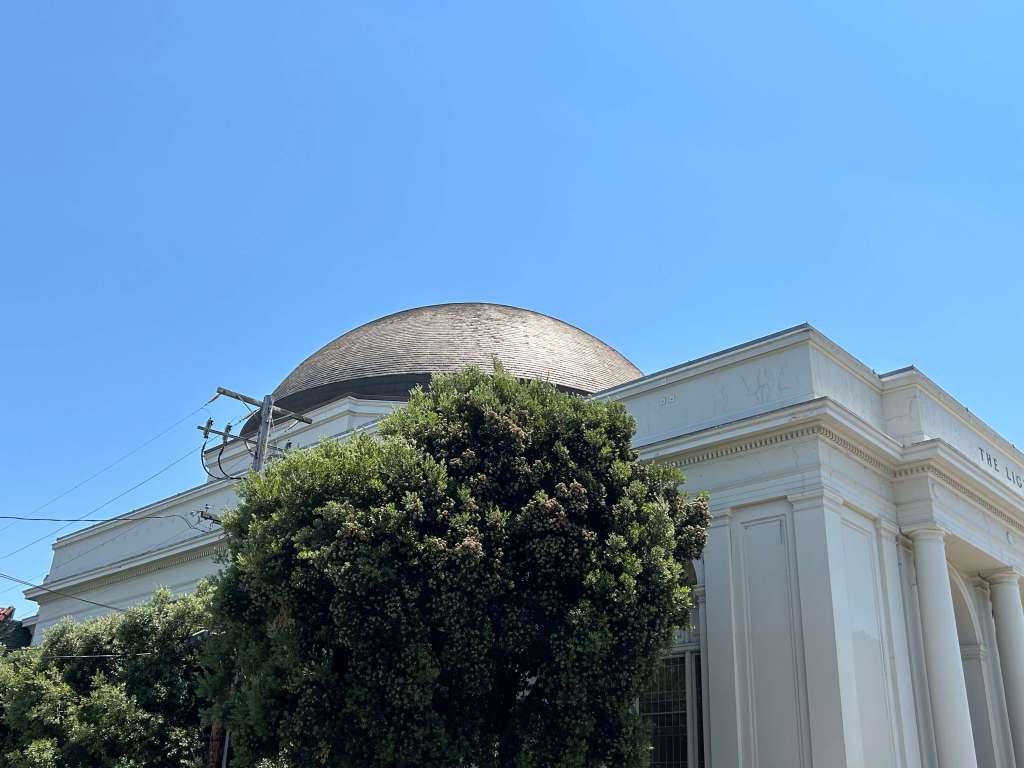
July 12, 2024 @ 1:22pm – The Mission, San Francisco Don’t let, don’t let, don’t let money fool you
The O’Jays
I’ve always liked saving money.
I receive money, and whether it’s two or two thousand dollars, I move it off to one side, and don’t touch it. End of story.
A small pile of gold two dollar coins on my dressing table.
A check from my grandpa that I deposit as soon as I can.
Pocket money. My sister and I both had piggy banks. Hers was never more than a quarter full. Mine was heavy and barely touched. Hers a rowdy bar. Mine a rarely visited temple.It physically hurt to lose money.
Of course, it’s pretty rare to actually ‘lose’ money.
But I worried about spending too much of it. I felt like if I didn’t pay attention at the supermarket, I’d buy the ‘expensive’ version of something and the next minute I’d be broke.
My friends couldn’t wait for their paycheck to drop into their account. They’d refresh the page, waiting for it to appear.
I never even liked looking at my bank account. I’d wince if the figures looked ‘low’. When I started a new job, I’d wait for several paychecks before I took a glance, and even then it felt like it would all easily be gone soon.
In my 20’s, I started making American money.
The best kind of money, right?
I learned a little more about saving.
Investing.
Retirement accounts.
Mutual funds.
Compound interest, the eighth wonder of the world,
I read books by people who were really good about talking about saving money, like Ramit Sethi and Dave Ramsey. That mustache guy.
Stories of people scrimping and saving and buying a house, or retiring early. These stories were mythical to me.
The crowning achievement of my life was a three month emergency fund. But why stop there?
It was no longer about an emergency.
I saved money because it felt good, not because it was smart.
It might look like discipline, but it’s really not.
It’s not wisdom either.
It felt good.
Of course, I’d never admit that to myself.
There’s always a good, sensible reason to save.
A house. My future. The bad economy. A rainy day.
It felt good to ‘stay in’. It felt good to say no. To throw away stuff I didn’t use. It felt good, just like it felt sickening to blow hundreds of dollars on booze.I’m not even interested in money.
The money in my account was like a strange, mystic totem, a rock sculpture in a forest. Purely symbolic.
I read financial advice not to learn, but for reassurance and validation.
I didn’t get happiness from finding ways to get more money. No matter how much or little I earn, payday doesn’t thrill me more than any other day.
I’m not the kind of person to find ways to lower my tax.
Or even cut my utility bills.
And those are great ways to save more money.
Go figure.
I have a friend who is more of a ‘maximiser’.
She’s always looking for ways to get more out of money.
She has a ton of deductions on her tax return.
She studies the tax code so she can part with less of her pay.
She loves sales, deals.
She’s doing something funny with her house. Something about investment property.
I’m more simple.
I see money, I save it.One day, my addiction to saving went away.
I think it was when I bought my apartment.
When I was looking for a place to buy I noticed I cared less about the price.
I just wanted a nice place to live.
And when I finally pulled the trigger, all those acorns I had been squirreling away were gone.
Of course, they weren’t really gone, they had just shape shifted. But I wasn’t even thinking about return on investment.
I just wanted my own place.
In that moment, money had turned from something sacred to something ordinary.
Some small print on a contract.
Most my battles in life feel like they are internal. Perspecties, attitudes, emotions, memories, dreams.
But this was external. I had to move some coins from one place to another.
Am I a spender now?
Just because I no longer see myself as a ‘saver’, doesn’t mean I’m a ‘spender’.
There’s more than two ways to be with money.
But I no longer feel really good about saving money.
I have to admit, I miss that feeling.
I no longer wince at spending ‘too much’ on a sandwich at the airport.
I don’t miss that.
I don’t think it’s ‘good’ to save money, just like it’s not ‘bad’ to spend it.
I invite you to use your money appropriately
It’s not appropriate to worry about $5 difference in your energy bill.
It’s not appropriate to buy a new smart phone every year.
If you are thirsty, buy water, don’t buy a dual-fuel outdoor pizza oven.
What matters is the compulsion.
There’s making money and then there’s “I have got to make money“. There’s saving money and then there’s “I have got to save money.”
See the difference? -
Street furniture
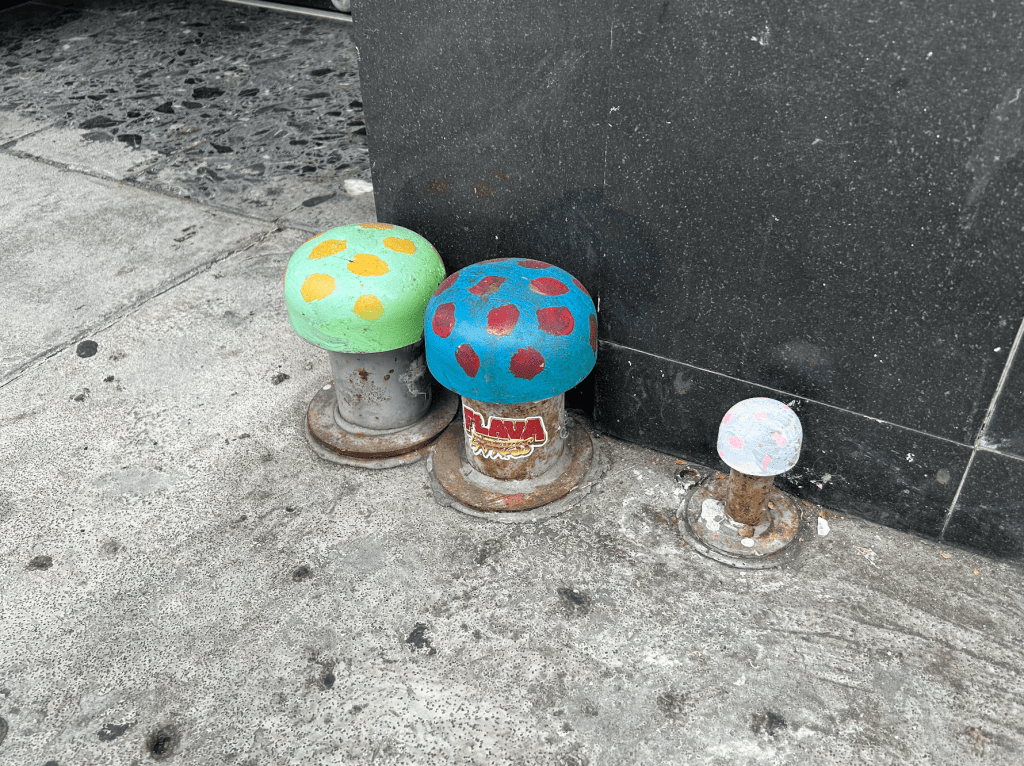
July 14, 2024 @ 10:12am – San Francisco, CA Leisure is an attitude of mind and a condition of the soul that fosters a capacity to receive the reality of the world.
Joseph Pieper
It’s Saturday morning. It’s 11 degrees celsius (51F), but the concrete grey sky and whipping winds make it feel close to zero. A few stragglers walk past me, scuffing their heels as if to say ‘isn’t this a nasty morning?’
I would tend to agree. I’ve just picked up my coffee and I’m about to turn down my street to walk home. I’m standing on a street corner, bracing against the wind and I glance up across the road.
It’s something I’ve never done, and will never be able to do again. To stare at this old boot repair stop. This bridge over train tracks. These shrubs. Holding this coffee. Right at this moment. And it’s not easy.
Because this particular intersection, it’s so banal to me it’s almost hard to do.
Because there’s nothing interesting there.
I’m both familiar with it, and tired of it at the same time. First impressions stick. I saw these shops, this bit of road, this dirty sidewalk once, and I knew it wasn’t worth my attention.
And so it was.
It made me think. If I have make up my mind so quickly about this place, I likely do the same for everything else I register with my eyeballs.
Try it out. Look at something you perceive to be ‘nice’. A bright red apple is pretty universally liked. Maybe you notice some thoughts naturally come to mind. Nice, little, yum, crunchy. These are basic value judgements. It’s a little word cluster. Morphed together it forms a sort of ‘vibe’ of that thing you’re looking at.
Two people look at a church. One word cluster ‘god, epic, holy, sacred, safe’, the other ‘junk, old, history, old people, boring’. Two word clusters. Two different churches are seen.
Conversely, a row of trash cans on the street: Dirty, plastic, gross, smell, ugly.
And that’s what they look like. Don’t they? At least that’s how they look to me.
Back to that street corner. Conscious of my little value descriptions, ‘concrete, grey, ugly, empty, sparse, boring’, I push myself to continue looking and let the value judgements drift off into the distance. Not much changes. But every cell in my body wants to move on, to ignore what I’m seeing. I’ve seen it so many times before. Another word drifts in: ‘waste of time’. But my eyes are content to move around and they rest on a little green electrical box. It’s an interesting colour and shape. And nearby, a similarly green shrub, about a foot high. More shrubs. A glimpse of a pastel coloured mural behind a car. The dull shine of a wet rubber.
It’s all there. There’s probably a lot more there too.
We need the ability to critically assess the world around us. In many ways, we are critical assessment machines. Instead of a body with eyes, we are eyes with a ton of CPU and some moving apparatus attached.
But when we allow our minds to run wild with fearful stories, harsh judgements and defensive attitudes, we start to lose touch with reality.
-
Seinfeld the Stoic
At first glance, Jerry Seinfeld doesn’t look or act like a Stoic. His stand-up routine is emotive and stacked with complaints, his car collection1 is in triple figures and his net worth is over a billion dollars2. Isn’t Stoicism about sleeping on the ground and walking around in rags?
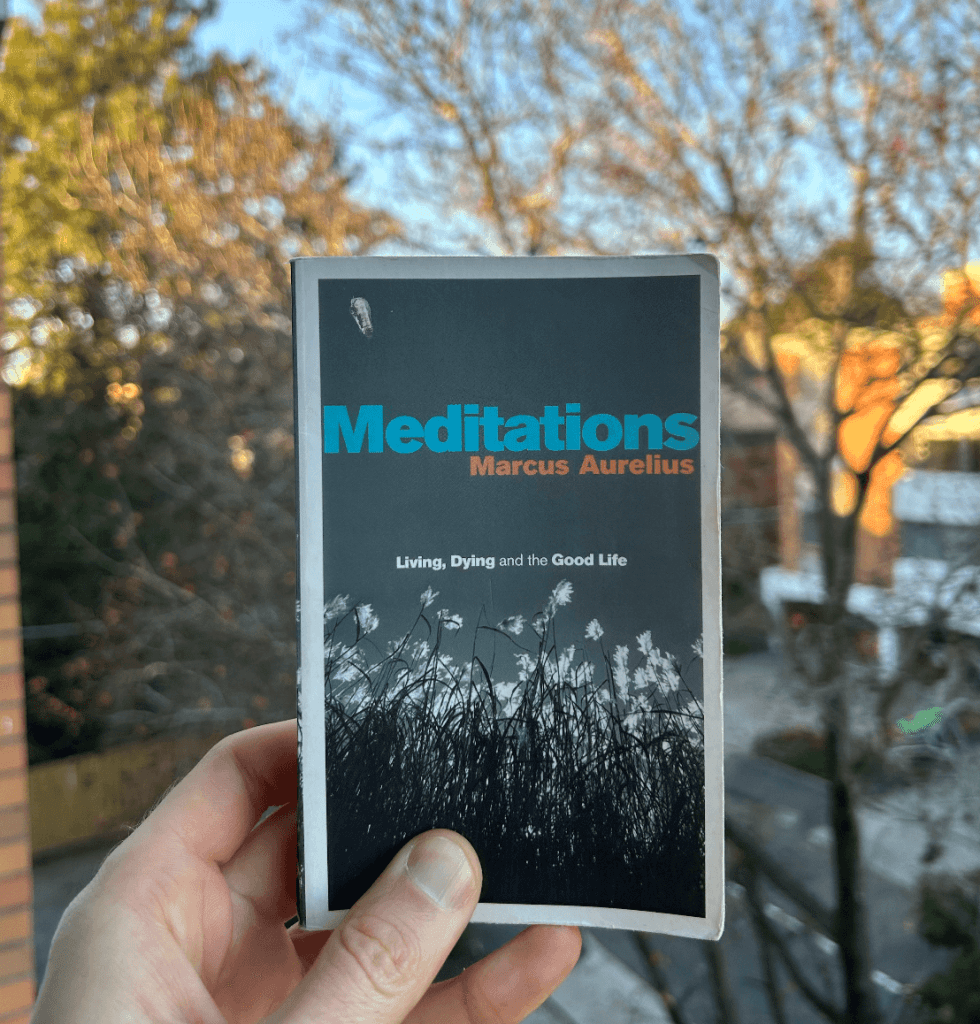
But if we compare Jerry with Marcus Aurelius, the most famous stoic and the ideas from Meditations, the results might surprise you. Here’s five things a comedian and an emperor have in common.
Jerry Seinfeld & Marcus Aurelius don’t really care about money
“I like money, but it’s never been about the money.” – Jerry Seinfeld
The Stoics famously did not value external, material stuff. Like Buddhists, they believed attachments to job titles, bank statements and big houses tended to make one unhappy in the long run. But that didn’t mean you couldn’t be rich. When we look at the two men who best exemplified Stoic philosophy, one was a Roman Emperor (Marcus) and the other was a slave (Epictetus). A philosophy doesn’t care about where you currently sit in the social hierarchy. And stoicism simply cares about doing a good job. If you’re a slave, be a good slave. If you’re the king, be a good king. We could even argue that it was more difficult for Marcus to be a stoic considering all the temptations and power that was at his disposal.
Jerry Seinfeld and Marcus Aurelius are cool with death
I don’t think for a second that it will ever mean anything to anyone ten days after I’m dead.. – Jerry Seinfeld
In an interview with Barri Weiss, Jerry is asked about his age. Rather than looking wistfully back on his life, or positively toward the future, he gives an unusual answer. “I’m almost 70, I’m dead. I could die and it’s fine.”3 And why should he worry? Marcus had the German hordes at the border, but if they were to win, he had no reason to feel bad about it. He did all he could do. If Jerry was to die tomorrow, he would leave his family behind but he won’t feel guilty: “I did great by my kids. I was a good dad. They feel loved. So… we’re cool.”4
Jerry Seinfeld and Marcus Aurelius are lone wolves
There is nowhere that a person can find a more peaceful and trouble-free retreat than in his own mind. – Marcus Aurelius
No one was meant to read Meditations. Marcus wrote it to himself, and in many ways he had no one to write to, because he had no equals. And who is really equal to Jerry? All Marcus wants to do is to live a good, philosophical life, but he needs to lead an empire. There’s an endless queue of ‘meddling, ungrateful, arrogant, dishonest, jealous’5 people knocking on his door asking him for stuff. And all Jerry wants to do is to craft jokes which he likens to calligraphy or doing lego6. He agrees that being a comedian (especially the richest and most famous comedian) is a ‘lone wolf racket’ and that he’s ‘only really comfortable with another standup comedian, or alone.’
Jerry Seinfeld and Marcus Aurelius are not your friend
There’s no one opinion that has any value. – Jerry Seinfeld.
Many people admire the Stoics. They look up to them and wish to be like them. They own heavily underlined copies of Meditations on their bookshelves. But what would Marcus Aurelius really think of you? Michael Sugrue, a former Princeton professor, doesn’t think you’d like the answer. “You wouldn’t want to work for this guy… He’s never going to be satisfied. And if he is.. he’s never going to give you applause. He’s going to say, you’re doing what you ought to do. You’re living like a philosophical man, which is reward in itself. You’re virtuous, what do you want from me? Back to work.”7 Tough stuff. Jerry also doesn’t really care what you think of him. “If you’re built right as a standup comic, you don’t give a flying fuck whatever thinks of (you)…I’m doing this job, I’m getting the money and I’m getting the hell out of here.”8 If you don’t like the joke, he’s not surprised. “Why would I think that I’m going to make something everyone will like?” What’s unnerving about these attitudes is that even though they sound a bit unpleasant, it’s hard to find ‘the slightest taint of hypocrisy.’9
Jerry Seinfeld and Marcus Aurelius know you better than you know yourself
Meditations is a ‘dreadful, powerful, caustic analysis of (Marcus) and others.’ 10When you read it, you’re shot in the face with a barrage of truth bullets. How can you argue with a line like “human lives are brief and trivial. Yesterday a blob of semen; tomorrow embalming fluid, ash.”?11 Isn’t it the same feeling when you hear a good joke? A good comedian will make you laugh, but is also able to “see through the surface of life itself.”12 A stand-up set and a chapter of Meditations are like acid that bubbles and boils through all cliches, habits, beliefs and language. Jerry continues, “if you could hear some of the conversations that comedians have you would feel like you took the most cleansing rain shower of your life… it is so peeled away of the surfaces and the gauzy phony planes of existence that most people deal with.” 13
We’re quick to judge what a stoic should look like. Ryan Holiday has certainly popularized a certain brand of discipline and hyper productivity. But strong philosophic ideas, Stoic or otherwise, stand outside our beliefs and preferences. And we can thank comedians and stoics alike for seeing us for what we really are and giving us the gift of perspective, neatly packaged in wise epitaphs and one liners.
- Inside Jerry Seinfeld’s car collection ↩︎
- ‘Get Out!’: Jerry Seinfeld Is a Billionaire ↩︎
- Jerry Seinfeld on the Rules of Comedy—and Life ↩︎
- Jerry Seinfeld on the Rules of Comedy—and Life ↩︎
- Marcus Aurelius, Meditations, translated by Gregory Hays, Modern Library, 2002. ↩︎
- The Scholar of Comedy (New Yorker) ↩︎
- Marcus Aurelius’ Meditations: The Stoic Ideal ↩︎
- Jerry Seinfeld on the Rules of Comedy—and Life ↩︎
- Marcus Aurelius’ Meditations: The Stoic Ideal ↩︎
- Marcus Aurelius’ Meditations: The Stoic Ideal ↩︎
- Marcus Aurelius, Meditations, translated by Gregory Hays, Modern Library, 2002. ↩︎
- Jerry Seinfeld on the Rules of Comedy—and Life ↩︎
- Jerry Seinfeld on the Rules of Comedy—and Life ↩︎
-
May 2024
© Hergé / Tintinimaginatio – 2024 Bristling
After an early morning swim, I rode home and noticed everyone looking spritely, fresh, showered, well-heeled. Or still exercising, walking, strolling, hustling. Bustling and bristling. Melbourne achieves this energy in certain parts of town, at certain times. It’s the same vibration of opening up a shop, rushing to an important appointment, but all the time. On every scale. In a waiting room, at a hot dog stand at a baseball game. Some cities are always like this. New York for example.
As a human being, you have a frequency/vibration. When you are in the place that your frequency/vibration matches the frequency/vibration of the place, you feel comfortable. – Jerry Seinfeld
What does $19 dollars actually get you?
A hot coffee, a place to sit, strangers to look at or to meet, a surface to write on, warmth, cover from the elements for a few hours, 500 calories or so.
Quotes
A man sets out to draw the world. As the years go by, he peoples a space with images of provinces, kingdoms, mountains, bays, ships, islands, fishes, rooms, instruments, stars, horses, and individuals. A short time before he dies, he discovers that the patient labyrinth of lines traces the lineaments of his own face. – Jorge Luis Borges
Trust in Allah. Tie up your camel. – Islamic proverb
Existence rests in the fleeting present; it is thus always in motion, resembling “a man running down a mountain who would fall over if he tried to stop and can stay on his feet only by running on… Thus existence is typified by unrest.” – Arthur Schopenhauer
How slipt? What deeds? What duty left undone? – Pythagorus
The whole function of the imagination is to draw up the material from the unconscious, clothe it in images, and transmit it to the conscious mind. – Robert Johnson
Writing
The Talking Cure – Hey! Put down your notepad when I’m talking to you!
Drowning – A review of Manodrome
Honor the Elephant – A review of Subliminal by Leonard Mlodinow
The Trolley – A few thoughts on the body we are stuck with
Music
Don’t Stop The Dance – Bryan Ferry
Music and Lights – Imagination
Voyage to Atlantis – The Isley Brothers
Blues at Sunrise – Albert King
Albums
Lambs in the field
We are like lambs in the field, disporting themselves under the eye of the butcher, who choose out first one and then another for his prey. So it is that in our good days we are all unconscious of the evil Fate may have in store for us—sickness, poverty, mutilation, loss of sight or reason. – Schopenhauer
We can admit there will be stuff in the future that we didn’t see coming. What then do we do about that? Forecasting seems to help. If we can forecast then we can potentially avoid some of it (cancel the flight), minimize it (eat something before that meeting), protect yourself (take out insurance), accept it (this is unavoidable) or find meaning in it.
Dreams sometimes indicate upcoming events as we start to mentally prepare for them. We could even think of a dream like a psychological weather forecast: Tomorrow will be partly cloudy. Light winds. High of 19 degrees. Prominent feelings of resentment, judgment, desire and fatigue.
A message from Shakespeare
Last scene of all,
That ends this strange eventful history,
Is second childishness and mere oblivion;
Sans teeth, sans eyes, sans taste, sans everything.
Home crowd hostility

An American Beats an Italian In Rome – Seb Korda feeds of the hostile home crowd
Fresh flowers
If we pay attention, our environment teaches us a lot.
For example, I go into a grocery store to buy some flowers. But as soon as I walk in, I’m a bit overwhelmed. Which flowers do I buy? Automatically I start peering very closely to all the varieties and try to think of the ‘best’ one to get. But I can’t make up my mind.
Instead of continuing to slog, I slow down and take a few steps back.
I see some things.
I see that fresh flowers are getting laid out. Someone grabs some while chatting on the phone and says “roses and tulip”. She’s combining flowers. I hear someone else says “get them wrapped”. I see that you can get flowers wrapped for free and they look much nicer.
There’s lots of great information all sitting there. The decision in many ways makes itself.
How to create more time
If you wake up at 5am instead of 7.30am, one would gain about 57 days or nearly 2 months extra per year. If you usually wake up at the luxurious time of 9am, you would gain an additional 7 days per month.
Every thing you need to do in a day, might be able to be combined with another thing you need to do. Don’t go to the grocery store twice.
Is your physical body just like pretty colors on a page?
Donald Hoffman argues that reality is more like a 3D desktop designed to hide the complexity of the real world and guide adapted behavior. Space is the desktop, physical objects are the icons on that desktop. – Do we see reality as it is? – Donald Hoffman
Intellect vs intuition
I can’t think of my bike shed code. I have my phone in hand, where the code is stored in my password manager. But before I check, I let my fingers type in the code without thinking. It feels wrong. I see my fingers type random numbers. Click. Unlocked.
I think our unconscious is quite happy to receive and carry out an order, as long as the conscious doesn’t interfere. For example, I want to fold my hand towel such that the tag is hidden. My intellect wants to figure this out procedurally and say “well if we flip it this way, then this should appear here”. But instead, give yourself the task and let your ‘hands’ figure out the rest.
I wrote more about intuition and the unconscious here.
Fear reduces your options
Only at 3-5, 0-15, do I start to serve with less fear, and worrying less about how ‘good’ it is.
Playing tennis with no fear pulls attention out of your head and soaks it into the other side of the court. Suddenly, I can see where that nasty cross court is coming from. There’s suddenly space to anticipate rather than react.
To riff on Viktor Frankl, I’d say that fear constricts the space between stimulus and response.
A dog with a friendly attitude can make a handful of people in a park very happy in the space of 5 minutes.
Two different ways to look at nature
In Grizzly Man (2005), Herzog and his subject Timothy Treadwell look at nature through very different eyes. They are making up stories about something neutral that is impossible to judge. Timothy sees a dead bumble bee (which was actually sleeping) as “beautiful, sad, tragic”. His heart can’t help but break. Herzog on the other hand, is left cold and haunted by the same environment. “I discover no kinship, no understanding, no mercy.”
-
Subscribe
Subscribed
Have a WordPress.com account? Log in now.

