June 14, 2026 @ 12:05pm – The Dandenongs, Victoria, Australia
Being a normal functioning human, requires a lot.
For starters, it requires oxygen. If we don’t breathe for a few seconds, we die. Sleep too. If we don’t sleep for a few nights, we go completely crazy.
And we need more than stuff like water, food, air and sleep.
If we want to be able to get anything done properly, we need bandwith too. We need a little extra fuel in the tank.
Imagine a laptop. Now let the battery drain to 1%. Start to load up and use lots of memory intensive programs. The computer will struggle. Now plug the charger back in and let the battery fill back up. Or try to book a plane ticket on a phone with 2G internet connection. Then move back into range of a 5G antenna. This isn’t self-care per se, it’s just a bit more bandwith to get the job done.
When we have bandwith we enjoy the ability to do things at the very least, properly. It may not be a pleasurable task, but you’re in less pain than you could be.
A practical example is when you go grocery shopping on an empty stomach. I don’t think we are always conscious that we’re hungry. You just start to be a bit more irritable, anxious and unhappy than usual.
But when you’ve had something nice to eat and drink, everything is a lot easier. It’s harder to get stressed. You remember what you came into the shop to buy. You’re able to skip buying the potato chips.
Strangely enough, it’s easier to be kinder too. Something like benevolence isn’t available to most of us, most of the time. But it’s more likely to be available if you have the bandwith for it.
We learned from a new angle just how wondrous a thing the brain is. A one-litre, liquid-cooled, three-dimensional computer. Unbelievable processing power, unbelievably compressed, unbelievable energy efficiency, no overheating. The whole thing running on twenty-five watts — one dim light bulb.”
Ian McEwan, Machines Like Me
When you have a bad habit, it becomes very easy to do things you don’t want to do, like staying up late watching YouTube.
But when consciously created, a habit can make it easy to do something you want to do, like eat healthier or go to bed a bit earlier.
Habits rewire your brain and eventually even change your identity. James Clear writes about this in his popular self-help book Atomic Habits (2018). You don’t just go to the gym every Monday, you become the type of person who does so.
A habit helps you to show up even when you have temporarily lost interest, motivation or willpower. On a particularly cold night, my swim coach admitted that ‘some nights all that’s left is the habit.’ That could sound a bit sad, but sometimes that’s the difference between sticking at something and giving up entirely.
Habits seem to work so well becausehumans are habitual by nature. When certain brain circuits are triggered, we react the same way again and again. Most of our movements are habitual and automatic. The way we breathe, stand, talk, scratch, itch, whistle. Our preferences repeat too, like which clothes we select to wear or which yoga mat we like to sit on. When so much of who we are, and what we do is a habit, the harder it is to notice.
And so, the danger of introducing new habits, is that although life may get easier and more efficient, we may also become even more stilted, predictable and mechanicalthan we already tend to be.
A man decides to run three times a week. Over the course of year his physical and mental health improve. He finds that he has more energy and a brighter outlook on life. But even this healthy habit can become unhealthy. His unconscious desire for perfection means he becomes irritated and frustrated when the weather is bad or his stats aren’t improving. He denies spontaneous impulses to try out different, more interesting routes. He turns down social invites to keep his streak going. And eventually gets injured after ignoring obvious signals from his body to mix things up or to rest.
We want to hammer our lives like a nail, tag it, stereotype it or cram it into a category.
But life isn’t mechanical.
Iain McGilchrist writes that “The only things in the universe that are machine-like are the few lumps of metal we have created in the last 300 years.”
This might be why mechanical things often fail or break in dreams.
So before you install a new habit, see how it feels to eat your dinner in a different place, at a different time or to skip it entirely. Maybe it’s worth removing a something habitual, before adding more.
When we gain the ability to hold our habits lightly, we find freedom, maybe the most important thing in life, or at least much more important than a healthy meal or some saved time.
If you had today’s spice rack in the year 1400, you’d be famous.
Ceylon cinnamon, black pepper, hot paprika—back then, these would’ve been like a garage full of Lamborghinis. Exotic, rare, wildly valuable.
Pepper, once known as ‘black gold’, was prized by the Greeks as early as the fourth century BCE, reserved only for the very wealthy. Even Buddhist monks were allowed to carry it, believed to cure everything from insomnia to sunburn. Today, science still recognize its antioxidants and anti-inflammatory properties.1
Which got me wondering.
Why and how does something so obviously good for us become so seemingly inconsequential and mundane?
One big reason is status.
Author W. David Marx describes status as a “zero-sum commodity whose desire is near universal.”2
Everyone wants it, even if we get after it in different ways.
New money buy it conspicuously. Old money signal it in much subtler and harder to fake ways. The rest of us follow along blindly, trying to keep up.
Status is a bit like a spotlight. In the realm of fashion and fast-changing technology it swings around wildly, never staying in one spot for long. It’s fluid, exciting and dynamic. It’s a game where the rules are constantly re-written. What’s tired was once wired.
Now at a few points in history, especially before global trade routes opened up, pepper enjoyed this spotlight too.
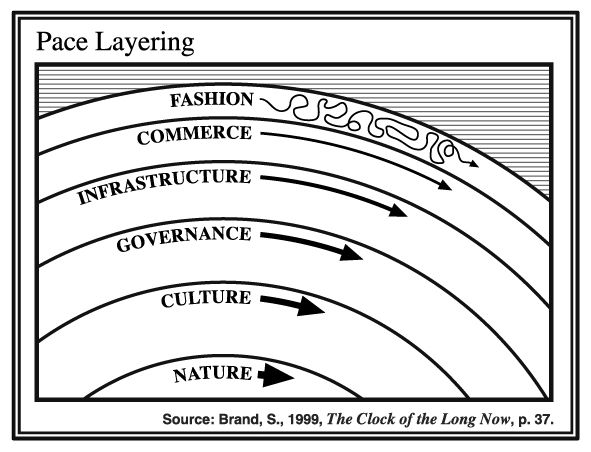
But pepper, like a lot of things, isn’t really designed to keep up with fashion trends. It doesn’t really fit the culture beat of April 2025, alongside Ultrathin models and reading retreats. It belongs to nature, the slowest changing ‘pace layer’ we know of. It grows on a vine. It responds to the sun and rain. From that perspective, status makes no sense.
Status games are fun, but ultimately say nothing about the inherent goodness or even utility of something. We can run from it, take advantage of it but would be wise to look through it less than we do. For when “we have been cursed to understand the mechanisms of culture too well (it makes) earnest taste nearly impossible.”3
Life consists in eating other creatures. You don’t think about that very much when you make a nice-looking meal. But what you’re doing is eating something that was recently alive. And when you look at the beauty of nature, and you see the birds picking around – they’re eating things. You see the cows grazing, they’re eating things. – Joseph Campbell
The mind can ramble off in strange ways and want things that the body does not want. – Joseph Campbell
Your body is a pile of food. Everything in your body from your heart to your hands was built mainly from food you’ve absorbed. And since we spend most of our lives looking after our own bodies, what we eat and drink matters.
Some people are very disciplined with what they eat. The health conscious follow rigid plans so that they can reach goals like ‘low blood pressure’ or ‘beach body’. Some people even skip entire food groups, go to fasting clinics or count every single calorie that goes in and out of their system.
The diets that we design and decide on are influenced by many different things. Peer groups, financial situations, interests, social norms and culture can all push us one way or another.
But instead of listening to yet another fitness podcast, might it be possible to figure out what our body wants to eat? Might an objective diet exist?
For many years, I counted calories and tried to eat based on what I heard was healthy. After giving that up, for reasons described here, I decided to see if it was possible to start eating more with my stomach rather than my head. Aside from common sense, I would try not to follow any particular diet or set of rules. Through the din of advertisements, influencers, social pressure and bad habits, I would try my hardest to hear the sound of my own stomach.
Maybe it’s impossible to separate our conditioning from how we make choices around food. Even if I think I’m intuitively picking one type of food over another, that intuition is influenced by something out of my control, like some deeply repressed fantasy or all the things I have learned in my life about nutrition.
Regardless if that is the case, I was more interested in what arrived on my plate every day. Does eating a bit more intuitively change what eating looks and feels like? Are these changes positive or negative? I care less about who’s in control and more about results.
Here’s how relying a bit more on intuition changed my eating:
Breakfast
In the morning, I found myself cooking more savoury breakfasts than I used to, like smoked salmon with cream chese on toast. Breakfast doesn’t need to be 100g of sugar. Sugar is ‘just a carb’, but sit down and drink a litre of cordial and tell me how you feel. We don’t need much of it.
Hot eggs, toast, oatmeal. Especially in winter, hot food in the morning is incredibly satisfying.
Lunch
Before I paid attention to my appetite, I’d usually default to something like a big subway sandwich or burrito and a large coke.
Although I was still pretty hungry at lunch, I rarely wanted to eat masses of meat or carbs. I never really get sick of salads loaded up with heaps of oily stuff (feta, olive oil, olives, avocado) or smaller soups. So more greens and fats than something like a pastrami sandwich.
Strangely, I found myself craving and loving tinned fish like sardines and mackeral. I spread it on toast. Feta and beetroot were other random foods I couldn’t get enough of. Who knows why. But I don’t belive we naturally crave junk food.
If I was ordering take-away, I found that I defaulted to sushi, again defaulting to fish over other types of meat.
Dinner
I started to eat smaller dinners, a bit earlier in the evening. It didn’t feel right stuffing myself right before bed. I think this is probably where people put on extra kilos.
The more I look at alcohol, the more it seems that this is something we’re mainly better off without.
The simpler my cooking got, the more I found myself adding salt to things. This is probably because I was getting a lot less sodium from junk food.
If you take some of the craving and bad habits out of your diet, things start looking healthier and frankly, a bit boring. We go a bit crazy when we aren’t stimulated with the latest lab invented flavors or if we can’t eat a different style of cuisine every night. But I was surprised how little my body cared about that sort of stuff. It simply wants food to keep it running. Even if it can physically handle plates of nachos and liters of beer (sweating and shaking), why would you?
Mind-led eating tends to be more habitual, compulsive and erratic. Body-led eating is perhaps closer to what we actually need to eat rather than what we crave.
Mind
Body
Want
Need
Binge, starve
Eat
Prepackaged for convenience
Take time to prepare
This food is “bad”
I’ll eat something else.
Hitting exact nutrient goals
Craving a particular food
Bias to added sugar, stimulants
Bias to micronutrients
Eats to feel better
Eats for energy
More technology (Powerade ION4)
Less technology (Water)
Protests meat
Says thanks for meat
Price
Quality
I need something new
I need something nutritious
Hunger > Taste
Taste > Hunger
Rarely satisfied
Rarely ‘starving’
Fever-Tree, a brand of tonic water coined the phrase “If ¾ of your drink is the mixer, mix with the best.” The same applies to us and our diets. If your body is mainly food, look after it with the best food you can afford.
Disclaimer: I would never urge anyone to stop eating anything, or feel bad about their food choices. I don’t care! This is just a reflection on an experiment with my own eating habits that I found interesting.I could be wrong about everything. Your mileage may vary.
December 25, 2023 at 4:27pm – Zhonghe Village, Taiwan
You shouldn’t damn ’em. Don’t judge ’em. Just forgive ’em for they know not what they do.
Max Cady (Cape Fear, 1991)
Belief is a toxic and dangerous attitude toward reality.
Terrence McKenna
In Determined: Life without Free Will, Robert Sapolsky sets off on a generally thankless journey to convince us that there is no such thing as free will. Taking energetic, impressive leaps from chaos theory to criminology, he keeps returning to the same conclusion. He can’t find a neuron (or a brain) “who’s generation of behavior is independent of the sum of its biologically past.”1 In other words, he can’t demonstrate that free will could exist, at least not in an important way like we think it does.
Sapolsky urges us that seeing through the illusion of free-will can be liberating and in doing so, we could be more humble, forgiving, self-compassionate and grateful for whatever fate has served us. Sounds lovely. Yet, we wake up every morning faced with the urgent feeling that we have choices to make. And although these choices are causal states of the brain, they “lead to specific behaviors, and behaviors lead to outcomes in the world.”2
Personally, I recognize the long list of luck that I have enjoyed so far in my life. Yet, I feel to my core that things could go differently if I don’t make considered choices about how I eat, move my body and generally conduct myself. In other words, I deeply, deeply believe I am keeping my car in the lane and I’m responsible for keeping to the speed limit and not crashing into a brick wall or flying off a cliff. So if everything from our destructive emotions to our good intentions are ‘determined’ like Robert demonstrates to us, how should we live?
Sapolsky likes to use an example of a college graduate and a garbage collector to show how environment & genetics can deliver vastly different outcomes. Let’s look at a less extreme example – diet. We have two sisters, Fat Sally and Thin Sarah. Both are 20 years old, and live fairly idyllic if uneventful lives in a middle class home in Atlanta, Georgia. Very similar human beings. But they do differ in one important way. Sally eats a lot of junk food, and is twenty pounds overweight. In comparison, thin Sarah is careful and considered with her diet. She thinks it’s important to eat healthy, and has spent years developing habits and a level of discipline to maintain them. She has what Angela Duckworth would callgrit. But no matter what values or judgement you place on either of these women, Robert Sapolsky argues persuasively that neither can be blamed or take credit for what’s on their plates.
Determinism is explained to both women. They learn how very small changes in their psychology and life experiences have led to differing attitudes, diets and waistlines. They had no important agency after all. Although they still feel like free agents, they agree that there’s no way things could be any other way than they turned out.
Their reactions are interesting. For as long as she can remember, Sally has felt like ‘the fat one’, and largely out of control when it comes to her eating choices. The idea that this was determined feels freeing and she stops blaming herself so harshly. With more self-compassion, she starts eating healthier and quickly drops her weight. Conversely, Sarah, who is proud of her ‘gritty’ character, feels her agency empty down the drain along with meaning in her life. She doesn’t know who she is anymore and slides into a depression. She gives up salads and instead binges on fried chicken and Netflix. Or maybe nothing changes at all. They shrug and continue doing what they were doing. Whatever the reaction, it was bound to happen.
And this is where talking about determinism leaves us every time. In a determined world, a response to a book that says that free-will isn’t possible is no different than responding to any other event that happens to us. In the same way that it’s a shame that someone’s mother drank alcohol while they were a fetus, it’s a shame that the persuasively argued concept of determinism might cause thin Sarah to give up her healthy habits.
Free will can’t be found in our brains because it’s a concept. And because it “emerges from felt experience”,2 it’s an especially salient concept, that’s not going anywhere. Like all the other concepts we’ve invented, free will can be useful, freeing, distracting or totally cast aside for us to live our lives the best we can.
Robert Sapolsky, Determined: A Life Without Free Will ↩︎


 Buddha Bike
