-
The trolley

“Tintin et les Bigotudos” – Studios Hergé collection If you are alive, you have a trolley.
You didn’t make the trolley. You received it on loan and will eventually return it to the store once you’ve used it all you can.
From the outside, the trolley looks simple. It has a material surface, wheels and a place to put things.
The trolley is strong and flexible.
It is made of natural material, and has a clever, efficient design. No trolley is the same.
The trolley is helpful for tasks and getting around. It can do many different jobs. And without one, you wouldn’t get much done.
Wherever you are, there is the trolley.
A trolley requires some raw materials to make enough energy to operate properly. The trolley wears down faster if it’s moving all the time.
The trolley is strong, but still breaks sometimes. Since the trolley is always being used, it’s natural for little bits to break off and change shape over time.
Some trolleys are smaller or more prone to breaking down. Some have been treated carelessly and roughly. Some trolleys are carrying a lot of weight and cannot move easily.
Interestingly, many people don’t accept their trolley. They are dissatisfied and unhappy with it. Other people take their trolley very personally. Many trolleys are repainted, renovated and refurbished.
A trolley can be changed so much that it is hard to recognize, but a trolley can never be swapped completely for a new one. Some people return their trolley early and say ‘take it back, I don’t want it anymore.’ Others ask philosophical questions. ‘Why this trolley? What’s the point of it?’
The trolley can’t answer these questions. It can only be a trolley. The point of the trolley to be used well as a trolley.
Whatever state your trolley is in, we should treat it respectfully, like a knife you’ve borrowed from your Grandfather.
-
Subliminal

© Hergé / Tintinimaginatio – 2024 There is only one other acceptable theory of how to hit a golf ball. Grip it and rip it. – Tin Cup (1996)
“Over the years, I’ve sort of learned to follow my nose on these hunches that I have, and usually something turns up pretty interesting.” – Hit Man (2024)
For most of human history, we have collectively understood the world without the help of machine learning, excel spreadsheets or even written words. Instead, we’ve made do with all things inexact: stories, myths, dreams, poetry, dance, drama and a deep connection with nature. These tools have helped us to make sense and meaning out of the mysterious. And they’ve done so by respecting all of ourselves we are unaware of – our unconscious.
These days, we think differently. We’re avatars on a digital social graph, sharing every thought to thousands. We hardly spend time outside. We don’t move our bodies much. We use tv instead of our imagination. We talk to computers with code. Thinking logically, analytically and systematically is highly valued. It’s all about precision baby.
Biologically, most of that type of thought is ruled by the left hemisphere. That’s where detail, order, power, control, rationality, planning, math & logic live. It’s the bread and butter of western civilization. It’s also the kind of thought we experience much of the day, when we zoom in, plan for our holidays, tick off to-do lists and tally up our budgets.
So where does that leave our intuition, imagination and other largely unconscious processes?
In Subliminal, Leonard Mlodinow doesn’t exactly have a point of view on that question, instead reviewing the latest and greatest science of the ‘new unconscious’, and all the cognitive biases that have become mainstream knowledge since it was published in 2012. These quirks show us that we are not as clever as we thought. And there’s consequences. Faulty memory sends innocent people to be jailed. Social and racial biases cause unqualified men to be hired or women to perform worse on a test. A light touch on the arm or the word ‘because’ is all it takes for us to say yes. Pick up artists rejoice, growth marketers profit.
Time and time again, reactions and decisions that are self-reported as good or accurate, are neither. An image used to describe this lack of conscious control is a monkey riding an elephant. The monkey thinks he’s in charge, but in truth the elephant pretty much goes where he wants. We conclude that we need to clean up our biases and get better at statistics if we’re going to keep our job or ever find our soulmate.
In terms of ‘correctness’, humans do seem to be hopelessly inaccurate and likely to misjudge reality. Hell, by looking at the eye, we know that we only have detailed vision in about two degrees of visual angle (that’s a thumb width at arm’s length). Ambiguity is everywhere and when it’s computed by our brains it invariably ‘opens the door to stereotyping, to misjudging people we don’t know very well. It also opens the door to misjudging ourselves.’
But what if we are looking at the elephant the wrong way? Rather than big and out of control, maybe it’s actually wise. Iain McGilchrist points out that intuitive thought is something unappreciated, undeveloped and deserves more of our brain power.
A lot of people have come away with the idea that intuition would be very bad thing to be guided by at any stage to any degree.
You can set up these artificial situations in which we seem to be getting things wrong by following our intuition… that’s often because 99% of the time we followed this intuition it would intelligently and quickly take us to the right solution.
Intuition, in certain cases, and certainly most experiments, can look like a contradiction, but that doesn’t necessarily mean it’s useless. Like Nassim Taleb says, “If a cognitive ‘bias’ is helpful, it is not a bias.” Rather than clean it up, or push it further back into the dark, we should seek to understand and involve it. Why?
- It’s need balancing. In high school we learn more about language, math and science than art or poetry. There’s no reason why our intuition couldn’t be as robust as our intellects.
- It’s all one system. Your unconsciousness isn’t in some deep water tank separate from your conscious mind. There is no monkey or elephant. Even the left and right hemisphere are part of one body. Any problem solved uses things we are aware of and in control of, and some things that are not.
- Most things are done better unconsciously. The better a fighter pilot or saxophonist gets, they ‘think’ less and less. In fact, many things get worse if we try and do them consciously. Csikszentmihalyi shows us in Flow that everything from gardening to choir singing benefits from intuition.
- It needs attention. Next time you feel overwhelmed with counter-productive or harshly judgmental thinking – try speaking to yourself. Say something like “I am really not interested in thinking these thoughts anymore, thanks.” Jill Bolte Taylor, who had a left brain stroke and basically lived in her unconscious for a few months likes to add “a kinesthetic component to my message like waggling my pointed finger in the air, or standing firm with my hands on my hips. A scolding mother is more effective when she says what she means with passion and communicates her message multidimensionally.”
Also posted on Substack
-
The talking cure
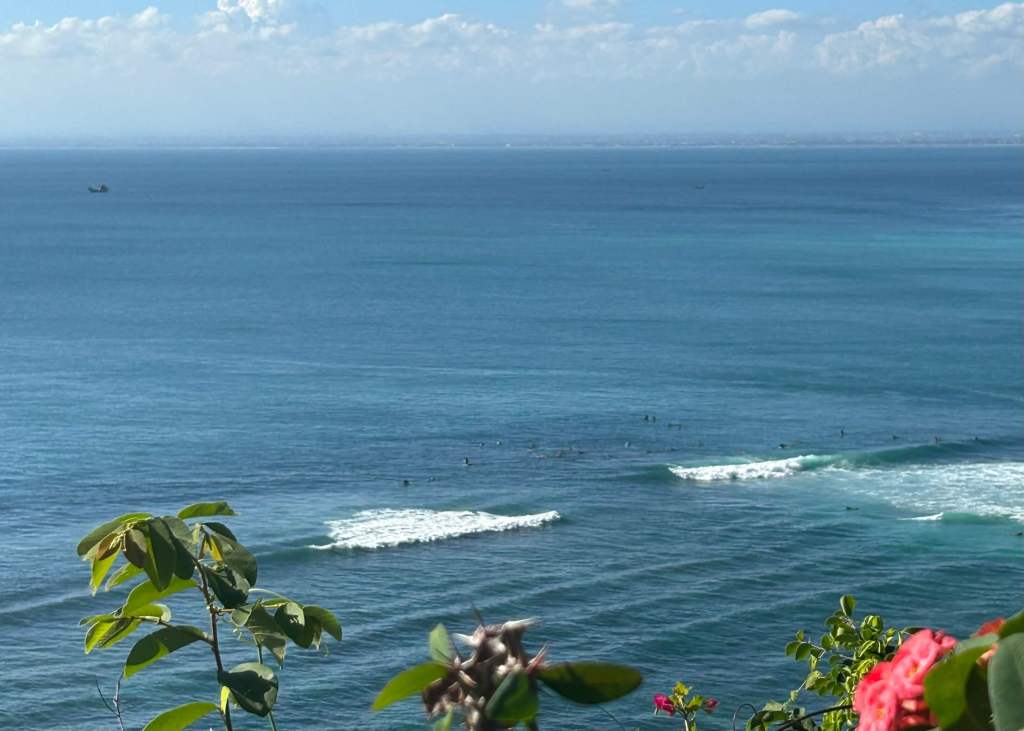
June 9, 2023 @ 3:31pm – Ubud, Bali Some kinds of therapy seem to suggest that the way to get better is to inspect yourself a great deal. Now there are moments that you certainly need to come to a realization of what it is you’re like and what you’re doing and why you’re doing it, of course. But it’s often better that you should lose yourself in something.
Iain McGilchrist
It is not the hearing that improves life, it is the listening.
Mihaly Csikszentmihalyi (Flow)
These days I feel like I’m drowning in data. Messages, emails, videos, articles, documents, spreadsheets, lists, tasks, tickets. Packets and packets of data that are all screaming for attention and consumption.
There’s work data pointed at me, there’s personal data and there’s a constant leak of environmental data too, overheard conversations, dog barks and billboard advertisements.
It’s no surprise then, that I tend to bias toward capturing and making sense of the world with words – data out of data. Apple notes tells me I log about 5 notes per day. Thoughts, things to remember, insights, random facts. Same goes with reminders. Less verbose, but still a sort of documentation or type of information processing.
There’s value in this type of practice. With knowledge work, ideas and projects often succeed on the strength of their documentation. One pagers, narratively-structured memos, wikis, JIRA initiatives. Over time these habits of extracting and boiling information can become addictive. We get tunnel vision, lost in a vortex of productivity that forms when we are constantly writing, logging and summarizing.
But the main danger is that we actually communicate less effectively. We miss the bigger picture.
Take therapy for example. Therapy as we know it today has been around about 140 years. Freud believed that there was a ‘talking cure’, that by talking about thoughts and feelings would give you insight into unconscious material and find relief from psychological distress. So therapy is a sort of conversation, a special type of communication between patient and therapist with the goal of shedding some light on previously unknown parts of your psyche.
The talking cure cures. I would walk out of a session with more clarity and more comfortable space around problems that previously felt claustrophobic. I’d excitedly write down what we talked about, eager to apply it. But over time, I found the more I tried to capture what was getting talked about, the less I got out of it. Like a raccoon washing cotton candy, the insights and lessons I had just experienced seemed to melt away into nothing. Jungian analyst Robert A. Johnson says he hates when people to notes in their analytical hour:
“They’re trying to instantly to catch something in canned tomato juice form that they can take home and drink later, and it doesn’t work. Any teacher worthy of this name is frequently wanting to yell at someone – for god’s sake forget about the notes and remember the level of consciousness you have at this moment.”
You can’t blame us for wanting to capture canned tomato juice. We have a bad habit of seeking the summary and skipping the thing itself.
- When we are reading or listening or learning about the context of a problem, we quickly start thinking about solutions. Stop. Wallow in the problem. Feel around in it blindly. Instead of rushing off to brainstorm anemic solutions, we should be storing up and absorbing more problems than we think we can handle. The solution will be better.
- We all know the difference between a good and a bad conversation. Author and Psychologist James Hillman describes some things that can interfere: “just talking out loud about what we feel. Complaints. Opinions. Information doesn’t work–Simply reporting what’s new, where you’ve been, what you’ve heard. Lullabies don’t help either-singing charming little stories to prevent anything from entering the heart or mind. And boosterism isn’t conversation either-broadcasting, self advertising what we are doing, have done, going to do. You can’t converse with a sales pitch or positive preaching.” 1So, just like therapy, a personal conversation flows better when and stop trying to capture and control the moment.
- Watching or listening to someone or something passively. Assuming you have the attention skills to concentrate and remain undistracted for 30 minutes, we rarely absorb most of what is being said. If it’s an important announcement at work, although we frown our faces so we look very serious and concentrated, and even write down some notes, we are not really listening. Maybe we are thinking very hard about a smart sounding question we can ask at the end, or wondering what this film or book is ‘really trying to say’. When we do such things, we have stopped engaging with the prime material.
Whether you are listening or conversing with an analyst, a friend or the CEO of a billion dollar company, drop the notes. By not taking notes, you couldn’t possibly be taking it more seriously.
Also published on Substack
- Hillman, J., & Ventura, M.. (1993). We’ve Had 100 Years of Psychotherapy and the World’s Getting Worse (p. 99). HarperCollins. ↩︎
-
Drowning
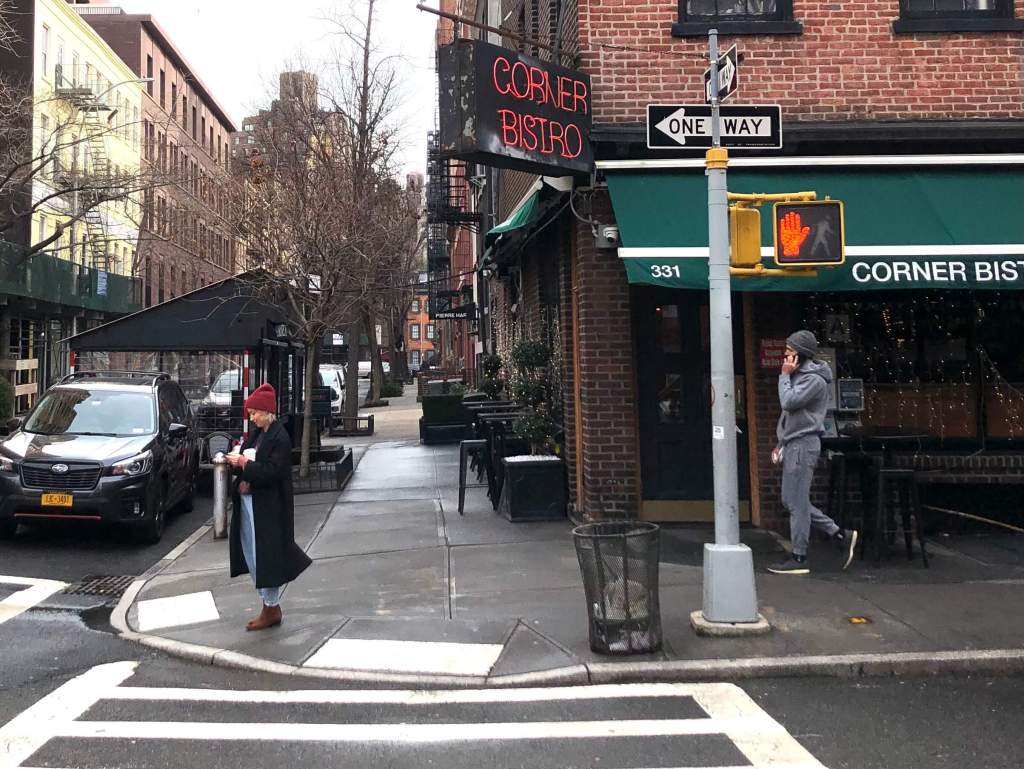
February 17, 2022 at 9:49am – West Village, New York Manodrome (2023) – Two stars.
In Manodrome, Jesse Eisenberg plays Ralph, a down and out loser who succumbs eventually to his rage, alienation and overall brokenness.
The story begins with one of his Uber passengers, calling him a creep and running away from him. She was breastfeeding her child, which he is caught looking at. He is alone, looking out at the world, unable to access love, feeling, life or anything else remotely nutritious. He is a baby himself, bulked up in the gym, but barely communicative, perpetually curling up, like a standing fetal position.
We don’t hear his thoughts, but we can assume there’s some thin trail of commentary there. All we can see is where his eyes furtively glance to, or away from. Gym rats tease him ‘still looking. still hungry.’ We see very little emotion or feeling echoing back from what the world throws at him. He’s trying to stay positive. He wants people to show a ‘little respect’. Everything he says, feels and does is undercooked, until it’s not.
His heavily pregnant partner asks him basic questions like, where did you go, how will I get home tonight. Simple questions, but there doesn’t seem to be a simple answer available to Ralph. Maybe these questions do not register. Is he focused on something else, that we can’t see? Is his soul responding to her, but it’s buried so deep in mud we can’t hear it? His compass, or any method for orienteering through the world is not completely gone, but seems to be constantly broken, or worse, hallucinatory.
Trash in, trash out. Pumping iron, for many people seems to provide a boundary, a weak fence-line between him and the abyss. He can reliably go there, and at least things don’t seem to get worse. Push on the bar, it goes the right way. When he pushes on anything else, things go wrong.
This lack of balance or inability to rest in a middle ground is exasperated by his run-in with Dad Dan’s (Adrien Brody) crew of lost boys. They shake him up, beg him to voice his concerns, to scream, to reverb, to bounce back. He is given some explanations for why he is the way he is, and offered a potential path out of hell.
Like a lot of similar stories, he starts to take on more agency. To step out of his rut, he stops listening to himself, or others. He follows a basic motto. Is he transforming? He has been treading water, almost drowning, does he now have one hand on a rope, or is he starting to swim even deeper? Is beating up a stranger heroic or cowardly? Up or down? The answer, which is unanimously ‘down’, makes this film un-interesting. There is no tension or complexity or questions we need to ask ourselves. He’s a rock dropping out of the window that doesn’t know it’s been thrown. It’s almost always a tragedy when someone deeply believes they are right.
Instead of a hero’s journey, where there is often a ‘fake it till you make it’ stage while the universe (or Yoda) nods and urges you forward, Ralph actualizes in the wrong direction. He’s getting more confused. He’s painting with broader strokes. He’s an out of tune radio, but now the volume is cranked. He’s churning out spreadsheets but the source data is wrong. His misery is externalized, with predictable results. Sex, screaming, shooting. More people are now sucked into his suffering.
In one of the final scenes, Ralph is on the run from the law and has broken into a restaurant pantry. A worker catches him feasting on bread like a feral dog. The man looks at him with a sort unconditional acceptance, a stark contrast to every other person who usually responds to him out of fear, habit, manipulation or transactionally. Stunned momentarily, more out of confusion than clarity, Ralph puts the gun to his head. It clicks. It’s the punchline of a long, cosmic joke. Someone, somewhere is laughing.
The stranger takes him home and tells him a story. When he was little, he fell overboard into freezing water. He’s drowning, and thinks he will die. He takes one last breath, but can see his dad swimming to save him. In one moment he understood death, life and love, certainly. Three things Ralph doesn’t even know that he doesn’t know. Ralph is still drowning. Ralph blinks, and then curls back into a fetal ball, falling into deep unconscious – as we see the flashing lights of the police streaming toward the building.
-
What’s the point?

September 1, 2018 at 7:24am – Tahoe National Forest Watch What’s the Point? on YouTube
A few minutes before I DNF’d Peaks challenge (strava), a particularly hard bike race, I asked myself an important question: What’s the point?
I didn’t have an answer.
When all you need to do is ride your bike to the finish line, asking “what’s the point?”, is not very helpful.
It’s the type of question that invariably creates more questions. Do I even like this? Why do I do this to myself? Who do I think I am? What am I getting out of this? Why am I here?
Camus would be rolling a cigarette in his grave.
It’s the type of question which needs to be questioned.
Ego
Perhaps a thought like that emerges from an ego trying to find a comfortable place to stand. Like a stressed publicist, it’s in damage control and it’s in search of a justification.
It was dramatic (I’ve lost the love, I’m quitting.) It was proud and sought validation (I’ve done a lot of training, but it wasn’t enough). It was dismissive (Things change. I’m interested in different things now. Cycling is not for me).
So when I say something like “racing isn’t that important to me”, it may not be what I really believe, rather what makes me feel good.
Preparedness
There’s also a biological reasons why get existential. When we run low on water or nutrition, our mind goes crazy. I was bonking, dehydrated and out of carbs. I hadn’t planned enough, paced enough or trained enough, and paying the price.
For your average weekend warrior, this is a simple enough problem to fix. You didn’t get the result you wanted, so you experiment, and try again. You fix your bike position. You buy new gear. You switch up your nutrition or your training plan. Pain or negative thoughts act as a pointers to help you improve.
I’d happily solve an existential problem with food, if only I could stop thinking about it.
Toughness
One day I was at a park when I overheard a mother urging her young daughter to keep running. She was flagging behind and her body language said she was seconds away from collapsing and giving up. Her mum urged her to ‘come on, get in your competitive mode’. The little girl cried out in exasperation ‘I’m trying!’.
When it comes to getting the thing done, fixing your attitude seems to deliver the largest return on investment. Ancient myths, spiritual gurus corporate slogans all urge us to keep an unwavering focus or intent on the goal and just do it.
I’d happily agree that I lacked grit, if I wasn’t so familiar with discipline and pushing myself to do physically uncomfortable stuff.
The thing is, there’s no end to how tough something can get. And for two unique people, with differing attitudes, a 5km and a 500km could feel equally as hard. And although perseverance seems to be a healthy trait that helps one to get the most out of their lives (rather than staying huddled under the covers), I think we need more than perseverance. Just because you are able to withstand a certain pressure, doesn’t mean you have to withstand it.
So, before we shrug our shoulders and say ‘toughen up’ or ‘get over yourself’ or ‘get back on the bike’, I’d like to ask ‘what’s the point?’ on more time.
I think we can look at this question from two different levels or perspectives.
On one level, we care (perhaps unconsciously) about short term gains, utility, getting ahead, grabbing stuff, avoiding pain, seeking pleasure. When we struggle with something hard, whether it is a 12ft brick wall we need to scale or a thank-you note we can’t put into words, we are essentially saying, I don’t want to do this. This is uncomfortable. This makes me feel bad.
But from another level, asking what’s the point could be a valid expression of frustration. Life is short. We can only do so many things. Let’s face it, genetics aside, we are all painfully individual and we may be guilty of grinding down our uniqueness into a fine paste all in the name of toughing it out.
Let’s look at two different people struggling with this question, in different ways.
Maria decides to quit her corporate law job and become a pastry chef. She’s used to working hard, but the combination of physicality and early hours are killing her. She’s struggling to learn the art of the croissant. She loves it but she also asks herself what’s the point? She misses the convenience and stability of her old life.
Miguel vows to read every day. Science says that reading makes your brain bigger and more empathetic, and he’s tired of hearing about it. He’s never been a reader, but this time he really pushes himself to make a new habit. He finds time out of his busy schedule to read, even sacrificing time with his kids. But no matter how hard he tries, it really feels forced. Sometimes he asks himself: what’s the point?
Maria works on her passion, while comfort and security tug at her. Miguel laces up his own boots, while his heart tells him he’s walking in the wrong direction. In both cases there’s a mixture of fighting demons and listening to what you actually care about.
Therefore, the challenge we face is not simply ignoring that voice that says ‘give up’ – that would be too easy. Sometimes we might have to listen to it too.
-
The Laws of Human Nature – Book review
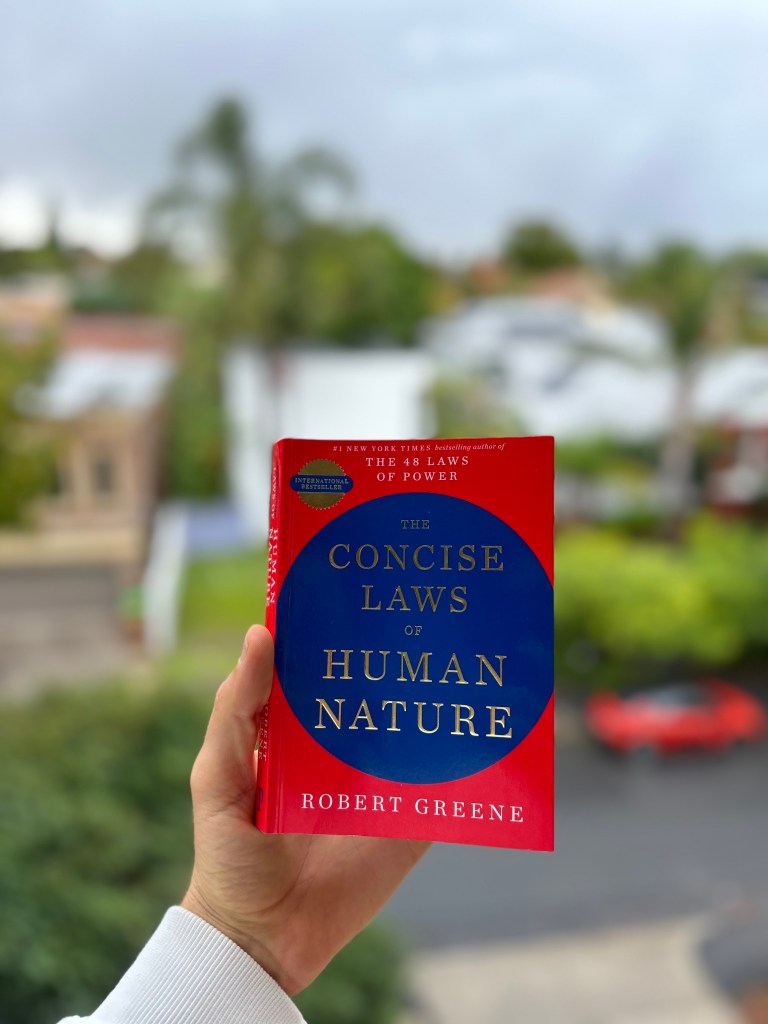
“If you come across any special trait of meanness or stupidity… you must be careful not to let it annoy or distress you, but to look upon it merely as an addition to your knowledge – a new fact to be considered in studying the character of humanity.” – Schopenhauer
“The kind of attention we bring to bear on the world changes the nature of the world we attend to.” – Iain McGhilchrist.
“I would permit no man, no matter what his color might be, to narrow and degrade my soul by making me hate him.” – Booker T. Washington
The book: The Concise Laws of Human Nature – Robert Greene (2018)
Date read: Feb 20 – 21, 2024
To Robert Greene, studying human nature does not have much to do with genetics, evolution, chemistry or physics. Instead, we’re looking into all the soft, squishy, smelly stuff that flames in the trash-can of the ego. Our egos get us into trouble again and again. They’re brazen, fragile, hostile, fickle, competitive, self-confident and ultimately disconnected from reality. The ego sees threats that aren’t there and projects a cloud of fantasy over real people and relationships, leaving us lonely, unsatisfied and suffering.
Greene attacks the subject of human nature as a systemizer, and this heavily structured almost synthetic style of writing grates on me (even in the concise version). He’s a wide reader (like his protege Ryan Holiday), and there’s dozens of insights and anecdotes squeezed into the tiny pages. But overall I didn’t like the tilt toward deception, persuasion and competition. But that’s to do with his audience. He’s writing for ambitious teens, freshman, businessman, those trying to understand the ego for their own advantage.
Although he doesn’t write directly about it, I think the most big idea of this book is the importance of how we use our attention. Our relationship to life, death, friends, lovers, bosses can all be negatively distorted and skewed if we don’t have a good grip on our perception of those things.
Here are five other ideas about human nature:
- People exist: Greene suggests to “see other people as phenomena, as neutral as comets or plants. They simply exist. Work with what they give you, instead of resisting and trying to change them… It is all part of the human comedy.” Rather than judging people or desperately want them to change, we should work with what we’ve got, or what’s presented to us.
- Face your dislikes: Psychologically, we are big stinking bundles of habits and memories. To grow, change and get things done, we’ll need to do things in new and different ways. To break some of our bad habits Greene suggests “to not react in the moment by repeated placing yourself in stressful or adverse situations in order to get used to them.” It’s not just about cold water shocks and facing your deepest fears; we need to stop distracting ourselves in even the must mundane situations. “In boring everyday tasks you cultivate greater patience and attention to detail.”
- Don’t seek, settle: Desire is a big motivating force in our lives, but can also backfire when we keep trying to seek the unattainable. Take a romantic relationship as example. “There is nobody perfect. Instead, it is better to come to terms with the flaws of the other person and accept them or even find some charm in their weakness.” By calming down “covetous desires”, we can learn to compromise, be at ease in the world and stop ourselves from constantly getting drawn away from reality. Greene also makes a great point that constantly seeking perfection in our work or love life burns a tremendous amount of time and energy, two precious and finite resources.
- Confirm, don’t critique: People don’t want the truth. I’m often asked by other collegeues for feedback or advice on their projects. I try and help them like I would help myself, and make sure I don’t come across as too direct (which is more my natural style). I try and be objective and explain how to improve their work. But I was surprised by Greene’s suggestion that most people “do not want the truth; they want support and confirmation given as realistically as possible.” Part of me recoils against this advice. Why even come to me in the first place if I’m just going to pat you on the back? But I see the point. This isn’t an either/or type of thing. Just because they are working toward a goal doesn’t negate the need to steady nerves, build confidence and get reassurance. It makes me realize most of the time I show my work I’m also looking for some amount of confidence boost too.
- You’ve got more energy than you think. A friend at work was complaining how ‘low energy’ she has become recently. She had seen several different kinds of doctors, and complained about a number of negative factors in her life. Her energy had disappeared. Or had it? At the end of the day I saw her showing someone around a social gathering, and she was smiling and brimming with renewed focus and excitement. You might say this was to do with a change in chemistry, or her preference for extroversion, but there was no doubt she had found a huge reservoir of energy out of nowhere. Where had that come from? It’s likely that we have and can access more “wellsprings of energy and health” than we think we can.
-
12 Unpopular opinions
The following excerpts are from an interview with psychologist James Hillman. I agree with about half of these.
There are other cultures that are not historically minded at all. They’re much more concerned with whether or not the trees are in good shape and are speaking to you. Much more concerned. Or whether the river has changed course: that’s something to worry about. My goodness, if the fish turn belly up, that is far more important to my soul than what my mother did to me when I was four.
It’s the shamanistic idea that unless I’m in order, I can’t put anything else in order…We’ve held to that view, but I don’t think that’s it; I don’t think it works. I wish it did, but I don’t think it does.
I think that group of overeaters could begin to realize what goes on in school lunches, and what goes on in advertisements for potato chips. There are acutely political dimensions here, dimensions that this group could work to identify.
If that’s the goal, what’s the difference between meditation and having a nice drink? Or going to the hairdresser and sitting for an hour and flipping through a magazine? Or writing a long letter, a love letter? Do you realize what we’re not doing in this culture? Having an evening’s conversation with people; that can be so relaxing. I think we’ve misguidedly locked on to meditation as the main method for settling down.
It’s a terrible cruelty of predatory capitalism: both parents now have to work. A family has to have two incomes in order to buy the things that are desirable in our culture.
Instead of saying, “This is my child,” they must ask, “Who is this child who happens to be mine?” Then they will gain a lot more respect for the child and try to keep an eye open for instances where the kid’s destiny might show itself — like in a resistance to school, for example, or a strange set of symptoms one year, or an obsession with one thing or another.
I think we’re miserable partly because we have only one god, and that’s economics. Economics is a slave driver. No one has free time; no one has any leisure. The whole culture is under terrible pressure and fraught with worry. It’s hard to get out of that box. That’s the dominant situation all over the world.
I see happiness as a byproduct, not as something you pursue directly. I don’t think you can pursue happiness. I think that phrase is one of the very few mistakes the Founding Fathers made. Maybe they meant something a little different from what we mean today — happiness as one’s well-being on earth.
Gary Snyder says, when something strikes you — whether it’s a hungry child, or the death of a fish, or the cutting of a forest, or the warming of the air — take that particular thing and enter into it. Learn about the salmon, about the Indian myths surrounding it, about the whole life cycle of the fish. Through your learning you develop sympathy, and you become an expert. You pick one place where your heart can connect to the world’s problems. We can’t just say, “This is too much. I can’t bear it.”
Why does our society believe old people need help? They are the ones who would be, in some other society, passing on help to others: teaching skills, telling stories, leading rituals, caring for children. They have a contribution to make, and instead they are segregated as sick people who need to be nursed.
We must not mix up aging with disease. We’ve done that in this country for too long. Aging is not disease. You can have cancer that is hideous at thirty-six, or leukemia in childhood, but for some reason we equate old age with disease. Many people are diseased in old age, but many are not. I just heard of a man today who is 102, and he still takes care of himself.
To avoid death, or accident, or wounding of any kind has become our prime objective. It’s as if, psychically, we live in gated communities in order to keep out the unforeseen.
-
Eating things

March 30, 2024 at 11.16am – Unknown, Australia Life consists in eating other creatures. You don’t think about that very much when you make a nice-looking meal. But what you’re doing is eating something that was recently alive. And when you look at the beauty of nature, and you see the birds picking around – they’re eating things. You see the cows grazing, they’re eating things. – Joseph Campbell
The mind can ramble off in strange ways and want things that the body does not want. – Joseph Campbell
Your body is a pile of food. Everything in your body from your heart to your hands was built mainly from food you’ve absorbed. And since we spend most of our lives looking after our own bodies, what we eat and drink matters.
Some people are very disciplined with what they eat. The health conscious follow rigid plans so that they can reach goals like ‘low blood pressure’ or ‘beach body’. Some people even skip entire food groups, go to fasting clinics or count every single calorie that goes in and out of their system.
The diets that we design and decide on are influenced by many different things. Peer groups, financial situations, interests, social norms and culture can all push us one way or another.
But instead of listening to yet another fitness podcast, might it be possible to figure out what our body wants to eat? Might an objective diet exist?
For many years, I counted calories and tried to eat based on what I heard was healthy. After giving that up, for reasons described here, I decided to see if it was possible to start eating more with my stomach rather than my head. Aside from common sense, I would try not to follow any particular diet or set of rules. Through the din of advertisements, influencers, social pressure and bad habits, I would try my hardest to hear the sound of my own stomach.
Maybe it’s impossible to separate our conditioning from how we make choices around food. Even if I think I’m intuitively picking one type of food over another, that intuition is influenced by something out of my control, like some deeply repressed fantasy or all the things I have learned in my life about nutrition.
Regardless if that is the case, I was more interested in what arrived on my plate every day. Does eating a bit more intuitively change what eating looks and feels like? Are these changes positive or negative? I care less about who’s in control and more about results.
Here’s how relying a bit more on intuition changed my eating:
Breakfast
- In the morning, I found myself cooking more savoury breakfasts than I used to, like smoked salmon with cream chese on toast. Breakfast doesn’t need to be 100g of sugar. Sugar is ‘just a carb’, but sit down and drink a litre of cordial and tell me how you feel. We don’t need much of it.
- Hot eggs, toast, oatmeal. Especially in winter, hot food in the morning is incredibly satisfying.
Lunch
- Before I paid attention to my appetite, I’d usually default to something like a big subway sandwich or burrito and a large coke.
- Although I was still pretty hungry at lunch, I rarely wanted to eat masses of meat or carbs. I never really get sick of salads loaded up with heaps of oily stuff (feta, olive oil, olives, avocado) or smaller soups. So more greens and fats than something like a pastrami sandwich.
- Strangely, I found myself craving and loving tinned fish like sardines and mackeral. I spread it on toast. Feta and beetroot were other random foods I couldn’t get enough of. Who knows why. But I don’t belive we naturally crave junk food.
- If I was ordering take-away, I found that I defaulted to sushi, again defaulting to fish over other types of meat.
Dinner
- I started to eat smaller dinners, a bit earlier in the evening. It didn’t feel right stuffing myself right before bed. I think this is probably where people put on extra kilos.
- The more I look at alcohol, the more it seems that this is something we’re mainly better off without.
- The simpler my cooking got, the more I found myself adding salt to things. This is probably because I was getting a lot less sodium from junk food.
If you take some of the craving and bad habits out of your diet, things start looking healthier and frankly, a bit boring. We go a bit crazy when we aren’t stimulated with the latest lab invented flavors or if we can’t eat a different style of cuisine every night. But I was surprised how little my body cared about that sort of stuff. It simply wants food to keep it running. Even if it can physically handle plates of nachos and liters of beer (sweating and shaking), why would you?
Mind-led eating tends to be more habitual, compulsive and erratic. Body-led eating is perhaps closer to what we actually need to eat rather than what we crave.
Mind Body Want Need Binge, starve Eat Prepackaged for convenience Take time to prepare This food is “bad” I’ll eat something else. Hitting exact nutrient goals Craving a particular food Bias to added sugar, stimulants Bias to micronutrients Eats to feel better Eats for energy More technology (Powerade ION4) Less technology (Water) Protests meat Says thanks for meat Price Quality I need something new I need something nutritious Hunger > Taste Taste > Hunger Rarely satisfied Rarely ‘starving’ Fever-Tree, a brand of tonic water coined the phrase “If ¾ of your drink is the mixer, mix with the best.” The same applies to us and our diets. If your body is mainly food, look after it with the best food you can afford.
Further reading
- Food rules – Michael Pollan
- A short book that distills a lot of common sense
- Grain Brain – David Perlmutter
- More scientific and specific advice about nutrition that is generally pretty good
- How to eat – Thich Nhat Hanh
- The mindful angle. It’s hard to eat junk food mindfully
- Nutrition tier lists – Dick Talon
- Nutritional breakdowns of most types of food
- ‘Eating’ on Buddha Bike
- Several other posts about food and diet
Disclaimer: I would never urge anyone to stop eating anything, or feel bad about their food choices. I don’t care! This is just a reflection on an experiment with my own eating habits that I found interesting. I could be wrong about everything. Your mileage may vary.
-
Did not finish (DNF)

December 29, 2023 @ 11:41am – Dongchang Village, Taiwan A selection of notes, quotes, ideas and musings from the month of March 2024.
Gratitude is a balm for bitterness.
- Complaining
- Trying not to complain
- Feeling proud you’re not complaining
- Losing interest in the idea of not complaining
We can’t just do what we want… that’s just juvenile. But we probably have many more options open at any moment than we think. – Robert Moss
A dream: I’m in conversation with an energetic, retired businessman. He encourages me to act my age. He says, you don’t get it, soon you’ll be my age and you’ll wish you took advantage of what you have. The next day, I realize this man was a tennis player at my club. He’s nearly twice my age but often runs me off the court.
98% of the time when I talk about cycling, people are like “you do what? The other 2% of the time I feel like a complete amateur.
A DNF pulls the rug out from under your ego. When you’re improving and getting good results, you hardly notice. But when you’re bonking and getting passed, suddenly you start questioning yourself. Why am I here? What am I doing this for? You kick up a big fuss because things aren’t going your way. This can be a healthy antidote to the inflation of a string of PB’s.
When we are little and we don’t get what we want we scream and cry. When we are adults, we scream and cry in our heads. When we finally get what we wanted, suddenly that voice goes very quiet. Our mind can be like a child who has been very rude, but suddenly gets the ice cream they want, and is now acting like there was never any problem.
“When an inner situation is not made conscious, it happens outside, as fate.” – Carl Jung
The death spiral of bonking:
- Come on legs, move.
- Denial. I’m not going to bonk.
- Come on legs, move.
- Trying to fix the issue. Water. Holding my legs differently. Concentration games.
- Finally giving up the games and accepting whatever is happening
- Come on legs, move.
- Repeat
Am I a cyclist? Is that part of my identity important? Maybe what’s important is not that you are or aren’t a cyclist. It’s more important to recognize that it’s a concept. It’s a bit of clothing that can be put on or taken off if you like. There is no forcing. There is no obligation.
Nothing against alcohol, but I feel physically better after cycling 170km and getting heatstroke than a weekend of drinking
Flossing is about getting food out of our teeth. Next time you floss, think about flossing out three meals. As you floss, remember what breakfast, lunch and dinner were and get them out of your teeth.
Daniel Goleman describes anger as a destructive emption. No matter how skilled and self-aware you are, it’s always going to be dangerous to deal with anger – it’s caustic. For some people, dealing with anger is like a toddler playing with a gun. Others are more skilled, like a soldier or policeman. Therefore, the more skilled you are, the more responsibility you have to get your anger under control. We would never blame a toddler for mishandling a firearm, but a soldier should know better.
Rather than focus on the subject of work, we should focus on attitude and how we approach work. When we are unhappy at work, we tend to blame the work, the content. In my experience, I’m bringing the same person to work, so if I’m unhappy, no job change will help.
Morang (the name of my street) is an ancient aboriginal word meaning ‘sky’ or ‘cloud’.
Triathlon is an extremely left brained activity. It’s all about timing. Sequencing. Logic. Caution. Optimising. Planning. Scheduling. It doesn’t take any imagination to be good at a triathlon.
An older man is handed a participation medal. He says “no thanks, I’m too old for that stuff.” A younger woman places her participation medal on her three year old son who receives it with pure delight. Maybe that’s the right age for a medal.
It’s easy to scoff at the suggestion to ‘think positive’, as if we can manufacture happiness out of thin air. But how exactly is that different than how we manufacture suffering out of thin air when we worry about the past and the future?
Two major things people get wrong about discipline (paraphrased from C.S Lewis):
- People think discipline is about renunciation or abstinence. It’s not. Instead of restricting and cutting things out of your life, think temperance: Going the right length and no further.
- There’s many reasons why one might give up meat or stop drinking alcohol. But the mistake we make is to start saying these things are inherently bad, or judging those who do drink beer or eat hamburgers.
-
Everyone’s a winner

February 22, 2024 at 6:11pm – Melbourne, Australia It is only our bad temper that we put down to being tired or worried or hungry we put our good temper down to ourselves.
C.S. LewisThere’s four or five cyclists sitting around a table. They’ve all recently participated in a grueling, all-day endurance event. Most finished with a good time. One cyclist did not finish. Me.
The cyclist who couldn’t finish feels like they need to speak up for themselves. They didn’t perform their best, that’s true, and there were some good reasons for it. But they also feel deep down that none of the results, even the winner of the day, really matter. But that’s easy for a loser to say.
The conversation shifts to the idea of individual responsibility.
One of the riders who did well starts to talk.
Look, the reason I’m most proud of my result has got nothing to do with the time, or the cheering of the crowd. It’s because I worked hard. I earned it. Sure, I’ve had a lot of help over the last few months, but today I didn’t rely on anyone except myself. I didn’t get pushed over the finish line. I trained hard and made sacrifices. I earned this thing with blood, sweat and tears. I found success through my own efforts.
And I’m accountable for everything that happens out there. If I can’t fix a flat tire, that’s on me. If I get dehydrated, it’s on me. If I get up the hill first, that’s on me. I deserve a medal because it’s based on my own hard work. I took the initiative to study the course, and pick the right nutrition and make sure I had the best possible chance of winning. I don’t want special support. I want to win fairly and squarely. It takes the fun out of it otherwise! I deserve this result.
He sits back in his chair, smiling, satisfied. “Don’t you agree?”
I clear my throat. I have a feeling this is not going to go well.
It’s tricky for me to talk about, because I didn’t finish. I’m not happy with my result. So, maybe I’m not thinking clearly about it. I mean. I believe in individuality. I’m very much my own person. I don’t gravitate toward big social groups. I’ve never followed a team or a sport. I’m Australian, but I don’t feel a strong affiliation to my country, and never have. I do my own thing. And I when go after a goal, it’s only me taking it on. I’m doing the work. And I’m not sure if I deserve the results, but I’m not sure who else should deserve them.
“Why wouldn’t you claim the result?”
Yeah, see that’s where it gets tricky. I’m like you guys. I get what you’re feeling. That’s why I love exercise. There’s no one else pushing on those pedals. There’s no one else running up that hill, even if you are surrounded by hundreds of runners. You are waking up at 5am. You are putting in the time and effort and energy. You are saying no to things. To food, to vices, so that you can perform at your best. But can I honestly say the result, the win, the PB, is mine?
“Yes. Who else?”
Okay. Take your body for example. We don’t get to choose a lot of things about our bodies. That’s chosen by our parents. But our bodies are also mainly the food we eat. Most of the time, I feel in control of what food and drink I put into my body. Whether I drink alcohol. Or eat donuts. Or how many donuts. So when we look at a body, we are seeing genetics but also a lot of choice. It’s a mix.
Someone else speaks up. “I don’t know where you are going with this. I finished the race. I think I rode really well. I don’t have to think about any of this.”
I know what you mean. When you succeed in anything, you don’t think about it. When you have a broken leg, you can’t stop thinking about it. Who thinks about a healthy leg? It’s also easy to tell yourself a story. When I was out there getting passed by everyone, riding slower and slower, I hated it. More than anything, it hurts your ego. And maybe it’s the same for you too, but in reverse. Who’s feeling sad, hurt, and angry when you ride badly? Your ego. Who’s feeling proud and accomplished when you win? Your ego. Who cares about these results? Who has to keep beating your time? Your ego. A PB is like giving your ego an expensive haircut and a massage. It feels great. It wants to talk more about it.
“You’re just saying that because you got a disappointing result. I agree that results and outcomes are what our egos care about, and ultimately they don’t mean much in the scheme of things. But you can’t chuck out responsibility just because you didn’t like the result.
I scratch my head. It hurts because two conflicting ideas are smashing against themselves. Maybe it’s possible to care less about the outcome, while still taking full responsibility for it.
-
Subscribe
Subscribed
Have a WordPress.com account? Log in now.


