-
Unleashed
This time I’ma let it all come out / This time I’ma stand up and shout
My way – Limp BizkitImagine you’re walking down a street and you come across a little black, scruffy dog. It’s still a puppy, but it ain’t cute. It’s been abandoned and it’s dirty, shivering and smelly. You don’t ignore it, you adopt it and take it home with you. It lives together with you in your house, in fact, for the rest of your life.
Here’s the catch. You aren’t aware of doing any of that. You barely remember the first time you saw it, and you sure don’t believe that you’re its owner. This is your personal unconscious, or what Jung called the Shadow. It’s mostly mundane stuff, that could be conscious, but your ego has deemed it as distasteful, uncomfortable or unfit for public consumption. It’s taken the liberty to wipe it out of existence. Out of sight, out of mind. The trouble is, the trash never gets emptied and often ends up stinking up your life in all sorts of strange ways.
Pushing and squishing are two ways we unnecessarily add to our shadow.
Pushing
I used to think the world was an extremely judgmental place. It was second nature for me to interpret a glance or tone of voice as disproving or even mocking. It couldn’t feel any realer. But as you might of expected, that wasn’t the case. It was actually me doing all the judging. I had simply pushed my own judging out of awareness.
It’s not just judging, it’s anything you don’t claim responsibility for. A coworker you are certain is dismissing or avoiding you might be your own avoidance that’s been ignored and pushed out of awareness. It’s a bit like trying to hide a tennis ball underwater. No matter how hard you push it down, it will continue to surface in different (and usually unrecognizable) places.
Squishing
(Choking him) was one of the greatest gifts he gave me. Because I stopped being polite, and sweet, and appeasing of people.
Joseph Zinker on Friz PerlsLife is constantly throwing us challenges. We get knocked around by others. Taken advantage of. We need to make tough decisions. Especially for people like me who tend to be very deliberate and careful about how they act, this means a lot of time holding myself back. I can also tell myself that it’s easier or better to simply agree or go with the flow rather than say no or be combative. But buried within these habitual responses are things that I actually want, and I’m not doing.
Seeking a resolution to an argument or stating your preferences can be quite stressful in the short term, and we tend to avoid it. But there’s a cost. Shrinking back, squishing feelings, fence-sitting and violating your own ethics all contribute to the shadow. The consequence of not speaking your piece, can manifest as unprovoked insults, black moods, violent outbursts or worse. We are all familiar with the extreme cases of blow-ups and meltdowns, mythologized in stories like Breaking Bad and Fight Club.
Walking the dog
What do you do with a dog that’s been chained up in the basement, has presumably a horrible appearance and is startled by the smallest noise?How can we take care of this beast (without setting it loose on the neighborhood)?
One way to take this dog for a walk, or find a balance between creativity and destruction, is by doing something out of the ordinary. This works to knock the superiority of the ego, which always thinks it’s in control and has the final word on everything. Here are a few ideas:
Put your foot down
Making it clear exactly what you want feels uncomfortable in the moment, but also doesn’t create any resentment. You want a beer instead of wine? Say so. Speak up. Express yourself.
Change your clothes
We’re all familiar with that faintly embarrassing, but energizing effect of something like temporary tattoos. One tiny thing and suddenly you might take yourself more or less seriously. Any change from the ordinary can be good. Since our personas can become very rigid and fixed, clothing is a great lever to play with. Wear speedos if you always wear jammers, or singlets if you always wear shirts. By messing with your uniform, you are recognizing parts of yourself that may have previously been papered over and hidden.
Think darker
I’ve written before about the power of visualization. Since your unconscious can’t tell the difference between a “real act” and symbolic one, it can be very energizing to imagine the profane, the stupid, the dirty, the embarrassing. It sounds ridiculous, but see if you run/swim/ride faster and with more vigor when you imagine that the sensation of sweat is actually blood or the runner behind you is actually a knife wielding maniac!
With a small amount of deliberate attention, we can both walk this dog and stretch our own legs.
-
Conditions
Epictetus was an emancipated Greek slave turned Stoic philosopher living in the Roman Empire (55-135 AD). Many of his thoughts around what it means to be free have been collected into the short book Of Human Freedom. Using lots of examples from his own life, friends and culture of that time, he makes the case that cultivating (psychological) freedom was the ultimate goal of human life. Freedom, ‘the power to live our life the way we want’, and the peace and happiness that comes with it, could be achieved by giving up a desire for things to be a certain way and accepting things as they are. The opposite of freedom is slavery. External stuff like reputation, money, fame chain us down, simply because they are never truly in our control. How can you be free if there is any sort of dependency or condition on that freedom?
How do we get free?
Freedom therefore needs to be developed internally and be a total surrender to fate. It can’t be anything less. He talks a lot about the will of the gods, but this hasn’t got anything to do with faith or religion. It’s simply an acknowledgement that life is mysterious, complex, ever-changing and impossible to control. Any sort of manipulation, tweaking or what the Buddhists would describe as clinging is like slamming the brakes on a car that’s already sliding on a sheet of ice. Painful and not very useful.
Peace is hard work. Change is uncomfortable.
Freedom doesn’t come easy. And if there is a cliché image of the Stoics as miserly, grumpy men in rags, Epictetus comes across as the grumpiest. To him, the stakes (your peace and happiness) are high. Like a strict teacher, he wants nothing but your best effort. We need to take this introspection and reflection really seriously.
Not only does it take hard work, but a more stoic approach to life will change how you behave and respond in daily situations. Let’s say you’re a competitive runner. By recognizing that you are attached to your race results (external), you’ll naturally recognize that you can’t be happy if those results don’t go as planned. You might develop a healthier relationship with your running but it’s also going to be hard for you to race so blindly again. This is a common trade-off. Change is uncomfortable. It could be a diet. You might start to watch your snacking and suddenly find yourself battling nagging thoughts that you have ‘become boring’ or ‘too strict’.
A common response to dealing with both the relentless reflection of Stoicism and the messiness of earthly life is to go and metaphorically live in a cave. Like devotees to any religion, Crossfit or new self-help book, it’s sometimes easier to blindly follow the rules. The problem is our minds. We can automatically bias toward behaviors that our minds have deemed to be safe and comfortable. Epictetus calls this out by asking us to consider why we read books in the first place. Books “are helpful, but it would be a bad mistake to suppose that one has made progress simply by having internalized their contents.” An introvert will happily do all the hard work, as long as it happens in their quiet study.
It can be difficult to get some separation between ourselves and our biases and proclivities. Here’s an example that shows how we tend to avoid uncomfortable stuff. Read it slowly and really see if you can feel your response:
“When you do this, it will drastically change your life and behavior. Things won’t be the same.”
See? I didn’t even say anything and yet a part of you likely felt some resistance. Maybe your mind dismissed it with an eye roll “oh yeah right, that won’t happen.” Or tried to temper it and control it “um that sounds a little bit extreme.”
If there’s a condition, you’re not free
Recognizing that your mind sticks blindly to preferences and ingeniously covers over its own trails is hard to do. It’s like a really good magic show, where you are both the mastermind behind the trick and the awe-struck audience. It can feel a bit like trying to negotiate with someone who is gaslighting you.
For months after I read Of Human Freedom, part of me felt confused and conflicted. My mind could not accept the contradiction that it had created for itself. The idea of mental discipline felt incompatible with relaxing control over my actions and embracing the random, chaotic nature of everyday life. The more I dug into that resistance the more my mind tried to point me in another direction, tried to make me to stop, to throw out the book or to dismiss my confusion as unimportant.
Ultimately, my mind was very happy to practice some of the ideas of Stoicism on the condition that it remained in a safe and comfortable zone. But freedom has no conditions.
-
A lone Swim – Sunday #1

Photo by Jordi Moncasi on Unsplash Trialling a new way to write publicly. Rather than preparing an article every week, I’ll share some of my personal notes. Here are a few of them from the past week.
Big fish
On Saturday afternoon I swam some laps by myself. This used to be a very common thing for me to do, but for most of this year I almost only swim in a squad. So swimming some laps as the sun went down felt very nostalgic. It reminded me of swimming laps at the appropriately named Lone Mountain in San Francisco. When you have the lane to yourself the view is like what an airline pilot might see at night as he prepares for liftoff. Two lines stretching away from him. It’s a view that doesn’t get old. You’re not truly alone of course. There’s little interactions with others in the neighboring lanes. There’s the sound of children laughing and divebombing in the far lane. There’s the sun reflecting off you. And there’s the water that’s always there, but never the same. And there’s problems too. Boredom. Questions like:
- 38 laps, should I round out to 40?
- How many laps have I done?
- Are we there yet?
When you swim with others, there is more comparison, more structure and more pain but I rarely get bored, and in general time passes faster.
We need both. In every aspect of life, we need to do things alone and with others. Swimming is inherently a lonely, individual task but doesn’t to always be that way.
Small fish
- Notice what makes you finish a task slightly before it’s finished. What are you feeling and thinking when you decide to finish at 38 laps rather than 40? There’s usually some very subtle sensation there.
- My swim coach told me off for slacking and I got really angry. I was saying to myself “but I’ve done so much hard work.” It’s an obnoxious, righteous part of myself. The fact was, I was slacking off. For me, I think this is actually a disguised craving for acknowledgement and praise. Funnily enough, I struggle to accept praise even when it’s handed to me fairly and squarely. Go figure.
- How to forgive yourself / others: “I didn’t know what I was doing.” “They didn’t know what they were doing.”
- Spring Haiku: Spring drizzle / Browsing at the picture book stall / Umbrella propped up – Anonymous
- “Everything in my shop is the best,” replied the butcher. You cannot find here any piece of meat that is not the best.” – Zen flesh and bones
- If you ever find yourself chased by a monster in a dream, the best thing to do is to stop running and turn to it in friendly way and say “Here I am, what exactly do you want?” A good analogy is a ringing phone. Pick up the phone.
- “People’s mind have become restless. Since they have money, they spend sleepless nights. Thinking about what to buy. Though we don’t have money, we sleep in peace. Our minds relaxed.“ – Zanskar monks
- It actually feels unsatisfying to generate new ideas because you’re not consciously doing it. It’s not the same feeling as writing a to-do item and ticking it off. You can’t say to yourself “I’m going to focus and come up novel, creative solutions.” You can only supply the intention, the material and be receptive enough to greet the idea when you have given up (in a shower, a walk etc). Your ego is simply too proud and deluded to admit it that it can’t come up with good ideas.
- Ben Shelton’s celebration. There’s something so striking about someone standing still while thousands of people cheer for them. It reminds me of Michael Jackson at the 1993 Super Bowl. He bursts through the stage only to stand dead-still for nearly 2 minutes. Can you imagine the energy of 100,000 people, revved up by the football looking and screaming at you all at once?
- “Lie down. Morning is cleverer than evening.” – Finnish and Estonian folk tales
-
The intruder
It was obvious within the first five minutes.
Balls weren’t bouncing where they should.
No one could volley, or rally, or serve.
This tennis lesson was a disaster.
Everyone looked dejected. What was going on?
Our coach found it funny at first, but quickly lost his temper. He’d stop us, wave his arms about, gesturing wildly. “Guys. Gentle. We want to keep the ball in, yes?” We’d listen and nod solemnly and then go right back to what we were doing, which was, playing terribly.
I know what it feels like to lose your mojo, but I guess this is what it feels like when a group loses it. Even I was getting worse and there was nothing I could do about it. I started to blame the other players, but that only worked for a while. I was missing easy shots. I couldn’t hide. I had no excuses.
I looked around. I felt like I could notice the level deteriorate in real-time. There was something different that night. There was a new player who had joined the lesson. We can call him R. R hadn’t been playing tennis at the club for all of winter, and I suppose with the first hint of a balmy night he had decided to get back into the swing of things.
R was rusty from the get go. He was impatient. Irritable. He hit the ball with venom, but had no control. Once you get to a certain level of tennis, you can’t help but try and sniff out other players’ weak spots. If someone’s backhand is leaking free points, it’s like there’s a giant neon arrow hovering over that side of the court. The worse he hit, the more we hit to him.
That explains why he was playing badly, but why the rest of the group?
I wonder if any group of people (children in a classroom, firefighters, airline attendants) quickly build up an implicit understanding of each other. Even if there’s not much of a relationship or even friendship, you just start to know each other.
With tennis, you’re picking up stroke style, movement, strengths, weaknesses, but also personality, temperament and probably a 100 other little things. Over time, even the loosest groups build familiarity, ease and cohesion just by knocking around the same 4 or 5 square meters.
When someone like R enters the mix, playing really bad tennis, the group can’t help but get disrupted. It’s like a large rock getting chucked into a quietly flowing stream. It takes a second for the group to realize there’s a new element, re-route and build up an invisible bond again.
Something as insignificant and fleeting as a grumpy mood can end up have a bigger influence than you think. And although we all like to think we are in control of our own behavior, when we are part of a group, we are often behaving as one unit – for better or worse.
-
A few things I believe about exercise
I don’t consider the body to be my own, because I lack for nothing, and because the law is the only thing I esteem, nothing else.
DiogenesSee what daily exercise does for one.
Seneca
Prahran Pool – Nov 17, 2021 @ 2.10pm I exercise to burn energy
Exercise turns out to be really great at burning off excess, stored-up, nervous energy. During exam periods in high school, I gravitated towards the pool as place to go to break up my study. Although most of the time in the pool was spent planning, brainstorming and memorizing quotes, I invariably felt refreshed, recharged and clearer in the head. Like brushing my teeth, it was a sort of brain cleaning. Ever since then, I’ve roughly followed a similar routine. I realize nervous energy, excessive thoughts and restlessness will always builds up until I can find a way to burn them off. This is the primary reason I exercise.
My body is smarter than me
Any serious athlete knows that performance is synonymous with pain. A lot of us find meaning at those limits. We’re here to see how far we can go. And being okay with physical discomfort is a really useful lesson to learn. But I also believe that there’s a difference between working hard and destroying the very vessel that is allowing you work hard. It’s up to you and your body to find some sort of agreement. Rules of engagement. Code of conduct. Like lying to yourself, only you will know where that line is. Don’t cross the line like Dom Toretto in a ’49 Chevrolet Fleetline engulfed in flames.
I don’t know what I’m doing
When you ask someone why they run (or swim or ride or whatever), you’ll get a huge range of answers, ranging from the banal to spiritual. Motivation can cover the full spectrum of human experience. I want more people to exercise and I will always encourage beginners where I can, but at the same time I have to admit that I don’t know what I’m doing. We all tend to compare ourselves to each other and think we are at different stages of some imaginary exercise journey. None of these things are really true or helpful, and I don’t think there are any ways to win, lose or take shortcuts at this game.
Exercise is not me
Speaking of shortcuts, I used to think that to get the results you wanted with exercise, you had to become ‘the kind of guy’ who exercises. Well, of course tying your identity with exercise will make you exercise more. You are hooking a habit onto the most important thing in your life. But the downside is not worth it. When injury or any sort of life change happens, you won’t just lose your fitness, you will lose a perceived large part of yourself. This is probably why so many athletes hang on after their prime. Try and keep your self-worth separate from how you spend your energy. No matter how much I swim currently, I know it will obviously lessen and eventually stop. I swim, but I’m not not a swimmer.
-
Going with your gut
Hesitation is the worst of all crimes
MahabharataIf there’s one positive thing to say about a personality test, it’s that they are short. Answer a few simple questions and a few minutes later you possess a shorthand for understanding yourself. The Myers-Briggs Type Indicator (MBTI), the most popular personality test, is based on Jung’s theory that we have a mixture of of attitudes (extraversion or introversion) and a primary way of seeing the world (thinking, feeling, sensation, and intuition). These cognitive functions help us to make sense of stuff, make decisions and form a large part of our personality. But they’re not perfect and even Jung emphasized the fact that these labels are more useful for orienteering rather than any sort of definitive explanation.
The last time I took a personality quiz, about eight years ago, I was told that Thinking was my primary function. I wasn’t surprised, since I’m often ruminating or lost in thought, but I remembered feeling disappointed with the job suggestions for a ‘logical’ type like lab technician or legal clerk. Recently, I took the test again and got Intuition, quite a different way of seeing the world than categorizing and analyzing everything. Had I got myself that wrong? Have I been ignoring my strength this whole time?
Jung defined intuition as a “perception by ways or means of the unconscious.” It doesn’t sound practical, but there’s good reason we all have the capacity for intuition. When you live in primitive conditions, like humans have for most of their existence, unpredictable things are likely to happen. The weather turns nasty. Floods. Famines. There’s a river or an impassable mountain right where you least expect. These situations couldn’t always be foreseen by sights and sounds alone. When you can tap into intuition, you now have ‘hunches’, hints, deeper feelings of uncertainty or confidence. To help him survive, man learned to listen to these gestures from the unconscious.
Since I usually rely on my ego to make decisions, I am not comfortable being intuitive. And it turns out, in 2023, I don’t think you need intuition to get by. Our culture and the modern world is geared around, protects and encourages Extroverted Sensing type people (practical, outgoing, social, pragmatic) types to succeed. We have really good signage, GPS systems and documentation to explain the world and make it really easy to get around. Gamblers, the classic ‘extroverted intuit’, who think with their guts are probably beaten by machine learning models or uber-rationalists. Even dreams are ignored by most people, or denied entirely.
But without intuition, decision making can degrade. It’s appropriate to use your ego to shave or make your bed. But often it gets in the way and even makes the process of decision making feel worse. Take driving for example. If we are good drivers, we’re usually letting muscle memory do most of the work. But when we need to stick a difficult park, we might find ourselves thinking our way through it: “Is he leaving or not? Can I fit there?” This can feel painful. We hesitate. We second guess. We jitter. This is where we make mistakes. It’s like we have suddenly slammed the handbrake on bubbling unconscious processes. And the longer we hesitate (is it this turn off or the next?), the more confused we get and the more likely we are to take the wrong turn.
I really can’t blame the personality assessment. Unfortunately, because our sense of self is a bunch of thoughts and feelings we believe about ourselves, there is a risk that a personality quiz can have too much influence on us. I was the one who created a narrow world view, who told myself for years that I’m a thinker and I’m only interested in cold hard facts, not the test. By ignoring my unconscious, and my gut, I have tended to approach decisions (and driving) in a halting, hesitating way.
If you can accurately find out your primary cognitive function, go for it. Like using your whole leg to push the pedals, life should roll more smoothly for you if you can lean into this strength.
But if you have any doubts about your ability to self-assess, don’t bother. Instead, I think it’s worth learning the framework, and notice what you can in yourself and others.
-
The Objective Psyche
The first principle is not to fool yourself – and you are the easiest person to fool.
Richard FeynmanA dream is information you should have, but don’t.
Robert A. JohnsonDreams are hard to understand and impossible to write about. I’m publishing this mainly because I want to put some sort of stake in the ground, not because I have anything particularly special to say about the subject. I want to share a little of my experience documenting and trying to decode my dreams. I hope I can continue to develop this skill and above all, listen more carefully to the unconscious parts of myself.
It took months for me to recognize I was the main barrier to understanding my dreams. Quickly writing the dream down helped me to remember it, but my left brain, who does most of the planning and linear thinking during my waking life simply can’t help but jump to wrong conclusions, ignore obvious points and ultimately fail to connect the dots. To this part of ourselves, unconscious material filled with unicorns and dragons needs to be scrubbed out quickly, like a plate stained with egg yolk. Robert Johnson explains that the ego simply wants to pin down a meaning for the dream so that it can hold a prize in its hands. So even if we don’t dismiss our dreams, we almost certainly get them wrong.
Once I could accurately capture them, I noticed the content of my dreams is often bright, colorful and deeply symbolic. My dreams can be filled with animals, and over time, I realized the animals sometimes stood in for people, places and emotions I was encountering in my waking life. One night I had a vivid dream about a long tentacled, bright red squid terrorizing a city. Rational Josh brushed it off as nonsense until I re-read it later in the day and I realized that the squid was a exaggeration (something dreams do to get a point across) of how a friend had been acting. Like any good insight, it felt so obvious and true, all I could do was smile to myself.
It’s also a relief to discover that no matter how messed up we are or how many mistakes we make, dreams tend to want the best for us. The images and symbols are said to be vivid arrows pointing us to own up to our mistakes, say the right thing and generally be a decent human being. Dreams seem to exist for this very reason. “One can never presume to already know what a dream is about, or the dream wouldn’t bother you with it.” Something as harmless as a burp or life-altering as the decision to poison your lab professor can be commented on, complemented or corrected with dream symbolism. For example, you might have gone a bit too far trash-talking your friends during basketball and a dream will balance this behavior with the image of a mouth gripped shut, or brown liquid pouring out of you. Get the picture?
Putting aside the symbols, exotic animals and moral guidance, I believe dreams are useful primarily because they contain something that gets us a bit closer to the truth. Like an insight that arises from a therapist or friend suggests what might actually be happening, a dream opinion could be seen as a sort of psychic fact, that can help us to step back and objectively look at our thoughts, feelings and actions. If we spend most of our lives with blinkers on, a dream is like the viewpoint from the horses tail.
Accurate analysis seems to be impossible (and likely expensive), so I think the best most of us can is the following:
- Face the fact that you do dream (yes, nearly everyone does, unless you have major depression or are very old)
- Write down your dreams.
- Practice looking at your dreams objectively. Don’t react to it as ‘rubbish’ and don’t leap to conclusions. This is really hard. Be okay with the fact that you may never understand it.
- If you feel like you have a significant or recurring dream, give it some more attention and ‘air’. Roll it around in your head. Brainstorm, list out some associations to your waking life, but again, do not try and understand it.
-
La profesora objetiva

Listo? – December 21, 2021 at 4:19pm When we begin to learn a new skill, our goals are should be simple. When I signed up for spanish lessons, my goal was to learn a conversational level of the language. In the past, I’ve tended to overthink my goals, endlessly rewriting them and shifting the goal posts, but in most cases, you should be able to write it down within a few minutes. At a high level, the goal of the teacher should be the same as the student. Hopefully, the goal of my spanish teacher is to teach me spanish as quickly and effectively as possible. We are aligned.
I had started learning spanish in early 2022, when I was staying in a small beach town in El Salvador. Every afternoon, I’d walk up the road and do a two hour class with Silvia, who also worked at the local boutique hotel. Fast forward a year and she agreed to teach me again, this time online. But I wasn’t basking in the sun, and there were no waves crashing in the background. I was leaning over my computer, in the dark, shivering, staring at a ‘your internet connection is unstable’ warning.
At first, this made me lash against the class, even questioning the value of the goal I had set. I wanted to change everything about the class. If only it was in person. If only we were back in El Salvador. If only it was in the evening rather than the early morning. If only the internet connection was better. Maybe it wouldn’t be a bad idea to quit. I’ll pick it up next time I’m back in Central America.
But I haven’t quit, yet. Silvia’s no nonsense teaching style and the form-factor of (low bandwidth) lessons over Google Meet have reflected all the ways I can get in the way of my own learning goals.
Seeking praise (buscar elogios)
After many lessons, I eventually caught my breath and found myself responding to some questions more naturally and stumbling less. But with this progress I also noticed the lack of encouragement. It’s not that my teacher was cold, or mean, or bored or indifferent, she just keeps moving onto the next thing. But I didn’t want to move on. What I wanted was pats on the back. Compliments. I had to remind myself of my goal, to learn spanish, not to receive praise. An objective teacher who focuses on the work rather than whether I feel good reminded me of why I signed up in the first place.
Stalling (Dando largas)
Learning a language is neither painful, physically demanding or stressful but it’s draining in a unique way. Most of the lesson, I feel like I’m eating an endless pile of Brussels sprouts, and I’m desperate for any way to avoid another spoonful. If Silvia had good english I might be able to stall and waste time. I could derail the conversation or make jokes. But because she only speaks spanish this is pointless. I can’t even complain in spanish, because I don’t know how!
Daydreaming (soñar despierto)
Additionally, because Silvia doesn’t really speak english, I have to listen very carefully. If you can’t clear your mind and concentrate, you’re not going anywhere. The only words you really need to listen to, speak or think in those two hours are spanish words (palabras). So again, the lack of english to hide in shines a spotlight on my wandering mind. For example, when I’m reading spanish out loud, it’s fairly easy to notice english thoughts starting to intermingle and obstruct my translation. No bueno.
All this is probably obvious from the teachers perspective. They know that most language students will quit because of self sabotage rather than the actual work. Unfortunately, the teacher and the class can easily become a foil for us to project our stuff onto. So before you decide to quit that ‘terrible’ class, or drag your hapless teacher under a bus, remember why you signed up, and honestly ask yourself if you are helping or hurting your chances of ever getting there.
-
Alive and well
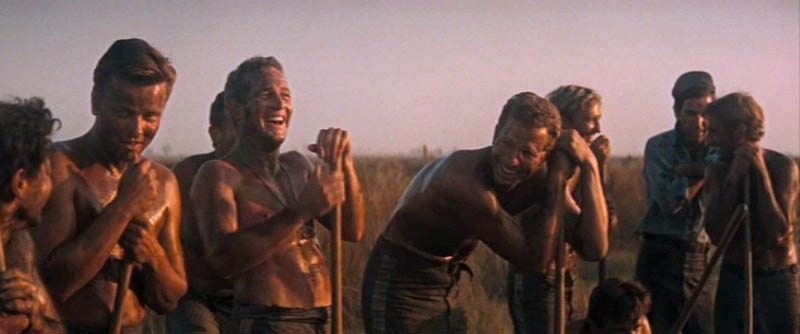
Cool Hand Luke, courtesy of Warner Brothers People say that what we’re all seeking is a meaning for life. I don’t think that’s what we’re really seeking. I think that what we’re seeking is an experience of being alive.
Joseph Campbell, The Power of MythIt’s fairly common to hear that exercise makes one feel alive. LeBron James has said it. Jane Fonda has said it. That annoying guy at your gym has probably said it. It’s also easy to gloss over such a cliche turn of phrase. If I’m breathing, I must be alive, right? What else would I be? Yet, I sort of know what they are talking about. I know I’m a living, breathing, conscious being, but I also seek aliveness.
So how might exercise help us to feel alive?
More feeling
Exercise wakes you up. Like an ice cold shower or a BOSS Iced Double Espresso (起きてる?), cardio enlivens your senses and places you firmly into your body. Blood circulation and a cocktail of feel-good chemicals help yank us out of our thoughts and back to the physical plane. The trouble is it doesn’t last. With any positive change of chemistry (I’m looking at you, first beer of the night), we can’t help but want more. Running around the block turns into marathon training. Runners high can help to bring you back to reality, but it’s not sticking around for long.
More spontaneity
Exercise can become a platform for finding flow: control of attention that can turn anything from sawing a log to swimming across the British channel into an optimal experience. Ideally, we don’t get distracted and find ourselves totally immersed in the doing. This is spontaneity. This is dancing like no one is watching. This is noticing an hour has passed in what felt like minutes. Unfortunately, we can’t stay concentrated forever. Like endorphins, flow eventually flushes out of our system.
Less fear
Pushing through fear can also make you feel alive. I’ve always felt mildly scared and uncomfortable scuba diving. When I think of diving, I think of disorientation and claustrophobia rather than the stillness and beauty that most people talk about. But when I acknowledged these fears and got back in the water (with sharks), I found myself feeling more in control of my mind and my body.
Some control
Although we can’t expect to stare down new fears every workout, perhaps more control and agency helps us feel alive? Alan Watts suggests that total control is no fun but some control is what we are looking for. Like descending down a mountain or getting into a romantic relationship, “we always love controlling something that’s not really under our control.” Our girlfriend could decide to break up with us. The bike could skid or slip. That’s the game. That’s what makes life scary. But that’s what also makes life feel alive.
Less dead
Our persistent, dogged drive to feel alive may stem from a desperation or concern about death. If someone doesn’t fall in love with us, or invite us to that party, we might just drop off the earth or fade into a fine mist forever. So we exercise to not only feel alive, but in an attempt to clear away all the thoughts, feelings and beliefs that make us feel dead. Children and dogs never seem to have this problem. Nothing is really impeding their aliveness or concerning them about their life on earth. They don’t feel pressure to prove it. They form a living, breathing example that being alive is a natural, simple fact. Ordinary. And not something we should be trying to game or control. Paradoxically, as soon as we place conditions on aliveness, we’ve lost it.
-
A discourse
I don’t want to get up.
But you do, don’t you? You do want to get up. You even promised yourself you would get up last night. And 5 minutes ago. And 10 minutes before that.
It’s cold out there.
A dumber, more obvious statement has never been uttered. I know it’s cold. You know it’s cold. Everybody knows it. What you are saying is, it should not be cold this morning. Or perhaps that it’s unfair that it’s cold. It is none of those things. In fact, even the word cold is slippery, and I wish you didn’t use it. Even the letters of the word cold seem to shiver when they come out of your trembling lips.
Well, it’s damn cold and it’s reasonable for me to curl under the covers for a few minutes.
No one in the world thinks that’s a reasonable thing to do. Who are you talking to? Who is making this order? Who thinks it is reasonable? Who wants to stay under covers and why? Have they ever considered what would happen if they did go back to bed? Have they played out that scenario? Or have they not thought that far? Have they – Oh never mind, you’re asleep again.
What’s the point in running?
You know, some people never ask these resentful questions. Some people have already returned from their run and their mind has moved onto the next thing. For them, the run was neither important nor a waste of time. It could not be categorized. But for you, you demand more. Like a star athlete dreams of medals, you dream of meaning. You obsess over reason, and if an activity has a foundation of logic, you love and caress it, and you are quick to become troubled and frail if you can’t find it.
It’s raining. I shouldn’t run in the rain.
You can and you should. To run in the rain is no different than running in the sun, and perhaps even better. Like I said before, as soon as you have considered this activity as something holy, you have strayed down a dead end path. To run in any conditions is as ordinary as a grocery store or a fallen branch from a tree. Of course, that’s the same for everybody.
Look, the fact is I’m not so good at running. Look at how my foot scuffs the pavement. Look at how I sweat so easily and get red in the face.
Ah now we’re talking man! How long I have waited to hear these sweet words. And for the first time, you’re right. You are neither fast nor graceful. You lope like stray dog. But you have recognized there is more for you to do. You should run as often as you can – without overdoing it of course. The more you run, the better you shall get. And soon enough, you will be admired for it, and you will find your question embarrassing.
I think I’ve lost some weight from running. I love running.
How did that happen? How quick you were to leap from hatred to ecstasy. Where was the middle ground? I turned away for a second and suddenly you are a war hero. How did that happen? How can you say such a thing seriously, and with a smile on your face no less!
Well look, I’m in better shape aren’t I? Lots of people run to lose weight.
You fearful creature. You will live longer and easily if you give up your obsession with something that was never yours. Do you comment and obsess over the weight of your neighbors dog? Your body is no different. Like this dog, you should note its appearance briefly, give it a pat and perhaps give it a compliment once in a while. But any more stress or thought paid to it is sheer madness. The dog is not yours, never was and does not pay you much interest either.
Inspired by Of Human Freedom – Epictetus
-
Subscribe
Subscribed
Have a WordPress.com account? Log in now.

