-
All purpose cheer – Touring around Taiwan by bicycle
Although it wasn’t how I usually explore a country, riding 950km around Taiwan with 40+ strangers was a vivid experience that rekindled my love of travel. Here are a few of my observations.
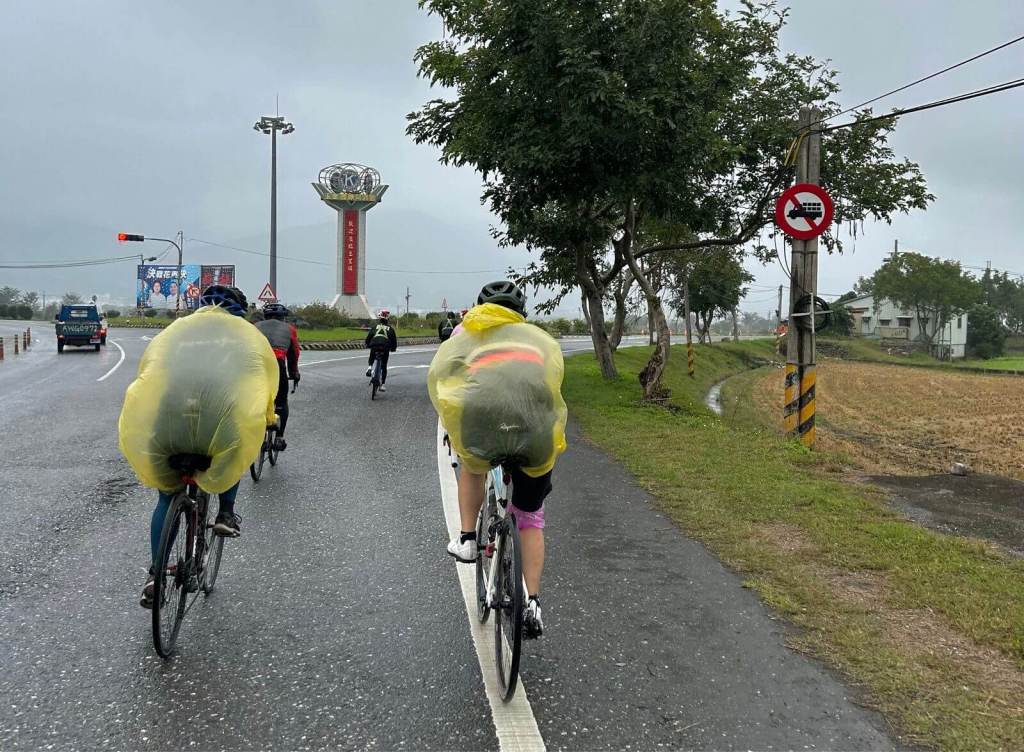
December 28, 2023 @ 3:31pm – Lehe Village, Taiwan Time
I’ve never travelled in a large group. For everything to run smoothly, everyone needs to stick to the schedule. Phone call to the hotel room at 6am. Breakfast at 6.30am. On the bikes at 7.10am. If you sleep in, you miss breakfast. I think of myself as pretty organized, but I was surprised to find myself one of the last people to get to the breakfast hall in the morning. Was I really that slow? At first I felt annoyed and rushed. A schedule can put some stress on you if you fall behind. But since logistics make up a big part of travel, when things are decided for you, it frees up a lots of mental bandwith. As long as you are on time, you can relax.
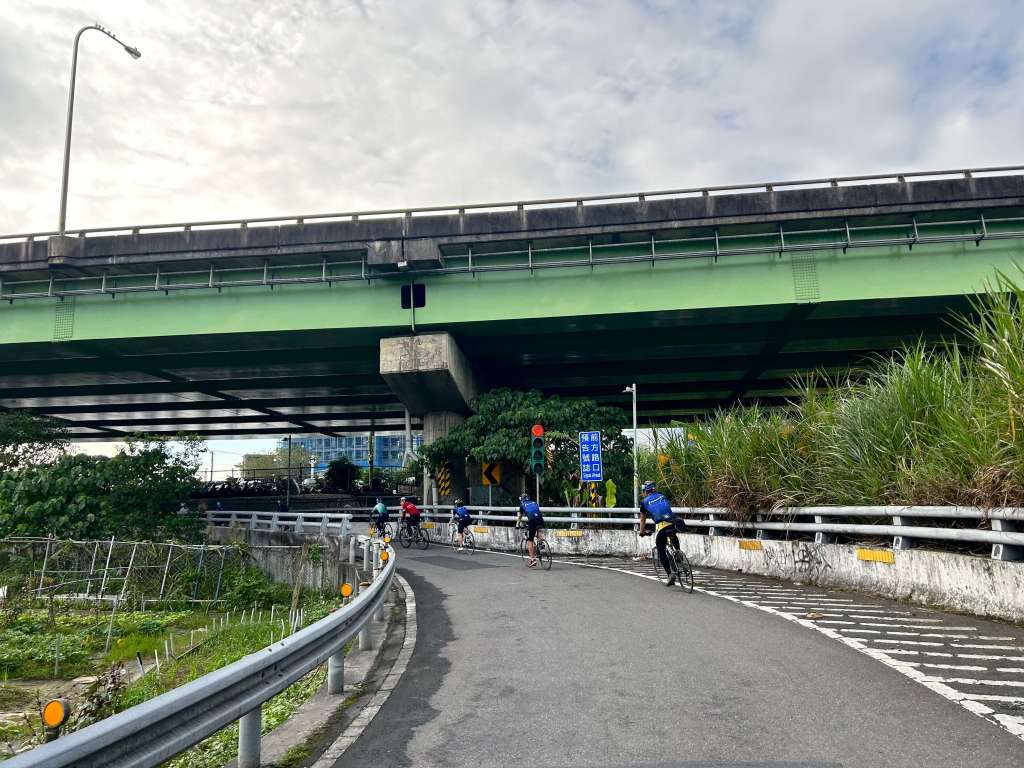
December 30, 2023 @ 3:26pm – Sanzhong, Taiwan Focus
When you’re riding a bike by yourself, or in a big messy peloton like we were, you need to concentrate. If you hit the wheel in front of you, you’re going over the handlebars, or worse. But after hours and hours of cycling, day after day, concentration is bound to dry up. Once in a while I found myself grasping for my brakes or swerving around a potholes. My concentration worsened when I was bored (long straight road) or when I was really uncomfortable (too hot).
Interestingly, my concentration improved by itself when it started to rain, or when the road started to twist downhill. The cycling might have been a bit more difficult, but it was much easier for me to focus. Maybe this was because the task was a better match to my capability. But on a 950km+ round trip, you can’t avoid long stretches of road. To help improve your focus, you can give yourself something to do. It could be a simple intention like “I’m going to ride safely down this hill” or “I’m going to smoothly stay close to this white line.” It doesn’t need to be a fanciful game. Your attention will inevitable drift away, but you can always come back and you’ll find yourself much more focused, no matter what the weather or the road is doing.
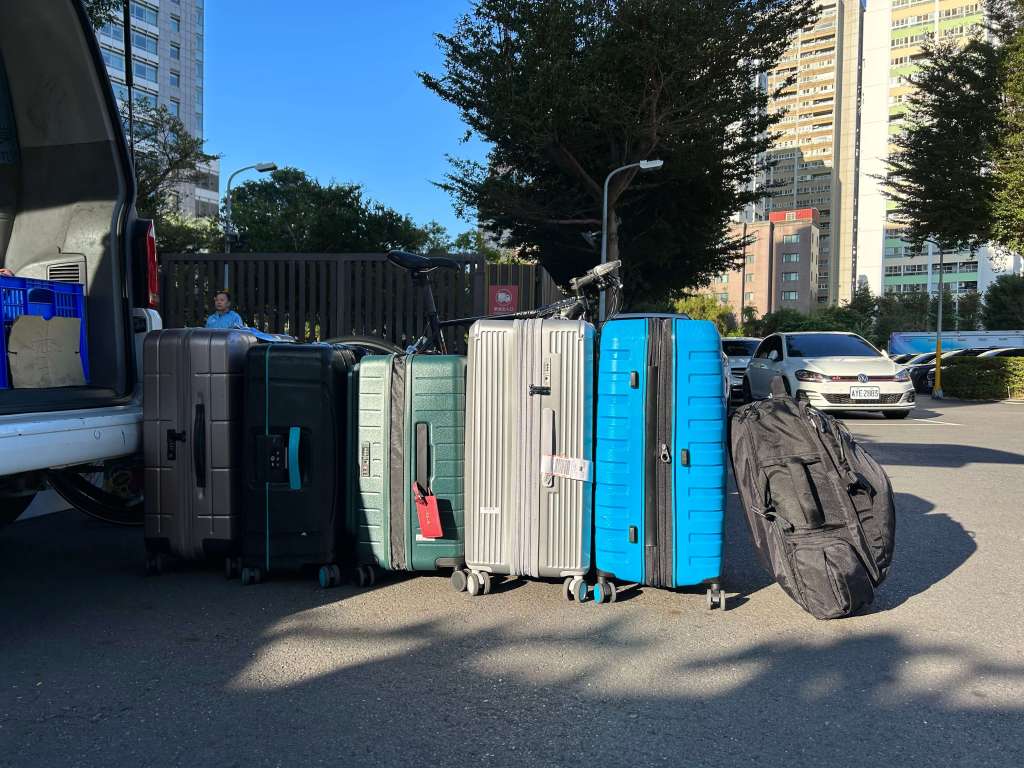
December 24, 2023 @ 8:14am – Taichung, Taiwan Opinions
“How is it bad? If I weigh the statement correctly, what harm can it do me?”
EpictetusJudgements are like little opinions or evaluations about what’s happening in front of you. Something happens and we respond. The sun glares off a puddle. Your jersey sticks to your back. Your socks are hot and sweaty. A judgement is passed automatically. “Not this again.” “Please no!” “I wish this wouldn’t…” When someone complains out loud, you are hearing their assessments of what’s in front of them. “Oh this looks like it’s going to be a hard hill to climb” or “wow so many cars on this road, when are turning off?” Every minute judgements trickle out of us quietly, usually without us noticing. They sizzle and crackle, charged with positivity or negativity. Judgements can make your time on the bike really miserable.
One way to help to quiet down this running commentary is to try and notice what’s actually going on. Let’s say you’ve got a flat tire and you’ve pulled over to the side of the road. In 5-10 seconds you’ll be able to see that you’re overheating, your nose feels burnt, your shirt is sticking to your back and there’s a lot of traffic noise. These are all happening. And you are probably commenting on all of these things. You probably don’t have a chance of stopping the traffic but you can control your opinions.
Of course, we judge people too. We form snap judgements very quickly. We might say to ourselves that someone is a certain kind of person, and this prevents us from really getting to know them. We might think we are being friendly, but it’s really superficial. We are better off making objective notes about people, and deprioritizing the judgements (or discarding them altogether). Rather than noticing a ‘weird old guy’, we could instead note down that he’s a man in his 60’s, traveling alone and doesn’t talk much. Leave it at that rather than anything too negative. On one of the last lunches of the trip, I sat next to a couple who I had never really even noticed. I had clearly made a judgement about them early on and blocked them out. I just didn’t think they spoke English and therefore hadn’t bothered to interact with them. They did speak English, and turned out to be friendly and interesting.

December 26, 2023 at 12:52pm – Chaozhou, Taiwan Encouragement
A few times a day, people would see us riding past, stop what they were doing and smile and shout out Jiayou! I was told this could be loosely translated to something like “go on” or “keep going” or something like that. It didn’t matter where we were or who it was. It could be an old woman scrubbing dishes or little kids walking home from school. I started to feel like the whole country was smiling at us, gently encouraging us to ‘go on’. In comparison to Taiwan, I think of Australia, my home, as bigger, brasher, louder and less personal. Would Australians smile and cheer us on with such plain good-will? What would they say? I couldn’t think of a direct translation of words and attitude that would fit.
After the trip, I was walking with friends to my local pub and a car sped past with a man loudly jeering out the window. That’s what I think of when I think of Australia. All noise, no connection. As the trip progressed I started to think of Taiwan as a more introverted country. I related to this. I felt like the Taiwanese, especially older folks in the south were quite happy with themselves. Tending to their gardens or homes or children comfortably and quietly.
December 30, 2023 @ 12:53pm – Shifen Village, Taiwan Words
When you don’t understand the language of a country, you’re left alone with raw noises and sights. Cycling through a busy city still feels intense, chaotic and colorful, but it’s naturally ‘quieter’ in your head because you can’t read any signs or overhear anything meaningful. It can be confusing, but it’s also less stressful. I noticed the same thing with my group. After a rainy afternoon of riding, we arrived at hotel and there was the usual rush for room keys and luggage. Everyone is shouting at each other and jostling toward the lift, but it’s all just noise to me. It struck me that this sort of scene would usually be really overwhelming, but with the mandarin floating over my head, it was easy to stay calm. The downside of course is you can’t do anything. You’re like a helpless baby relying on the kindness of your new friends. Restaurant menus, road signs and briefings would have left me stumped if I wasn’t traveling with friendly people who were always offering to translate for me.
December 26, 2023 @ 11:23am – Wanjin Village, Taiwan Thanks
Guilt is a horrible thing. It can seep into any activity and leave you feeling bad, no matter what you’ve actually done. When we travel, we can feel guilty about lots of things. The impact on the environment. Ignorance to local traditions and customs. Inequality and the position of power you might have as a foreigner. But does this guilt serve any purpose? Instead of feeling guilt, you can approach travel with a sense of gratitude. If you’re lucky enough to step on the ground of another area of the world, instead of saying sorry you can instead say thank-you.
I don’t know any mandarin, but I was encouraged to learn the word xièxie. I found myself saying it a lot. At the restaurant and at the hotel but also quietly in my head. You can say thank you to anything. The grass you’re stepping on. The food you’re eating. Thanks to this architecture. Thanks to the sun. Thanks to the rain. The company. The air you’re breathing. This fresh peanut mochi. Whatever. Rather than feeling guilty that you are taking these things, see that the country is endlessly giving them up freely. The air keeps coming. The waves keep coming. Travel can be about receiving rather than taking. And there’s a whole lot of stuff to receive. So don’t feel bad about it, just remember to say thank you.
Subscribe to Buddha Bike on Substack
-
Fighting discomfort – One year of Buddha Bike

December 30th, 2023 @ 12.56pm – Jilong River, Pingxi District, Taiwan Since January 2023 I’ve written 45 posts on topics like pain, gratitude, morality, free-will, consciousness and discipline. I’ve tagged every post with a ‘ing’ category. So far I’ve used: Writing, cycling, dreaming, eating, lifting, moving, racing, reading, rowing, running, speaking, surfing, swimming, thinking, working.
But wherever possible, I try and relate what I’m talking about to triathlon.
Here’s my directors cut for the past year, roughly organized into themes.
Moving
- Animal immersion – We should take advantage of our innate understanding of animals, like actors do.
- Fighting the water – We tend to fight the water when we swim, rather than let it do the work for us.
- Keeping in touch – Exercise (especially outdoors) strengthens your senses as well as your muscles.
- Mirror muscles – Social media encourages us to sculpt our bodies into artificial and unhealthy shapes.
Thinking
- Partly cloudy – Reflecting on bad moods and some ideas on how to prevent them.
- Conditions – Conditions are directly interfering with your happiness
- The objective professor – We will do almost anything to get out of something painful (like learning Spanish)
- Excuses – Judgmental thoughts are usually what prevent you from starting, finishing or continuing your exercise.
Feeling
- Swimming with discomfort – Cold water gets more uncomfortable the harder you fight it.
- Pain face – Cyclists should tell their mind to shut up, not their legs.
- Nowhere to Hide – Rowing demands a lot from someone who is not a practical ‘sensing’ type.
- Toughing it Out – Comfort seeking is built into us, but it is ruinous.
- The Terrible, Horrible Wave – When fear isn’t faced, it makes everything (including surfing), much harder.
Eating
- Eating until you are 100% full – Reflections on 5+ years of obsessive calorie counting
- Eat first with your stomach – Throw away your calorie counting app and rely on something infinity smarter – your stomach.
- Filling in the gaps – Before you try your next diet, see if you can stop automatic eating.
Racing
- Peace & War – What’s stopping us from always being ready to race?
- The Trouble with over control – How to avoid post-race disappointment
-
Good at productivity
El Salvador – Dec 3, 2021 at 10:17 AM Whenever we pluck the fruit of creativity from the golden tree our other hand plucks the fruit of destruction.
Robert A. JohnsonThe body is bad at productivity. But we’ll show it what to do. Eyes open. Brain on. We are pretty good at ignoring hunger and tiredness and sadness if we really try. Yes, okay, there’s burn out, but that’s really a temporary thing. You can always start being productive again.
Tim Ferris showed us that there are ways to get productivity wrong. Being efficient, he says, is “getting good at a certain task, whether or not it is important.” Efficiency is the wrong way to be productive. Instead, we must be effective, and do what’s important.
We can be good at linking our happiness to the success of our business or the results we achieve at our job. At the end of the quarter, or the year, we know exactly how much we’ve produced. We know if we did a good job or a bad job. Guilt and shame can be very helpful in letting us know that we didn’t produce enough. In some cases, we weren’t efficient or effective. But that’s good to know. Next year we’ll put more effort in. We’ll step it up. We are very good at feeling guilty.
In 2022, I spent some time in El Salvador. My plan was to take a break between jobs. I’m not sure where that idea came from. Maybe I was a little burnt out. But instead of doing nothing, I reminded myself that I need to be productive. Any little quiet gaps in the day, even when I thought I finally had nothing to do, I always managed to open my laptop and find something.
Some days you wake up and you’re really not feeling it. Our energy does seem to wax and wane. But with the rise of productivity tools like Notion, we are good at always improving how productive we can be. Maybe we learn how to use tags to organize our thinking and quickly find old notes. Maybe we use large language models so we can finish our work faster. We are very good at finding new tools that we can use to our advantage. I’ll admit, it can be tiring to be machine-like, and there’s always the worry that the machine can do it better. But I think it’s fine for now, as long as our productivity is going up.
We are really good at being productive, rational and orderly. These things seem to fit together nicely. This is the public face that we present to others. We turn up on time, say the right thing and get all of our work completed to a good standard. Of course life is made up of opposites, and there is another side to this squeaky clean image. Sometimes we can’t help bursting out with a rude remark, a filthy curse word or do something dirty and gross. But we are very skilled at hiding that sort of behavior. That type of thing isn’t going to help us to reach our goals, or be a better person, so it’s really best not to talk about it. Ultimately, we are in charge of ourselves and the decisions we make.
We’re very good at productivity these days, that’s clear. But we can put down the efficiency and effectiveness and see that there’s always work to do. And work can be fun. Work is just what we can do during the day with our time and energy. In fact, we can’t help but work. We are natural workers. Sleeping and eating just happens. Work just happens too.
Once you finish feeling bad about how productive you were this year, get to work.
-
The trouble with over-control
El Salvador, December 10, 2021 @ 6:58 AM “To win a dog sled race is great; to lose, that’s all right too.”
Old eskimo saying, Joseph Campbell – This Business of the GodsAny big endurance race like Iron Man, is a psychic and physical explosion. Athletes have been strengthening their bodies and minds for months, maybe years, and in a blur of cheering, panting and isotonic gels, suddenly it’s all over. Depending on their goal, they’re either victorious, defeated or an unsatisfying in-between.
Whatever the result, there’s only one thing left to do. Post on social media. Sharing a race report with your buddies is a time honored tradition. How did it go? How did you feel? Which was your strongest leg? What the hell happened in T2? The bystanders have seen the results, now they want answers.
In Australia we’re well into the summer racing season, and race reports trickle into my newsfeed at the end of every weekend. There’s always the usual remarks on the weather, the different kinds of luck they faced and thank-you’s to all who supported their training. Their words can be surprisingly honest and vulnerable. Thoughts are more lucid and emotions are rawer after a race. They’ve left 95% of themselves out on the course, and the last 5% is squeezed out into a paragraph on Instagram.
Unfortunately, the race doesn’t always go as expected. The tone is often one of disappointment and frustration. A triathlete I know who’s finished multiple Iron Mans reflected that he’s “come up short almost every time.” It’s a shame that a bad result can throw a dark shadow over all that effort. It’s a bit hard for me to read, especially after logging many miles together in the pool or on the bike. I’ve seen how hard they’ve trained, and I want them to get the result they wanted. But I’m bias, and a more objective person might be thinking “it’s an iron man, why wasn’t finishing good enough?”
It could be that the self-control and discipline that get athletes in the shape to compete in a long distant event, backfires when they face truly uncontrollable situations. Here’s a couple of examples of over-controlling ruining stuff.
Over-control takes out the joy in things
When you’re training for a race, fixating on a perfect end-state ruins the actual work. For example, eating, a pretty damn enjoyable thing to do, starts looking more and more mechanistic. We’re chopping up stuff and shoving it into a boiling cauldron, waiting for a magical belch of smoke that will propel us across the finish line. A swim in the pool or a long run should really be treated as their own separate thing. Even if there’s an upcoming race, a training session doesn’t have to exist purely as a means to an end.
Over-control makes you rigid and reactive when plans change
I fall into a similar trap of trying to control my life at work, the same thing that athletes think they can do on race day. And the results are the same. I approach a new project with the flimsy hope that everything will unfold in a predictable way that benefits me. A project (or race) panning out exactly like you want it is a bit of a selfish goal, isn’t it? Even if we’re able to control all those variables and brute force our way to the end, the accomplishment will be a hollow one.
Over-control is self-defeating
I also do something similar in my personal life. It’s hard to make friends when you move around, especially in your 30s and when you tend toward introversion. So naturally I’ve made it a goal to make new friends. But it’s never worked out. By desiring this abstract ‘great new friendship’, I’ve found it impossible to make it happen. The more of a priority I made it, the harder I found it to meet new people and the more disappointed I was with the people I did meet. Interestingly, when I gave up on these impossible ideals, I started to meet new people.
Doing what’s in front of you with precise and genuine seriousness, tenderly, willingly, with justice.
Marcus AureliusIdeally, we finish the race with a good result and feeling great. Next, a bad result with a smile is nearly as good. But it’s far more common to get a decent result but be unhappy about it, or a complete blow-up. We’ve seen how over-control can backfire, so it’s worth checking in occasionally on how hard you are trying to bend an outcome into reality. I’d like to see a world without any miserable race reports. I want to read a race report that involves no expectation, sense of control or selfish goals. I want a race report that sounds like it was written by a troglodyte: “Bike hard. Run strong. Feel good.”
-
Running wild
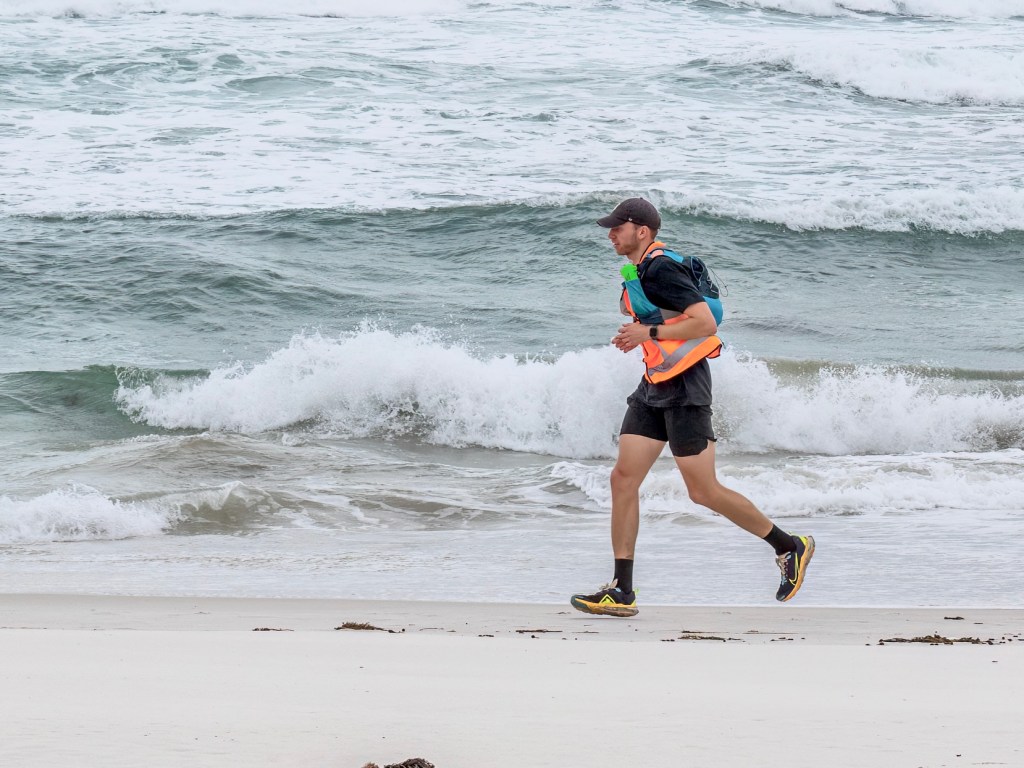
Wilsons Prom, May 6 2023, 9:41am Ever since I read Born to Run by Christopher McDougall I’ve been thinking about it. I’ve also been running. Most of the time, I’ve run along the river near my home, but also around closed city circuits with thousands of people and on pristine beaches in the middle of nowhere.
There’s a Chinese proverb that describes four basic postures of human activity. Walking, sitting, lying and standing. As for exercise, running feels a bit like the fifth posture. We know how to do it when we are kids, it requires little to no equipment and there’s no rules or regulations attached. Just run. It’s also natural. It’s a bit of primal behavior that can easily be woven into your week. Like gardening or camping, running serves a valuable function of connecting us to a simpler, uncomplicated world before alarm clocks and spreadsheets and ‘X’.
I agree with McDougall that we’re all natural born runners, but what does that look like?
Listening to your feet
She judged her speed by the tickle of wind on her skin.
Born to RunThe kids accelerated when they felt frisky, downshifted when they didn’t, and caught an occasional breather under a shady tree.
Born to RunYour body is an intelligent, finely tuned instrument. And your feet are no exception. Unfortunately, we tend to forget they exist. We plug our ears with loud music and forget all about the two very sensitive organs attached to the bottom of each leg. Instead, we tend to focus on the workout or the latest sports science approved technique. Ignoring, battling or overriding natural signals from our bodies is a sure way to run yourself into the ground.
Turning down the throttle is also a tried and trusted way to maintain and persevere your energy as you run. It’s like squeezing a tube of toothpaste. If you squeeze desperately and mindlessly, you’ll get a spurt of it and have to readjust to get the rest. If you are careful and watch what you’re doing, you’ll be able to get it all out in one go. Energy is always a finite resource, but if managed right you won’t run out of it as quickly.
Chasing antelope
50,000 years ago, a hunter would chase an antelope on feet. Their attention would be mainly focused on their target, but also on their bodies; their thirst and that sore left ankle that was playing up again. They would also need to be aware of their surroundings. All animals from sea anemones to giraffes need to have these two different ways of looking at the world. Iain McGilchrist explains that if an animal is “only paying one type of attention, it will not survive because it will become prey to another creature very quickly. It needs to have a different attention, which is broad, open and sustained.”
Generally, we suck at that second kind of attention. But it can be helpful and pretty easy to practice while running. A simple way to do this would be to try and check in with what’s above your head. You don’t need to look, or think about it. Just check in. Get a sense of how far above your head branches are hanging. Are they close? Or is there sky? Are there noises up there? What kind? It’s easy. Your body is very good at this.
Take advantage, give up control
Take what comes to you and take the advantages out of it rather than resisting it and trying to make it into something it isn’t.
Iain McGilchristA man never rises higher than when he does not know where his road will take him.
NietzscheNever know when it will end. You can’t control it. You can only adjust.
Born to RunI’ll admit it. I track my runs with an Apple Watch. I even glance at it from time to time. But although I find stats like distance or duration helpful, anytime I’ve properly dug into the data (and at this point I’ve got a lot of it), I can’t say I’ve ever been struck by an insight that’s improved or even changed the way I run.
If you’re looking to run further, faster and have more fun doing it, I’d focus on mental flexibility rather than more technology. No matter how good your computer is, it’s not going to prevent a bad mood, a wave of fatigue, a flash of rain or a pothole where you least expect it.
Technology can plan every turn of your route, keep your heart rate beating like a drum machine and shave seconds of your PB. It extends human control, and a little bit of control is fine. But it doesn’t have all the answers. It’s better to embrace the chaos and uniqueness of every run rather than fighting against it.
-
A Meaning Vacuum
A selection of thoughts from the last 7 days.
Going Infinite properly introduced me to Sam Bankman-Fried. It’s a well written account of a shit-show that only humans in the year 2022 could pull off, but I was most interested in Sam himself. He’s undoubtably a fraud and a criminal, but also seems to be devoid of what Jung called the feeling function.
- To feel is the sublime art of having a value structure and a sense of meaning – where one belongs, where one’s allegiance is, where one’s roots are. – Robert A. Johnson
- He doesn’t understand the concept of beauty or even the point of happiness. As he wanders around playing puzzles, tapping his leg, judging everyone and committing financial crimes he seems to vacuum meaning out of the world.
- On belief: “Didn’t see the point in anyone trying to imagine” / “And if you can’t think your way to a belief (why bother)”
- Art & religion: “Felt nothing in the presence of art. He found religion absurd.”
- On human beings: “Sam could read others fine. The problem was that Sam did not care”
John J. Ray III is a clean-up expert who is appointed as the FTX CEO once they file for bankruptcy. He is tasked with the unenviable job of finding the billions of dollars Sam lost. What was interesting was that he didn’t talk to Sam.
- John Ray had learned a lesson the hard way. One of the crooks he’d replaced engaged him in conversation and then lied about what had been said. In the first few days after he signed the company over to Ray, Sam reached out to him, over and over, with these pitiful emails. Hey John, I’d really love to talk. Ray took one look at them and thought, No way, José. – Going Infinite
You can’t trust the guy who made the mess in the first place. If you want it done properly, you’ll have to figure it out by yourself. I think this is a great principle when you are dealing with yourself. When you are feeling particularly lazy or gripped by a foul mood, you need to treat your own thoughts like a hostile information source. You’ll want to listen to them, but you shouldn’t and you won’t be able to use them as evidence.
Ryan Holiday’s book about discipline has created more questions than answers about the topic for me. What actually is it? How do you get more of it? Should we have more of it?
Let’s say I’ve been swimming for nearly an hour in the pool. The set asks for 600m more. After 200m, I’m thinking of getting out. What exactly is the force that keeps me in the pool for the remainder?
What if discipline is simply the removal of self imposed barriers? What if discipline is simply saying “why exactly can’t I get up at 5am – what’s stopping me?” “What exactly is the reason I should stop this run early?”
Discipline is something that I’m pretty familiar with in my own life. I seem to respond well to it, but I’m also somewhat aware that it’s a dead end. I’ve written about chasing discipline with my diet and where that eventually leads. There were positives and negatives but ultimately discipline doesn’t solve all your problems like you think it will.
“Thought is peculiarly individual, communicable only in words, and establishing barriers between the fool and the sage whereas emotions unite.”
R.H Blythe
“The man who believes that the secrets of the world are forever hidden lives in mystery and fear. Superstition will drag him down. The rain will erode the deeds of his life. But that man who sets himself the task of singling out the thread of order from the tapestry will by the decision alone have taken charge of the world and it is only by such taking charge that he will effect a way to dictate the terms of his own fate.”
Cormac McCarthy, Blood Meridian
In the forest there are 2000 trees. But if you look at it closer and accurately, every tree is a personality. No two trees are the same. – Marie-Louise Von Franz
One final dig at Sam Bankman-Fried. Another thing that made him different to most was his “willingness to assign probabilities and act on them.” Although he’s an extreme case, the world does seem to encourage us to spend more time thinking rather than feeling.
The danger with a statistical approach to life is that although it might help your ability to make snap decisions or to get ahead in business, it drains out the meaning. “Reality consists of an enormous amount of unique” beings and stuff, and slapping simple labels, measurements, weights and probabilities turns it into a dreary video game.
A lack of meaning is why most people rock up to therapy in the first place – complaining that there’s nothing unique or special about their life. For Sam, for whatever reason, a lack of meaning didn’t seem to be a problem worth solving.
-
Discipline is Destiny – Book review

The Stoics, like the Buddhists, liked making lists of stuff, and virtue, what they considered “the highest good”, is actually four different things. Wisdom, courage, temperance and justice.
Ryan Holiday has decided to write a book about each of them, and I’m going to share what I think about Discipline is Destiny, the second in the series, detailing the virtue of temperance.
The positives? Ryan Holiday is a smart, productive dude, and he reads a lot of books. Any book you pick up by him will have a high chance of containing an interesting quote, anecdote or lesson from history. As much as I’d like to say that I’ve read 1300 pages detailing the life of Robert Moses, it’s easier to peer in via an airport paperback. Discipline is Destiny is no different than his other Stoic Buffet™ books, and I’ve listed out my favorite quotes below.
The negatives? Ryan’s industrial strength reading and note-taking ability becomes his weakness, as he struggles to weave together all these nuggets of wisdom into a coherent whole. Like his mentor Robert Greene, he’s a systematizer. He looks for patterns, connects the dots and applies scaffolding to make sense of life. But unlike like Yuval Noah Harrari, Nassim Taleb or Alain de Botton, nothing really fresh emerges from the system. This book felt strangely dense yet fluffy at the same time. The sporadic insights from Ryan are index-card sized. What is missing here is a book-sized insight. Without a central argument, or even strong chapter structure, contradictions start piling up. On one hand you’re nodding your head at a piece of wisdom, and at the same time glancing up at the chapter title and thinking really?
Toward the end of the book, Ryan writes that “the four virtues are about instilling character – good character- so that at the critical point, a person’s true nature kicks in.”
That is an interesting idea, that I wished was explored more. It’s not like some self-help author invented the idea of discipline to sell books. This stuff, along with the capacity for courage, love, wisdom etc is in us already. Which makes you look at the instructions and examples from famous people a little differently. Did they actually know what they were doing? Or did that particular virtue come easier to them? Is the sword-saint of Japan or a five star general doing something special, or just being themselves, in a way that looks special to the outside eye? Some of the characters here clearly worked extremely hard to stay disciplined in their fields, others simply don’t seem to have an off-switch. Even Ryan is quick to say that none of them (the Queen included) is perfect.
Off-seasons: A feature of athletic life that those of us in other professions should consider adopting.
Absolute activity of any kind leads to bankruptcy. – Goethe
Epicurus had a surprising definition of pleasure: “sober reasoning, searching out the motives of every choice and avoidance, and banishing those beliefs through which the greatest disturbances take possession of the soul.”
Marcus Aurelius tells us to chill: Don’t feel exasperated, or defeated, or despondent because your days aren’t packed with wise and moral actions.
Freedom is an opportunity for self-discipline. – Eisenhower
On Theodore Roosevelt’s strenuous life: “While in the White House, I always tried to get a couple of hours exercise in the afternoons.”
Word I hadn’t heard before, and I’m unlikely to ever hear again: “Military commanders speak of the value of celerity.”
E.B White turning down an invitation to a prestigious commission like an absolute boss: “I must decline, for secret reasons.”
“When you have nothing to fear, your mind becomes dull.” – Floyd Patterson
“I have taken more out of alcohol than alcohol has taken out of me.” – Churchill. Can you say the same? All that stuff you do/eat/drink/say every day. What are you getting out of it?
William Thalhimer, a jewish businessman reflecting on dealing with an anti-semitic: “I came out here to purchase that piece of land. I got the piece of land. It belongs to me now, not to him. That man can go on cursing me as long as he likes. I have that land.”
Money is exactly what he deserves. – Musonius Rufus
“Why didn’t you do your best?” Admiral Hyman Rickover asking Jimmy Carter a particularly hard interview question.
Cleanthes, a stoic philosopher, came upon a man berating himself for some failure. “Remember,” he said kindly, “you’re not talking to a bad man.”
“Lift me up and hurl me, wherever you will. My spirit will be gracious to me there – gracious and satisfied.” – Marcus Aurelius
-
Toughing it out
Laziness is contagious. We’re supposed to just nod along like it’s normal that everyone’s just surrendered to a banal existence?
Nyad (2023)“I get tired of sitting on cushions. Cushions in my car, cushions on the chairs at home, everyplace I go they have cushions.”
Lou GehrigI’m running late for a group ride. And I just realized I didn’t pack my helmet. At this point, it’s very easy to call the whole thing off. It’s a valid excuse, and I’d definitely get to jump back under the covers. However, I choose the ever so slightly harder path, rush to get my helmet, and made it to the meetup point with a few minutes to spare.
There’s nothing particularly disciplined or uncomfortable about what I chose to do there, but these small, forgettable moments hold a great deal of influence on whether we actually stick things out. Diets, workouts, projects, relationships, can all die from the smallest wounds.
Marcus Aureliuus famously questioned our need to huddle under the blankets and stay warm, but comfort seeking is built into us. Take a look around. We prefer comfort wherever we can get it, from the daily routines that make up most our lives to the support and familiarity we seek from friends and community. You’re probably even reading this from a comfy chair. So if we’re ever going to stick to a diet or workout, at some point we’ll need to face this wired-in tendency for laziness and comfort-seeking.
The good news is there’s no need for extreme feats of endurance. We simply need to find small ways to stop quitting and giving in when things get tough. In every aspect of lives, we need to tough it out.
A lot of adulting boils down to being okay with what’s laid in front of you. We can complain about our responsibilities, but eventually we do them. You might not get excited about filling up the petrol tank, budgeting or getting your teeth cleaned, but at some point you stop resisting and you accept the responsibility. It wasn’t always like this though. At some age in your life, cooking dinner for yourself would have been a painful, herculean task, and now you just do it. Why should exercise be any different? We’re adults when it comes to vacuuming, why can’t we be adults about exercise?
We’ve all got a picture in our minds of what disciplined or discomfort looks like. These pictures and beliefs are usually informed by our upbringing, conditioning or latest action film we’ve seen. We think we need to push ourselves harder or go further than we’ve ever gone before. But that’s performance, not discipline. Toughing it out is simply how you respond to any little moment where you want to give up. Whether we’re a novice, or a professional athlete, any workout will present a number of little obstacles. It could be obvious (a massive hill to climb) or extremely subtle (a niggling scratch on a finger). But how you respond matters. Do you give in? Do you take an easy way out? Do you cut corners?
Taken to the extreme, seeking voluntary discomfort can come across as silly, entitled and masochistic. In Living with a Seal, this taboo is explored in a light hearted way when a well heeled businessman invites a Navy Seal to be his live-in personal trainer. We never learn much about The Seal aside from his love of push-ups and contempt for lazing about. I wanted to know what he was thinking as they go for a run around Central Park in the middle of the night. Did he find this stuff meaningful? Did he enjoy it? Was he laughing on the inside at the absurdity of it all? He’s a man of few words, and we get no philosophy, reflections or even a reason why he’s so disciplined in the first place. The message really did seem to be that simple: discipline and discomfort do some good.
-
Partly cloudy
It’s just one of those days where you don’t want to wake up
Break stuff – Limp Bizkit
Everything is fucked, everybody sucksWhen I’m clutched by a bad mood, a simple question like should I go for a swim? becomes increasingly difficult to answer. My brain goes in circles. Hours before I was looking forward to it, but now I feel different, negative and not like myself.
But with a good habit in place, I can drag myself to the pool even when I don’t feel like it. Predictably, by the second lap, I can barely remember my previous state of mind. Happily deluded thoughts dance in my head (see, it always works out, what was that fuss about?) and like a hangover washing off in the shower, I’m close to forgetting my stern pledge to never drink again. I’d be happy to forget it too, if it wasn’t for the fact that this same, uncomfortable routine has played out thousands of times before.
Isn’t this strange? Shouldn’t the mental havoc caused a bad mood warrant a deeper investigation, or dare I say it, a solution?
Five years ago, I took a stand against a bad mood. I had wasted a weekend feeling listless and loathing for no apparent reason. I then proceeded to waste more time dismantling my brain to figure out where I had taken a wrong turn. Once I felt a bit better, I concluded in a blog post that I had been stuck in a comfort zone and needed to be more aggressive and take more risks. Not a bad course of action, but really just more neurotic chatter. I had thought my way into some internally approved solution and moved on with my life.
You contain multitudes
It only takes a little concentration while you wash the dishes to notice that we are constantly thinking. Marie-Louise von Franz, a disciple of Carl Jung explains how your mood and thoughts interrelate: “You’re in a friendly mood. Then you think of something negative and then you muse about revenge. We constantly switch moods.”1
Our personality changes too. It’s not hard to reflect on all the different people we can be. You might be monk, a benevolent businessman and a hedonistic playboy all depending on context. A bad fight might bring out a different, previously unknown side to our partners. Office Christmas parties are known to feature some hapless employee showing their true (or worst) self. Not only do our thoughts and moods constantly change, but our selves do too. Yet we tend not to notice.
In extreme cases, we might call this shift a possession. In primitive cultures, rituals are conducted where mediums are put in a trance and “certain gods, female or male enter them, and they speak in a changed voice. The god speaks through them. Then they are possessed. They become the horse and the god becomes the rider.” 2Emerging from the trance, they often have no memory of what happened moments ago.
It sounds extreme, but perhaps this is a helpful analogy for the effect of shifting moods. Psychology seems to think so.
Archetypes, Parts & Circuits
Over the past 100 years, psychology has given us some useful tools for peering into the black box of a black mood.
- Internal family systems is a therapeutic model developed in the 80’s that breaks our mind down into various parts or subpersonalities. These parts can take on roles and characteristics that may be adaptive or protective in response to past experiences or current challenges. For example, “firefighter” parts that deal with intense emotions can be seen as responsible for binge eating or addictive behaviors. Author Jenna Riemersma explains that “when our parts… have taken over, we feel like we are the part. When our Angry part is up front, we feel angry, act angry, and speak angrily. We often think we are an angry person. The same goes for Sadness, Anxiety, Control, or any other part. When the part is in control, we have to speak from it. We speak as though we are it.“3
- Jung defined the Anima as man’s internal ‘other’, a “feminine image which guides and shapes the way you relate to women and the world at large.”4 When a man is involuntarily possessed by his Anima, he becomes “spineless, moody, sulky, passive yet overreactive to small slights, indecisive and lost in fantasy, stuck in a fate that his repetitive patterns have chosen for him.”
- Harvard trained Neuroanatomist Jill Bolte Taylor was used to dividing the brain physically, until she had a critical left brain stroke and had to re-learn different parts of her brain from the inside out. She describes the left/emotional brain as a character. “If I get upset and can’t resist calling you nasty names, my Character 2 has possessed my brain and is out of control.”5
When a strong mood suddenly enters us, we become that mood. We believe those negative thoughts are our own thoughts. We’re involuntarily possessed, taken over, deluded, submerged, flooded, immersed, engrossed or like Bolte Taylor dramatically describes as “engulfed by a blinding fog of desperate emotion.” No exaggeration needed.
While these different schools of psychology might have different words for these parts (and endless metaphors for how they behave), both Jungian scholars and brain scientists choose to be curious in the face of debilitating moods.
Bolte Taylor tries to notice her own physiological reactions, “a recognizable furrow in my brow” or a “stiff body posture”. “If I choose to become fascinated when I start feeling prickly, curious about the charge, that is often all I need to deactivate the circuit from running”.6 For Von Franz, her animus can change her mouth and hunch her shoulders up and forward. Weirdly specific, but useful it keeps you in charge. “If you know (something has grabbed you), you can steer it, kick them out or play them and put them aside again.”7
Curiosity huh? Worth a try. But although I can remember where I wrote that blog entry in my Brooklyn apartment, and roughly how I was feeling, it’s impossible for me to get in that same headspace. Perhaps because it wasn’t really me. And maybe tomorrow, for a few hours, I won’t be me again.
- https://youtu.be/v13PUb9sC9s?t=5131 ↩︎
- https://youtu.be/v13PUb9sC9s?t=5066 ↩︎
- Riemersma, Jenna. Altogether You (p. 187) ↩︎
- https://appliedjung.com/anima-possession/ ↩︎
- Bolte Taylor, Jill. Whole Brain Living (p. 92) ↩︎
- Bolte Taylor, Jill. Whole Brain Living (p. 266) ↩︎
- https://youtu.be/v13PUb9sC9s?t=5206 ↩︎
-
Nowhere to hide
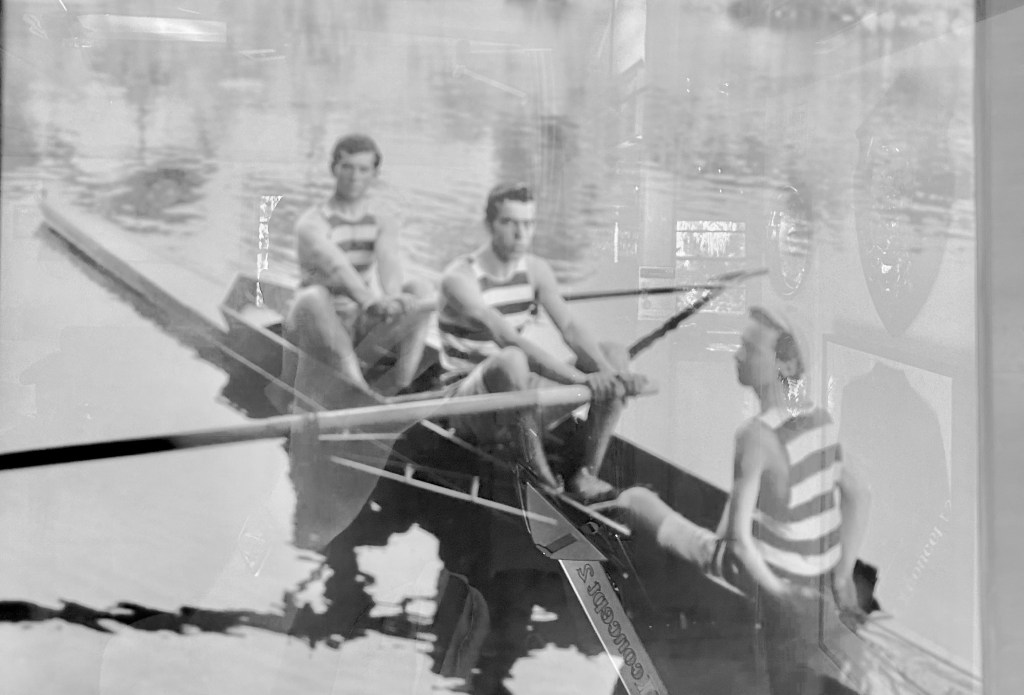
Sensing types are not up in the clouds. Their feet are planted firmly on the ground. They like to get their hands dirty. Talk shop. Sensing types are found in a rugby scrum, behind a bar at a busy restaurant, planting trees in a garden or walking the streets with a nightstick. The Swiss countryside is filled with hearty, earthy sensing-type farmers.
I’m not a sensing type of guy. In fact, it’s likely my weakest cognitive function (how we prefer to interact with the world.)
Swimming laps is something I love to do, but also helps me to get in touch with my immediate surroundings and dial up my sensing. But as an introvert, it’s always easy to retreat when things get tough. You can give up and finish up practice early. You can waste 50 laps lost in thought, with no real repercussion. And although I usually train in groups, these are all ultimately individual pursuits. Recently, I’ve tried out rowing, which is another activity that sensing types love to do. But unlike swimming, cycling and running…
Rowing doesn’t let you hide.
Being present isn’t a nice to have when you’re rowing, it’s compulsory. When you’re rigging the boats, all the details matter. Order, size, colour, space matters. If I take a step out of place, I’m knocking over oars or damaging a hull. I’ve got to listen and look around me constantly. Once you’re on the water, you need to concentrate and row in rhythm with the other guys in the boat. Sensing types love this sort of thing. It’s concrete, practical and when everything fits together, there’s a beauty to it.
But for me, my mind is going absolutely berserk, looking for an excuse or an exit out of there. Doubt, fear, confusion and endless criticism make it uncomfortable to get in the flow. Rowing shines a very bright light on these habits with an exhausting amount of feedback loops:
- Stability in the boat is important. If one oar lifts up too high, the boat is immediately off balance.
- The tenser my body is, the harder I grip the oars. The harder I grip, the harder it is to square the blades, and the more my hands get blistered.
- What matters most is probably keeping in time with the stroke. The feedback for a lapse in concentration is a horrible clang of oar on oar.
- We think that negative thoughts help us to improve, but any thinking at all tends to take you off track. Paradoxically, the thought focus on the stroke takes you out of rhythm.
For brief moments, we find some peace. There’s some encouragement over the loudspeaker. ‘That’s good. More like that.’ You are surprised to find that you are both relaxed and concentrated. You’re not smiling and serene but you’re not frustrated either, you’re in the middle. You’ve forgotten about the time, but you’ve recognized for a brief moment that you really are sitting in a boat on a river.
-
Subscribe
Subscribed
Have a WordPress.com account? Log in now.

