-
Swimming under pressure

October 29, 2020 @ 6:24am – Canberra, Australia I’m lap swimming, like I usually do on a Monday evening. It’s a coached squad and there are six or seven others in my lane. We’re meant to swim about five seconds apart, but we tend to bunch closer, so the person in front is almost kicking in your face. Swimming that close gives you a bit of a ‘draft’ and uses less energy.
We order ourselves fastest to slowest, which generally works well. I’m usually the second slowest. If I miss a few weeks or have an off-day, I’m dead last. When we’re asked to swim “fast,” I only need to keep in touch with the person just ahead of me, someone slightly quicker. If I were near the front, I simply couldn’t keep up.
And that’s exactly what I found myself struggling with. We were meant to be swimming at a moderate pace, but I noticed a gap opening between me and the swimmer ahead. “What’s going on?” I wondered, kicking harder and pulling faster. “Am I slow? Or are they extra fast tonight?”
Over the next few laps, I worked to close the gap, eventually bringing it down to a body length. I felt satisfied, but I was gassed. In trying to keep up, I’d been swimming much harder than the coach had asked. It wasn’t sustainable. Luckily, the set ended, and I could rest for a few minutes before we started again.
I think one of the main reasons I strain to keep up is because I hate the feeling of being passed, or of slowing someone down behind me. It’s the same pressured tension you might have felt when rushing to an appointment, gripping the steering wheel as traffic refuses to move
Before that moment, I’d never really admitted that to myself. I’m far more likely to get irritated, blame others, vow to get fitter, or just swim harder. Anything rather than really acknowledge that bad feeling.
Sometimes I’ll move to the very back, so there’s no one behind me. Back there, there’s no pressure, no fear of blocking anyone. But usually someone’s already claimed that spot. There’s usually a swimmer nursing some kind of sore shoulder or something who insists, “No, you’re faster than me, stay where you are” or “where do you think you’re going?” And so I’m back where I started. Burning with indignation, trying to keep up with the person in front while the swimmer behind is on my heels (literally). So much for that shoulder.
Another way to avoid being passed is to just give up and get out. This isn’t usually my style, but I do see this in my lane all the time. A swimmer is up near the front, swimming strongly for three-quarters of the set, then suddenly veers off to the side, clutching a calf or hamstring in mock agony. A cramp, exhaustion, hunger or a multitude of other excuses can become a get-out-of-the-pool-free card. With a laugh or a shrug, they no longer have to worry about keeping up.
Luckily, there’s a simple antidote. Just let yourself get passed! Relax. But you’ve really got to let it happen. No excuses. Swim the best you can, and if someone passes you, you got passed, simple as that. Remind yourself that no one has asked you to not get passed, except yourself. Obviously, it’s not going to feel good, but that’s sort of the point.
Exposure always helps, but there’s deeper assumptions to fight if we want to avoid this reaction for good.
Falling behind and keeping up both assume there’s a race, a specific result that’s expected.
But that goal line doesn’t exist. The pressure is entirely self-created.
When we see that clearly, the straining and the avoiding are no longer needed.
-
Totally and seriously

October 1, 2008 @ 6:58am – Central Bulgaria Imagine you have to get on stage dressed as a giant carrot and get chased around by a guy dressed as a rabbit.
You’ve got a job. You pay the bills. You just don’t do stuff like this. It’s ridiculous. It feels silly and wrong.
But, not only do you need to run around with this rabbit, you’ve got to do it as seriously as possible.
Usually to be serious at something, we try and be good at it, or at least try hard to get it right. We roll up our sleeves, ‘focus’ or might screw up our face in concentration. We take things seriously if they are important to us, or when we care about the result.
It may be easy to think you’re being serious, but being serious is more serious than you think.
Let’s go back to the carrot suit. Have you put it on yet? Great.
It’s going to be difficult to take something this silly and make it serious.
But. What if:
You’ve been doing this carrot – rabbit thing for 50 years. It’s not just a one off stunt. It’s been the career of your lifetime.
It’s been your livelihood too. It’s got your kids through college and made a nest egg for retirement.
It’s also been passed down your family line. Your father did it before you, and his father, and so on, further back than anyone knows.
Over the years it’s helped you through your own struggles. Addictions. Mistakes. It’s taught you things. You might not even be standing here if it wasn’t for this Carrot suit.
Finally, and maybe most importantly, you enjoy it. You see the benefit not only for yourself, but you want to share it with others who might benefit too.
Now, when you think of all those things at once, as you’re dressed as a carrot, I think you’re getting a bit closer to what serious looks and feels like.
And I think we’d all be better off if we did things more seriously.
Like singing, for example.
I’ve always disliked karaoke, because I’m not very good at singing and I feel uncomfortable looking and sounding bad in front of other people.
But I’ve found the more seriously I sing, the better I sound and the less uncomfortable I feel.
To do something seriously, means to do it totally. You can’t have one foot in and one foot out. That carrot guy isn’t hesitating or doing it half-heartedly is he? Why would he?
It’s a bit like a dog chasing a ball. There’s not much inner conflict, umming and erring or hesitation when a dog chases a ball. The dog is not divided. It just does.
Totally, and seriously.
Also published on Substack
-
The Slow and Painful way to Effective Speaking

October 4, 2025 @ 10:55am – Boronia, Victoria I’ve tried lots of things to make my presentations better. I’ve read countless books and articles about narrative, storytelling and communication. I’ve learned about frameworks like The Pyramid Principle and I’ve attended Dale Carnegie courses to improve my public speaking. I’ve even spent hours poring over famous keynote speeches frame by frame, trying to figure out what made them great.
But nothing really helped. Even when I thought I got things right, my presentations still weren’t explaining, informing or persuading anyone.
More recently I’ve come to realize the problem wasn’t the advice, feedback, frameworks or PowerPoint templates. It was how I was using them.
For example, I’ve often received feedback that I speak too fast. I need to speak slowly. Good advice. But I’d misunderstand it. I’d speak slowly because I thought that’s what would sound good, or would make me look good or simply because that’s what other good speakers did.
I’d also try out things that I saw in other presentations that looked good. I’d create a slide with only one sentence on it. It looked bold and dramatic. But there was no thinking or intent. I did it because I’d seen others do it. With every decision I made like this, I’d wind up with a series of slides that didn’t really make sense together.
I was putting together presentations like cooking without ever stopping to taste or question a particular method or ingredient. I’d remind myself to add salt without learning or understanding that one adds it to food to balance and bring out the flavor.
Rather than figuring out the perfect font size, I’d have been better off asking myself what my audience were actually interested in, or why my slide-deck was even needed in the first place. Even though just thinking about your audience can increase anxiety, they are the reason for your presentation and it helps to bring them into sharper focus.
This focus helps you when you are deciding on both the content and style. It’s not to say that craft and polish don’t matter. They do. But before I start nudging around rectangles, I have to keep reminding myself to ask ‘why?’. Am I making myself more clear? Does this benefit my audience? And 99% of the time it doesn’t.
When we edit, we consciously shape what others will hear, see and hopefully understand. Here’s actor/director Jesse Eisenberg answering a question about how he edited his film A Real Pain.
I feel the tone is created by the characters, and Kieran’s character is this relentless character. He’s driving the whole movie, and he’s a guy who doesn’t give you a break. I just wanted that feeling to be part of the movie. So when we were cutting the movie, it felt like: What are the characters doing in this scene? How are they driving the movie? It was 99% driven by Kieran, except one scene where Kieran’s not in — at the dinner table in the restaurant — where the camera suddenly slows down, and now the scene’s about David. But for the most part, it’s just: how are the characters driving this?
I recognize the irony in me sharing advice about presentations. I’m living proof that reading stuff like this won’t help. More information won’t make you question, reflect and recognize what’s getting in the way of clear communication.
For me, my concern over looking good excluded more important inputs like how the audience was feeling and what they were interested in. I’d forgotten the reason why I was presenting what I was presenting.
Until we can answer those sorts of questions, or admit that we aren’t asking them and just trying to look good, we will struggle to bridge the gap between what we say and what people actually hear.
-
Working well with others

September 4, 2025 @ 11:47am – Melbourne, Australia “A huge percentage of the stuff that I tend to be automatically certain of is, it turns out, totally wrong and deluded.”
— David Foster WallaceWhether you are making shoes, advertisements about shoes or shoe-making software, it’s likely the work is getting done in a group or a team.
Since 2020, this way of working has become especially important. Engineers and designers can no longer reliably chat at a desk or gather around a whiteboard. Those conversations have migrated online to collaborative software, like Miro and Figma.
If you’re used to working alone, it can be overwhelming to see all this work in progress. Miro boards filled with sticky notes, spaghetti diagrams, screenshots and other design detritus. What used to be private thinking is now facilitated in real-time workshops, with dozens of stakeholders calling in, watching, listening and co-designing together.
I resisted this type of collaboration for a long time.
I was critical of workshops and dismissed them as “UX theatre”. I thought they were inefficient and believed there was better ways to use my time. I didn’t think stakeholder management was my job. I was wary of politics, group think and other barriers to creativity. And when I had no other choice, I turned my criticism inward, lamenting my own facilitation skills or introversion. I thought, maybe I’d like collaboration if I was actually good at it.
There might have been some truth to these concerns. But what if it was less about collaboration being a mess, and more about my own need to be perfect?
Anti-teamwork
A perfectionist is usually defined as someone who has set high standards for themselves or others. At their core, they need to look good and be right. And at first glance, a perfectionist in the team will look like and sound like a normal person. They’ll bring their skills, help out and try to work together. But because of this strong, often unconscious need, they tend to prevent, rather than encourage healthy collaboration.
Firstly, a perfectionist cares more about how they look, rather than the shared goal of the team. They’ll often lose sight of the overall goal, and instead tend to focus on little things that don’t really make much difference.
The perfectionist is usually driven by a harsh ‘inner critic’ that nags and nitpicks them hundreds of times before they critique or blame another person. But when they do, harsh criticism will make their team feel judged, shamed and less likely to share ideas. Hypocritically, a perfectionist can’t bear to be criticized.
A perfectionist thinks they are right. This rigid conviction comes at the cost of creativity, listening and general respect for others. If you believe you are right about something, why listen to someone else? Conviction taken to extremes is behind every totalitarian regime and fundamentalist religion. Due to their predictable righteousness, a perfectionist will struggle to sit with uncertainty, ambiguity without an “irritable reaching for facts and reason.”1
A perfectionist can’t handle being ordinary. They think in black and white terms; their output is trash that needs to be exceptional. They live in a fantasy world and need to return to reality, where the rest of their team is waiting. Marie-Louise Von Franz connects this attitude with a “sudden-fall” dream, which she says “generally coincide with outer, deep disappointment when one is suddenly faced with naked reality as it is.”2
Lastly, a perfectionist doesn’t know how to fail. If something doesn’t turn out how they planned, they blame or find ways to avoid responsibility. Without owning (and learning) from these mistakes, they have failed to fail, or what I’m coining inauthentic failing. They’d be better off to “get back up… to celebrate behaving like a human—however imperfectly—and fully embrace the pursuit that you’ve embarked on.”3

It’s easy to wave off perfectionist tendencies if you’ve got them. I’d filed most of mine under positive sounding interview answers like attention to detail, working too hard or caring a bit too much.
Collaboration can be chaotic. For a perfectionist, this collaborative world can feel like hell and they naturally want to defend against it viciously. That’s where all the ranting, blaming and burning the midnight oil comes from.
But rather than blame brainstorming or lame ice-breakers, I would have been better off noticing my own perfectionism – and how it makes collaboration nearly impossible.
To truly collaborate, and to actually get things done, one must accept the messy Miro board, the antithesis of perfection, the ordinary, imperfect nature of life itself.
- https://en.wikipedia.org/wiki/Negative_capability ↩︎
- Marie-Louise von Franz, The Way of the Dream: Conversations on Jungian Dream Interpretation ↩︎
- Marcus Aurelius, Meditations ↩︎
-
In the Beginning, there was Blame

July 3, 2024 at 11:13am – Dillon Beach, CA The man answered, “The woman you put here with me gave me the fruit, and I ate it.”- Genesis 3:12
Whenever you find yourself in a situation where you might look stupid, wrong, flawed or generally bad, you always have the option to blame.
Blame is like a big red button that’s always available to press. When you press this button, it shoots out a red lightning bolt at somebody or something to blame.
It feels a bit like dumping rubbish into a bin. It’s mostly habitual and automatic. When we open the lid, it stinks, but once it’s closed, we wipe our hands clean. The trash is going somewhere else and isn’t our problem anymore.
Man has been blaming things since Adam threw Eve under the bus. No one person, institution or ideology can escape a pointed finger or resist pointing too.
And although it doesn’t feel nice to be blamed, there’s always a good, noble, righteous reason why someone ‘should’ or ‘shouldn’t’ be blamed for something.
The Nuts and Bolts of Blame
Neuroscientist Jill-Bolte Taylor links blame to the left hemisphere, where she suffered a massive stroke, described in A Stroke of Insight and Whole Brain Living.
“As my left brain became stronger, it seemed natural for me to want to “blame” other people or external events for my feelings or circumstances.”
Recovered from her stroke, she gained a rare objectivity, and wrote clearly about how it feels when anxiety, shame, guilt, anger or blame overwhelm and possess her consciousness.
“highly focused as my head feels like it is in a deep cloud …heavy, burdened, or desperate, just as though doomsday has perilously arrived… prickly in my body and tense in my throat… like a pressure cooker that is ready to explode with vehement hostility and blame.”
These “old pattered responses” become habitual over time and “perfected in …attempts to fend off threats”, but may also get triggered if we have a strong need to hide something, like shame.
This is the focus of the book Healing the Shame That Binds You, where author John Bradshaw admits that shame “ruled me like an addiction. I acted it out; I covered it up in subtle and not so subtle ways; I transferred it to my family, my clients and the people I taught.”
Blame can also be used to strike out against anything we find strange or unpleasant in our environment.
This dynamic is called projection, described by analyst Joseph Lee as a sort of “magnetic attraction between you and (certain unacknowledged) qualities(s) out in your environment.” Rather than accept these disowned parts of ourselves, we defend against them with criticism and blame.
Beyond Blame
This is one of the paradoxes of our life, that familiarity is stronger than comfort – Virginia Satir
Post-stroke, Jill Bolte Taylor sounded like Marcus Aurelius when she writes “nothing external to me had the power to take away my peace of heart and mind.” Not easy for us mere mortals, but this is the promise of blaming less.
Without blame, we could go easier on ourselves and others. We could accept responsibility, and stay comfortable with uncertainty and not-knowing. We could learn to speak the truth and say what we want to say, without holding our tongue or venting and complaining. And we could reel in our projections, admit our mistakes and become a more realistic, imperfect human being, warts and all.
A world without blame is deeply uncomfortable and painful. But it’s possible, and gives us the chance to see life clearly, as it truly is.
-
Police in plain clothes

August 7, 2025 @ 11:13am – Dart Island, NSW A desire to understand is wisdom;
desiring a result is greed.Sayadaw U Tejaniya
It’s June 20, 2022. As usual, I’d arrived at my therapist’s office in a rush. We talk about feelings. Feelings I’ve had for as long as I could remember. Feeling different. Disconnected. Feeling like a fraud. A deep, disorienting sadness.
These were sensitive topics for me, but I was trying too hard to do therapy correctly. Asking clever questions. Speaking carefully. Thinking a bit too much. That doesn’t get you very far. It’s not really talk therapy. It’s not even proper talking. The performance prevents anything real to percolate. You’d be literally better off talking to a tree.
My therapist changed tack. She asked the part of me that was blocking her questions to sit (imaginarily) on a (real) empty chair and tell her why it was acting like that. Why was it so defensive? And what in particular was it protecting?
When I spoke as that part, which we named The Controller, I repeated the same evasive, critical stance I had taken before. The crucial distinction was that it was now a separate part of me. Before the exercise, I was identified with it. I was it. By naming, placing and conversing with it, it was now a separate part. It had its own form. It had moved from subject, to object.
Unofficially, this was parts work, usually associated with Internal Family Systems (IFS) therapy. In No Bad Parts, Richard C. Schwartz rejects a “mono mind paradigm”, dividing up our interior world into many parts or “little inner beings who are trying their best to keep you safe.” There’s different types of parts, like Protectors, “the parts of us usually running our lives” and Exiles which “we have tried to bury”, burdened with difficult “emotions, beliefs and memories”. There’s also the Self, which is like our mature and ‘spontaneously compassionate’ side, that we all access once other less healthy parts move aside.
When we talk to, listen to, and gain the trust of these different parts, we can restore peace and order inside us. Exiled parts can emerge from the shadows when we no longer find them disgusting or dangerous. Harsh, defensive parts like an inner critic can relax. By talking to The Controller, I learned a little about what it cares about (identifying threats), but also that it’s tired of this job. This attitude, this protective stance started to sound like an extremely expensive insurance policy, written for imaginary risks.
Outside a police academy, plainclothes officers whoop and horse around like new graduates. Two run straight at each other and collide, bouncing off unhurt like stuntmen. A policeman tells me they’re practicing to be criminals.
Dream – August 5, 2025No Bad Parts, written by IFS founder Richard C. Schwartz, is a decent, slightly bland introduction to the theory. But like a book about basketball, it’s probably better to start practicing. Schwartz recommends finding an IFS trained therapist, which is a good start, although any mental health practitioner would be able to walk through a similar exercise to mine that I shared.
Since most people probably don’t have access to a therapist, or the concentration required to sit quietly and listen to themselves, it’s worth experimenting with other approaches. For example, if you have a practice of recording your dreams, you might consider thinking of dream characters as parts. Dreams have no need for conscious visualization or monk-like concentration. All you need is a bit of memory.
Dreams are naturally vivid and emotive, effortlessly delivery images and potent symbols for you to review each morning. A dream of a meeting with a confused, miserable teenager might be showing you an Exile that you banished years ago for being too embarrassing. A dream of policeman, horsing around in plain clothes might signal the relaxing of a habitually judgmental attitude.
Parts work uses different language than Jung, but the thought is the same. It doesn’t matter if you recognize a part in a dream or in an empty chair. What matters is getting free of the habitual identification, with the confidence and assurance that “you will never find anything in the unconscious that will not be useful and good when it is made conscious and brought to the right level.”1
- Johnson, Robert A. 1989. Inner Work ↩︎
-
Light pollution
July 18, 2025 @ 12:54pm – Melbourne, Australia “The cave you fear to enter holds the treasure you seek.” – Joseph Campbell
“We have to acknowledge that we hate those things and only those things in the world that we first hate in ourselves.” – Ken Wilber
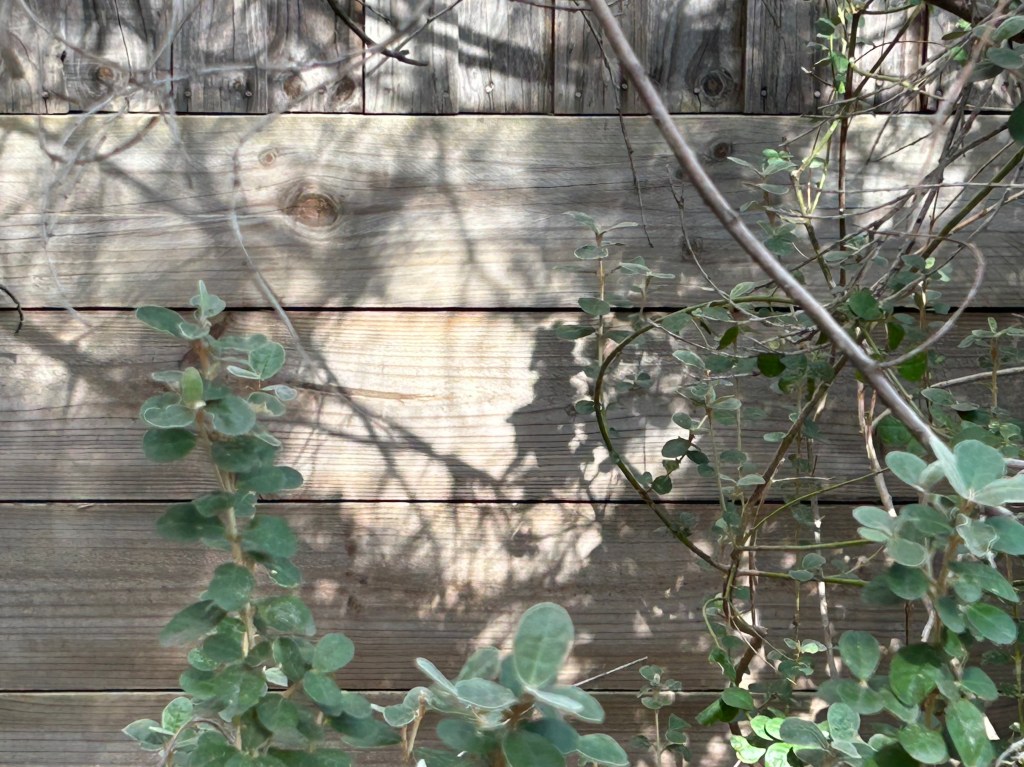
If you look up at the night sky in a city, you’ll see a couple of stars. There’s the constellations you’re familiar with, and a few others here and there. You may have seen the sky full of stars, but that’s probably not the sky that you experience most of the time. It’s limited, but it’s your sky. In a similar way, we are habitually identified with a certain type of consciousness, our ego. This is the attitude, thoughts, beliefs, that we have grown up with and grown used to.
It’s been developed for good reasons, because an ego helps us to relate with others and get things done in society. But because of how the ego is developed, unconsciously, and in response to stuff that happens in childhood, it is naturally going to be a little bit narrow. As we’ve grown up, we’ve made all these little choices about what is good, what is bad, and so on. It’s been in our interest to try our best, but we’re always operating off limited information. So our personalities end up a bit limited too.
The ego is missing some stuff. It’s probably over-indexed on certain things, under-cooked in other areas. It’s a house designed with very little oversight. Some of us spent most of the time designing a sleek infinity swimming pool. Others spent a lot of time getting the kitchen right, but forgot to plumb the bathroom. Some rooms are lit up with seductive mood lighting, others have no electricity.
In this imperfect process, as we double down on the things we believe to be important, we’re also doing a lot of shoving away of the things that are deemed dangerous or difficult, or that don’t particularly help us to navigate the world.
This stuff becomes what Jung called the Shadow, the “dumping ground for all those characteristics of our personality that we disown”1. Deborah Stewart, of This Jungian Life podcast, describes it as “the underbelly of the ego…that’s hard to look at… hard to feel really connected to…loaded with feelings of disgust, profound discomfort, and a feeling of wanting to push it away.”2
Although the ego and the shadow have such differing relationships with the conscious mind, they both constrain us. We are constrained by identification with some things and rejection of other things.
The Constraint of the Ego
I was collaging with some friends. I hadn’t made a collage in a long time. I thought it would be easy, but I found it very difficult to create a composition that I liked. I was selecting and cutting out images from magazines. I thought I was being clever. I thought I had a good eye and aesthetic. I’m a designer. I should be good at this.
But I was stuck. I was jiggling around pieces like a jigsaw puzzle. Nothing was fitting together. My friend D saw this and asked what I was doing. I said “I’m trying to move it around so it looks right.” She replied, “What’s right? It’s a collage.” She had a point. What did right mean? And why was that important? Why not just have fun? Why not make something silly, or shocking, or bright turquoise? No, for me, I need to get it right.
A few pieces of ripped paper shone a bright light on what’s habitual for me, what I identify with. The need to be careful, considerate, aesthetic, minimal. I pick pleasing things. I take care and attention and time. That’s my ego.
There’s no right way to do a collage, of course. That’s like saying there’s a right way to make a song. And I got more interesting results when I used colors that I don’t normally use, or if I used my left hand, or closed my eyes, or if I ripped things really quickly, or if I ripped instead of using scissors.
The Constraint of the Shadow
When I buy something at the supermarket, I don’t make small talk. I place my things down on the counter, my phone bristling ready to pay. I move on as quickly as I can. I want to be efficient. I don’t want unnecessary attention on me. I don’t want to slow down people behind me.
Now, sometimes, when I need coins for the laundry in my apartment building, I need to ask for change. It’s not possible to move by quietly like usual. I have to stop and say “Hey…” I have to ask someone to do something for me. In a way, I have to admit that I need help, or that I don’t have my life completely organized and together. Those are things that I would rather not look at directly. Things that my habitual side really can’t stand and pretends don’t exist. That’s my shadow.
And there’s a lot of defense mechanisms when I’m pushed into those shadow areas, even with something simple like asking for change. For some people it’s “hatred, disgust, avoidance, criticism, accusations, attacking.”3 In this case, I’ll get irritated. I’ll try and avoid it. I’ll roll my eyes. I’ll think about finding a machine to do this so I don’t have to think about it again. I’ll feel bad about holding up the line and apologize a lot.
Just like the ego constrained my collaging attempts, my shadow also prevents me from spontaneously asking for things.
There’s no need to blow up the ego, or to live out your shadow all at once. That would be reckless and dangerous. These functions have been carefully created for practical reasons. But we need to watch them closely. Watch how they shape our behaviour and most importantly how they constrain us into tight spaces.
We can try to stop squeezing ourselves between our (self-created) likes and dislikes. It’s not comfortable there and never will be. We need room to move. Like Viktor Frankl famously said, “between stimulus and response there is a space. In that space is our power to choose our response. In our response lies our growth and our freedom.”
We can look up at the sky and we can say “hey, I kind of know this isn’t the full sky, right? I kind of know that light pollution is blocking some stuff. I know there might be more out there.”
- Robert A. Johnson, Owning Your Own Shadow: Understanding the Dark Side of the Psyche ↩︎
- Episode 55 – Identifying & Integrating the Personal Shadow,” This Jungian Life ↩︎
- Episode 55 – Identifying & Integrating the Personal Shadow,” This Jungian Life ↩︎
-
Breaking the habit

February 18, 2022 @ 1:31pm – San Francisco, CA We learned from a new angle just how wondrous a thing the brain is. A one-litre, liquid-cooled, three-dimensional computer. Unbelievable processing power, unbelievably compressed, unbelievable energy efficiency, no overheating. The whole thing running on twenty-five watts — one dim light bulb.”
Ian McEwan, Machines Like Me
When you have a bad habit, it becomes very easy to do things you don’t want to do, like staying up late watching YouTube.
But when consciously created, a habit can make it easy to do something you want to do, like eat healthier or go to bed a bit earlier.
Habits rewire your brain and eventually even change your identity. James Clear writes about this in his popular self-help book Atomic Habits (2018). You don’t just go to the gym every Monday, you become the type of person who does so.
A habit helps you to show up even when you have temporarily lost interest, motivation or willpower. On a particularly cold night, my swim coach admitted that ‘some nights all that’s left is the habit.’ That could sound a bit sad, but sometimes that’s the difference between sticking at something and giving up entirely.
Habits seem to work so well because humans are habitual by nature. When certain brain circuits are triggered, we react the same way again and again. Most of our movements are habitual and automatic. The way we breathe, stand, talk, scratch, itch, whistle. Our preferences repeat too, like which clothes we select to wear or which yoga mat we like to sit on. When so much of who we are, and what we do is a habit, the harder it is to notice.
And so, the danger of introducing new habits, is that although life may get easier and more efficient, we may also become even more stilted, predictable and mechanical than we already tend to be.
A man decides to run three times a week. Over the course of year his physical and mental health improve. He finds that he has more energy and a brighter outlook on life. But even this healthy habit can become unhealthy. His unconscious desire for perfection means he becomes irritated and frustrated when the weather is bad or his stats aren’t improving. He denies spontaneous impulses to try out different, more interesting routes. He turns down social invites to keep his streak going. And eventually gets injured after ignoring obvious signals from his body to mix things up or to rest.
We want to hammer our lives like a nail, tag it, stereotype it or cram it into a category.
But life isn’t mechanical.
Iain McGilchrist writes that “The only things in the universe that are machine-like are the few lumps of metal we have created in the last 300 years.”
This might be why mechanical things often fail or break in dreams.
So before you install a new habit, see how it feels to eat your dinner in a different place, at a different time or to skip it entirely. Maybe it’s worth removing a something habitual, before adding more.
When we gain the ability to hold our habits lightly, we find freedom, maybe the most important thing in life, or at least much more important than a healthy meal or some saved time.
This is the 100th post on Buddha.Bike
-
Claws and teeth
June 5 @ 12:08pm – Hawthorn, Australia Heating up
We were born to work together like feet, hands and eyes, like the two rows of teeth, upper and lower. To obstruct each other is unnatural. To feel anger at someone, to turn your back on him: these are unnatural. To feel anger at someone, to turn your back on him: these are obstructions – Marcus Aurelius
Why does anger exist? “Fear tells us what to avoid; anger tells us what to resist. Both of these emotions exist to keep us from dying, from getting hurt, from losing energy.”1 When “anger is roused…it tries to push away and eliminate whatever it is that’s unpleasant.”2
When you have anger, passion, fear, breath can never remain normal. A little harder, faster. Also heat, palpitation at the biochemical level. – S.N. Goenka
Minor irritations can lead to anger. I know that when I’m late for something and I’m rushing around, it’s easy for lots of irritations to stack on top of each other, and I’m more likely to get angry. When I’m swimming laps, leaking goggles, missing instructions or losing track of my time all start as minor irritations but can quickly build up into anger too.
In order for a fight to happen, at least one person needs to take it personally. Just like pain needs to be personal, so does anger.
Everyone expresses anger differently. Some will express it immediately and then get on with their day. Others don’t acknowledge their anger, but will take it out on their kids, or an untidy house.
Anger, like any strong emotion, literally distorts your perception. Anger can easily spill out into the environment. This is what people mean when they say ‘projecting’. You are sending out your anger, and suddenly all the cars around you are angry, everything is angry but you. Your unclaimed anger might appear as a monster in a nightmare.
I seem to care a lot about fairness (in a subjective, relative sense). For me, the thought ‘that’s not fair!’ is very often associated with a feeling of anger. Perhaps the more righteous you are as a person, the more angry you’ll tend to be.
A person who is never angry will not be able to love either. – Osho
Anger is hot. Resentment is cold. Resentment is pickled anger. Fritz Perls, founder of Gestalt therapy, believed “the key to resolving resentment…was expressing one’s anger.”3
Another grotesque side product of suppressing anger is passive aggression. Those little snarky comments we can make sometimes are like steam leaking out of clamped down pot.
You can hold a grudge for decades, but the actual emotion of anger leaves your body very quickly. “It takes less than 90 seconds for me to think a negative thought, have a negative emotion, run the physiological response, have it flood through me and flush out of me.”4
Cooling down
It is very difficult to observe anger as anger – abstract anger – S.N. Goenka
In the Tibetan Buddhist system, anger is the same substance as clarity and intelligence, which is an interesting comparison. When you think of anger as a form of energy, it’s easier to see that it is “free of any problems, except the problems we create out of fear of that energy.”5
There’s lots of ways to express your anger in a safe way. Turn it into aggression in the gym. Do some primal screams. Anything but act on it blindly.
Exercise seems to help, since we can’t really exercise angrily, but we can exercise aggressively.
You can write it down. What was the thing that made you angry? Or what is the angry thought you’re having? I’ll write down “I have no time” or “This is a waste of time” and an angry face 😡 next to it.
The better you can deal with anger, the more responsibility you have to do so.
Anger is given to us like claws and teeth, to defend ourselves and is vitally important. We need rage and anger. But Jung taught us to first learn to control it and then to use it in a controlled way. Let it out, but let it out so that you could stop any minute if you wanted to. – Marie Von Franz
- Ego – Peter Baumann ↩︎
- The Practice of Not Thinking – Ryunosuke Koike ↩︎
- https://www.anilthomasgestalt.com/about-fritz ↩︎
- https://www.youtube.com/clip/UgkxLhPBmIvO28k9YC8Z81UMLP_ayXZGV8kT ↩︎
- https://selfdefinition.org/tibetan/articles/mindfulness-anger-management.htm ↩︎
-
Sliding doors

February 19, 2022 @ 11:53 am – Petaluma, CA I have found life to be too short to be preoccupied with pain from the past. – Jill Bolte Taylor
On a recent meditation retreat, I spent the first few days living in the past. I finished each day in a fog, feeling like I had recounted every single missed opportunity and disappointment I’d ever experienced.
No matter what technique I used to calm down, my mind would find a new thing to feel sorry about. Eventually, it relaxed a bit and I could enjoy the last few days without too much rumination.
When we clutch hold of missed opportunities or ‘what ifs’, we can’t help but feel miserable. It’s almost like the closer things were to playing out differently, the more pain and regret we feel.
Yet, our future is always changing based on the choices that we are making in the present.
One place to see these probabilities play out is in our dreams.
There are many different beliefs and theories about what the images in our dreams mean. A Jungian analyst might see a car crash as a metaphor or a symbol representing an inner dynamic. A Theosophist might see a premonition, a warning to drive more carefully. Or for the majority of us, it’s random, meaningless and already half forgotten.
But what if these images reflect real possibilities? I’m not talking about the dream with the spaceship or the fire-breathing dragon. I mean the dream where you are living in a nicer house, or a different country. Banal stuff. Things that could have, or might still happen to us, depending on chance or the decisions we make.
For example, in a recent dream, I was:
- Camping with an old friend from High School
- Struggling to ride a bike
- Living somewhere in Colorado
- In a very senior, chaotic role at my company
Choosing one job over another, a promotion swinging my way, a lower level of motivation, never leaving a place I used to live. These are all probable, plausible alternatives to my life. In a metaphorical sense, they are forked code, glimpses of parallel universes.
A sliding door dream doesn’t neccasarily paint a picture of a better life, just of a slightly different one. This can open us to new opportunities and perspectives.
And still, even if you choose to remain fixated on the past, consider that other versions of yourselves are living different, perhaps happier lifetimes, in your dreams.
Read this post on Substack
-
Subscribe
Subscribed
Have a WordPress.com account? Log in now.

