-
That’s it

December 7, 2024 @ 3:34pm – Melbourne, Australia I don’t always know what an elegant design solution should look like. If I did, my job would be very easy. I also struggle to articulate what I’m looking for. When I look at someone’s work, I’ll often think, that’s good, but something’s not quite right.
Most of the time, we figure something out and get to a good enough solution. We pick something and move on. We don’t have the time to iterate forever. That’s where goals, design principles and other frameworks help a lot. At the very least, we can make sure the work reaches a decent benchmark of usability.
But every once in a while, a designer shows me a concept and I think,
“that’s it.”I’m pretty sure every designer knows that feeling. It’s a near-instant moment of recognition. All of a sudden, the constraints and loose threads get tied together. No answer is perfect, but this is a really good one.
How to spot it
- It’s instant. You’ll have an almost instinctual reaction. You don’t need to think about it much.
- It speaks for itself. You’ve been taught to provide context when you present your work. That’s always useful, but if the solution is good enough, it doesn’t need much help.
- It’s often something you didn’t think of. You’ll find yourself asking “why didn’t I think of that?”, usually because it’s something you already knew. Sometimes it’s an earlier iteration you moved past too quickly.
- The medium doesn’t matter. It could be made with code, LLMs, pen and paper, a sticky note or a scribble. It might be polished, but it often stands out despite being rough. That’s why high-fidelity concepts can be harder to judge, since they can look resolved when they aren’t.
Great artists steal
Earlier in my career, I’d try to reverse engineer these moments. Great artists steal right? I’d try and figure out, was the solution great because it used the design system, or because it broke the rules? Was it what they removed, or something special they added? Was it something about Apple or Stripe or companies like that? What’s the trick?
I could list a bunch of things that might be “the trick,” but I’d probably be wrong. For most of us mortals, we have to rely on design methods and just doing the work.
In the meantime, there’s one thing you can do: notice that feeling when it happens, and ask yourself:
- What led up to it? How did we get here?
- When did I last see it, in my own work or someone else’s?
- Why does this solution stand out so much more than the others?
-
Outlets
September 24, 2026 @ 12:39pm – Melbourne, Australia The modern person can’t get enough energy. Our phones, computers and cars constantly need plugging in. All that technology is worthless without a charger cable.
We treat our bodies like big electronic devices too. Every morning we fuel up on caffeine and carbohydrates only to crash on the couch hours later. If only we could contain it and lock it down. But we can’t, so we’re endlessly looking for more. Deep down we fear we’ll lose it: going flat, burning out, a depression or death.
But in our rush to power up, we forget to ask ourselves: where is all this energy going to go?
Pent up
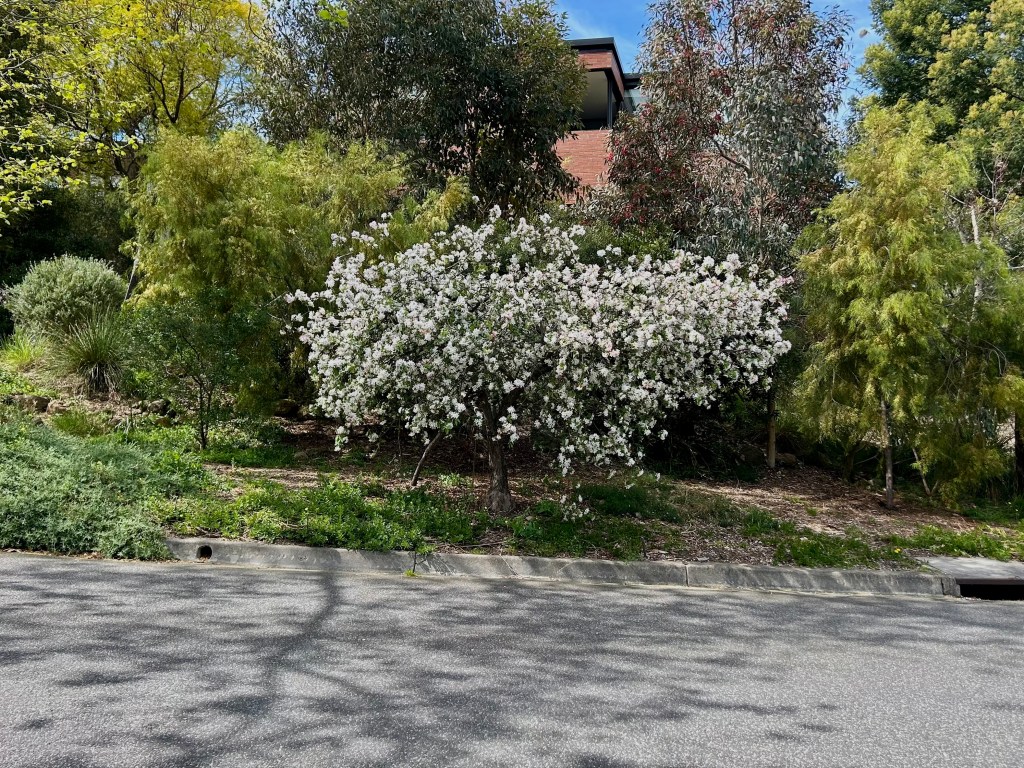
Think of it this way. As you buy, cook and eat food, rubbish starts to pile up. At some point, you’ll need to empty the trash. Or think of water flowing along a street gutter after a heavy rain. The water needs to move, and if it can’t find a storm drain, it floods to find another way out. Similarly, our bodies finds ways to burn off this excess energy.
It can happen unconsciously. Office workers, cooped up in cubicles, jiggle their legs under their desks. We chew on our nails, fidget and scratch our heads. We blurt things out or find ourselves in loud arguments.
We can see this sort of behaviour in animals too. Unlike us, they can’t hide it with stories or excuses. When a dog doesn’t get a walk, pent up energy can yelp, pace or chew it’s way out.
It may not feel like it, but energy is always finding a way out.
A way out
Just like we can’t exactly stop rain water or accumulating waste, we need to rely on more conscious outlets, like exercise.
At first, it can be good to just burn everything up. For example, if a dog has been cooped up in a cage, it will need a long walk or a big swim to get back to baseline. In a similar way, yogis have argued that modern people carry too much nervous energy to go straight into sitting on a cushion. They prescribe intense physical activity, catharsis1 or yoga poses like “Lions Breath”.
Once you’ve dealt with excess energy, sitting quietly or walking the dog should be much easier. From then on, we can find different ways to exercise, like weightlifting or running.
We don’t need to rely on exercise either. It’s simply not practical to run for hours every time we feel nervous or over-excited. Instead, we need to build a more conscious relationship with our own energy, while making sure it doesn’t become neurotic or compulsive.
Here’s what that could look like:
- Instead of feeling irritated by your restlessness, you could funnel it into cooking a complicated dish or a creative project.
- You could experiment eating different kinds of foods. Rather than avoid sugar because of the associated energy crashes, you could try using it to help with a tough training session or to think through a problem.
- For other ideas, we can look to those who have mastered energy, like Pema Chödrön, who views something like anger as a “limitless source of creative power”.
Like an electric current or an over-excited dog, energy isn’t bad. It just needs a place to go. Instead of chasing it we should be thinking about how to use it carefully and consciously.
-
The Expert Eye

January 11, 2025 @ 6:12pm – Heathcote, Australia “Tactics flow from a superior position.” — Bobby Fischer
We can’t really know what reality is. The best we can do is to get to know our experience of it, and use other means to flesh out the full picture, remembering that “even the most truthful accounts of reality can never represent it in full.”1
But some accounts of reality are simply more truthful. These accounts come from experts, people who are much, much better at seeing what’s actually happening than the rest of us. They could be a technician scanning an x-ray, a coach studying a serving motion or a hunter staring down a growling bear.
With their expert evaluations, they can quickly and accurately notice important things about reality.
The Art of the Evaluation
Cops, who might take “thirty different assignments in one shift”,2 are expert evaluators. In his book 400 Things Cops Know, Adam Plantinga describes how he’d respond to a household that would alarm the rest of us. Looking around he’d think, “okay, the kids are dirty, but they seem unharmed. They’re likely neglected, not abused.” In other words, he might not like what he sees, but he doesn’t see a crime – the main thing he’s looking for.
Over time their evaluations become less “clunkily conscious”. Thinking less is a sign of a “true expert,”3 says Iain McGilchrist: “When you start out … you have to learn and memorize and think consciously about many, many things. But by the time you’re a skilful physician or surgeon, a skilful chess player or a skilful pilot, you don’t think like that, because that would make you a very second-rate performer.”
The observations experts make can seem obvious after the fact. Anything that’s true will feel obvious in some sense. In The Bridge on the River Kwai, an engineer is asked to give his honest opinion on the bridge under construction. He sums up the problem in a few words. “I wouldn’t build it here. The Japanese couldn’t have picked a worse location. There’s no bottom. You see those piles? They’re sinking. Our chaps could drive those logs till doomsday and they wouldn’t hold.”
In The Dog Whisperer, Cesar Millan points out signals that many troubled dogs show, such as heavy breathing (anxiety), a cool stare (aggression) or a raised paw (a warning). The owners might see these things too, but they simply don’t understand their significance. These aren’t special or unusual behaviours, but they are important.
A problem half-solved
Even though experts can see important things in an instant, it doesn’t mean they’re always right. It doesn’t mean a policeman can “peer into men’s souls and determine whether they are the guilty party”. Even the Dog Whisperer gets bitten. “I didn’t see that coming”, admits Cesar, after an aggressive labrador lunges at his hand.
Experts also face another, bigger problem: the rest of us. Their evaluations can lead to smart strategies and solutions, but someone has to execute. This is where the “real work” is.
- Military intelligence only matters if it’s backed up by guns and bombs.
- A tennis coach might know the secret to winning a Grand Slam, but will need to make sure his athlete sets his alarm on game day.
- An overexcited dog needs longer walks, but who’s going to do the walking?
Whether or not the expert sticks around to fix what they’ve found, at least the action is aimed in roughly the right direction. There’s lots of work to do, but it’s easier, and it won’t be wasted or going round in circles, because it flows from something true and important.
Also published on the Buddha Bike Substack
- Nexus: A Brief History of Information Networks from the Stone Age to AI – Yuval Noah Harari ↩︎
- 400 Things Cops Know: Street-Smart Lessons from a Veteran Patrolman – Adam Plantinga ↩︎
- The Wisdom Of Intuition – Iain McGilchrist (YouTube) ↩︎
-
Tsundoku

August 21, 2026 @ 3:05pm – Melbourne, Australia If I look around my apartment, I can find twenty or more books that I’ve never opened. Some were bought recently, others have been lying around for years. The Japanese have a name for this buying and piling up of books: “Tsundoku”.
But it makes me wonder, why does it happen?
Piling up
Firstly, I blame a rule that I heard from Ryan Holiday, who signs off every newsletter he sends with the following: “if I saw a book that interested me I’d never let time or money or anything else prevent me from having it.” Reading does use up time, money and energy. But it doesn’t take a lot of those things. It also tends to give back. “Even one (good) idea makes it worth” buying books, writes Ramit Sethi. I agree.
The problem is, the more you read, the more you want to read. Authors reference other authors. Books reference other books. If I like an author, I will want to read other things they’ve written. The same applies to other interesting themes, concepts, ideas or recommendations I come across. With these two forces in play, and the fact that I’m not a particularly fast reader, makes Tsundoku inevitable.
Thankfully, it’s not a big problem. Books weigh down a home with their steadiness like a good table or cabinet. Interesting titles or covers catch your eye and can remind you of a story or an idea. This is especially true of unread books, which are always asking you “are you ready to read me yet?”
Hanging out
Maybe they pile up because some of these books just need a bit more time. In Be Here Now (1970), Ram Dass suggests to “hang out” with famously dense books like the Tao Te Ching or the Bhagavad Gita as a sort of spiritual practice. He explains how to do this:
“take one passage—perhaps a phrase—certainly no more than a page. Read and re-read and re-re-read it. Then let your thoughts work around it. Paraphrase it. See how it applies to others and to yourself. Note if and how it differs from the way in which you usually think about things . . . different assumptions, etc. What are its implications regarding your own journey? Read it again. What laws of nature is it reflecting? Then, sitting quietly, let your mind associate to the passage. And then be quiet. Certainly a half hour a day is not too long to spend on this exercise.”
“Hanging out” is a sensible approach not just for ancient books like The Old Testament, but anything intellectually intimidating or that has a radically different viewpoint to you. It’s a bit like spending 30 minutes talking to a stranger about their life. You really have no hope of even scratching the surface of who they are as a person. But with maybe one or two good questions, one might get a little bit of a better understanding.
Settling down
But then there’s the books I don’t even want to hang out with. They just sit there. I can’t even read a page of them. For whatever reason, they’re just not something I’m able to digest yet, so I need to leave them be, within reach, for some unknown amount of time.
Maybe it’s laziness, or fear that stops me from picking them up. Maybe deep down I know I’ll dislike them, and stop reading after a few pages. Or maybe my subconscious has already started reading without me, just like it quietly solves problems while we are busy gardening or walking the dog.
If you do this too, I wouldn’t be worried. Let them stack up. Don’t feel pressure or an obligation to read them. Read something else that looks more appetising, or just wait. Keep them around, nearby. And I’m sure at some point in the future, even if it’s years later, you’ll read them at the exact right time.
Also published on Substack
-
Ordinary destiny

Fight for your country — that is the best, the only omen! – The Iliad
Watch me explain this idea on YouTube
We are introduced to the realm of choice and consequence by our parents, for our own benefit. If you touch this thing, it will hurt you. It’s safer to hold hands when you cross a busy road. Lesson by lesson, experience by experience, we build up a model of the world, and how to navigate it effectively.
Later as adults, taking on and carefully managing your responsibilities, big or small, turns out to be highly valued by society. It might take some prodding, but we are able to admit it was our fault when we forget to take out the trash, pay a bill or drink and drive.
It’s not just social conditioning that makes us think we are in control of our lives, it subjectively feels that way too. We feel like a doer, an actor, an agent. As Robert Sapolsky argues, it feels undoubtedly like we have free-will, making it hard to relax and let life happen.
Just how long have we been thinking and feeling so responsible for our lives? Probably as long as any recorded history. At some point, maybe back when Homer’s sea was still wine-dark, the idea of applying our individual mind to a problem must have been a pretty new, radical idea.
It’s a persuasive call to action too; If you’ve got the guts, guile and will, you might be able to change your fortune. This is the Odysseus realisation. He sees a shipwreck or a knife wound as a consequence rather than chance. From this view, the world is wide open. Don’t just sit there. Help yourself. Just do it. Make it happen. This must have felt like taking drugs or riding a motorbike for the first time.
But if man is now in the drivers seat, what happens to the gods?
The images of Greek Gods like Poseidon don’t really have a place in the modern world. But there’s still truth to them. It can start as something small. You run out of an ingredient you need. You don’t see a text message in time. Your phone battery dies. You bump into someone you didn’t know was in town. Someone else tells you they’ve taken a job in another country. You wake up extra early feeling deeply refreshed.
The Odyssean, modern approach is to figure these things out. It’s about consequence. We seek out the cause. We might blame ourselves or someone else around us. Or we might say, oh I wasn’t paying attention while I was chopping that onion, that’s why I cut my finger. I’ll make sure to be more careful next time. This makes us feel more certain and in control of whatever we are doing and our place in the universe feels a bit less scary.
But are you certain you’re in control?
Why were you chopping the onion like that? Why an onion? Why that knife? Why then? Why were you distracted by that thought that crossed your mind? It really only takes a few simple questions before our own agency is overwhelmed by the black box of interdependence and conditionality.
I’m all for agency. I’m all for making things happen. And the mind is made to be used. But we should also try to see happenstances and other obstacles as one of the many ordinary forms destiny can take. They’re like little lightning bolts. And by working with them carefully rather than slicing them to pieces with our swords, we might find some relief like Odysseus does when he finally returns home.
-
Tool builders

July 14, 2024 @ 2:29pm – San Francisco, CA A computer is… the most remarkable tool that we’ve ever come up with. – Steve Jobs
Beware brand-new time-sucking beta-rollout crap. – Bruce Sterling
Right now everyone I know at my job at a software company is building things, including tools. A few years ago, a designer might have found some spare time to code up a plugin that helped to speed up a manual workflow. Now they are pushing code to production and creating bespoke apps. All you need are some agents and some agency.
One type of tool I’ve noticed a lot of people using and creating are “skills”. Skills don’t really take any technical skill to make. But they are useful. They “teach Claude how to complete specific tasks in a repeatable way, whether that’s creating documents with your company’s brand guidelines, analyzing data using your organization’s specific workflows, or automating personal tasks.”
Some skills are developed and used privately. For example, another designer told me about a skill they made to turn any text into something that sounds like something they would say. Other skills are shared out publicly, so that lots of people can use them, like a whole marketing team or the entire company.
Skills that are designed for many face the same usability issues that any type of software has. The developer simply can’t know everything about the “user”, or how they will end up using their program.
In most cases this mismatch or misunderstanding of mental models results in sub-par user experiences, wasted time and general confusion. Users might send emails, stop using it, or worst, suffer in silence. But by talking to users, testing, making smart assumptions and iterating, many of these issues can be resolved and avoided. It’s not easy, but it’s not rocket science either.
With the skills and other new tools we make, we must do the same. Even if there’s only one user. It’s the users who are the ones who are needed to actually use, test, stress and push the builders to make improvements that meet their needs.
Are you building something? Consider:
- The whole world might not need access to your tool straight away. Roll it out slowly, or test with small, private groups of people.
- Make it as easy as possible to get feedback. Better yet, sit down with someone who’s actually using your tool and listen and watch how they use it.
- Allow healthy competition. Great software wouldn’t exist if we stopped after building one messaging app, to-do list or browser.
- Sometimes it’s better to buy. Even a company like Google, filled with some of the best internal tools (and tool builders) still relies on software built by other professionals.
- The whole world might not need access to your tool straight away. Roll it out slowly, or test with small, private groups of people.
- Make it as easy as possible to get feedback. Better yet, sit down with someone who’s actually using your tool and listen and watch how they use it.
- Allow healthy competition. Great software wouldn’t exist if we stopped after building one messaging app, to-do list or browser.
- Sometimes it’s better to buy. Even a company like Google, filled with some of the best internal tools (and tool builders) still relies on software built by other professionals.
We shouldn’t put up with broken, inferior tools. Let’s make sure we’re not building more tools for other people to put up with too.
-
Here we go again

July 13, 2024 @ 5:17pm – San Francisco, CA One does one’s thinking before one knows what one is to think about. – Julian Jaynes
Blindly listening
Most of us think in some form and mixture of words and pictures. And a good portion of that content is repetitive. Time for dinner. Tired. What’s for dinner again? An image of a person you talked to a few hours ago. The same words and phrases stream by all day. The content is often mundane, but it can easily absorb us. You’re probably listening to your thoughts more than you’re reading these words.
This inane chatter follows us everywhere. Whether it’s a holiday in Greece, or starting a new job, you’ll still find the same old thoughts going around your head. The same thoughts, the same suffering. Wherever you go, there you are. It’s a heavily recycled line, but it does occasionally ring true.
Even though we all think, it can be jarring to learn about what other people are listening to. For example, here’s Joe Rogan describing what his inner voice sounds like:
It’s like a general. It’s someone going.. “Shut the [—] up. Go to work. What are you talking about? Why you being such a bitch?” So, he’s kind of a jerk. My inner voice is never wrong. My inner self-correcting voice is always correct. It’s always right. If I’ve done something wrong in my life, made a mistake in my life, said something I shouldn’t have said, that voice berates me.
No matter how silly they might sound to others, we tend to listen to them. We respond and act on them too. We’re reaching toward our phone before we realise we’ve been thinking about calling someone. And if the content is unpleasant, we lurch away. We just glance away from the mirror and sigh, or start to stuff our faces with food, or turn up the music louder.
Talking back
To take a step back from this blind reaction, one thing we can do is to reply to it directly. We can say “yes? what else?”. By engaging with an insulting or judging voice, we might discover it doesn’t have a whole lot of substance to say.
Here’s another tool. It’s called Here we go again.
Step 1: Notice a bit of inner commentary. For the reasons described above, this is hard to do. So maybe you notice a thought that you say out loud like “I’m tired.”
Step 2: Say “Here we go again.”
Step 3: Notice how it feels. You might feel some confusion and annoyance and resistance, a bit like how it feels to try to understand a dream. It will be even harder if you are overcome by a strong emotion. Maybe you might hear another voice say “cut this stupid exercise out, this is a real problem we need to deal with.”
But no matter what the thing is, you can always just roll your eyes and say “here we go again.”
- Small things: I don’t want to do this. I don’t want to get out of bed.
- Big things: I want to quit my job
- Material things: Look at all these dirty .
- Philosophical things: Life has no meaning.
Here we go again. Here we go again. Here we go again.
Use it liberally. Even if it feels silly, it’s almost always better than blindly following the thread of thought.
Here we go again.
Also published on buddhabike.substack
-
Milquetoast

July 12, 2026 @ 9:07am – Woori Yallock, Australia To serve a mania is detestable and undignified – Carl Jung
Give up the fight, give up control and live – The Odyssey (2026)
How did I get through a difficult Vipassana retreat? I had gone to the retreat (December 2022) more on a hunch than anything else. I was a completely inexperienced meditator and didn’t know what to expect. But when things got hard, I didn’t cry or give up or scheme. I unconsciously reacted in the way that is most comfortable to me. I put my head down and tried harder. And it worked.
But when I recently completed the same retreat, and found myself applying the same kind of pressure on myself, it made things worse. As the days dragged on, I became more and more agitated. More unhappy and stuck in my head.
Some relief finally came to me about halfway through the retreat, while I was asleep in a recess period. I’d spent the morning failing to relax and focus. When the meditation bell woke me, the words “If you keep setting fires, you’ll go insane” were ringing in my head. I felt a little better, and I mused on this interesting warning over the rest of the day. Unlike most dreams, this was fairly clear advice. I was the person setting fires; worrying about dirty socks or my meditation posture or some other trivial thing that caused me distress. I was the problem. It was also a command to stop doing something. The typical conscious approach to any sort of obstacle is to do something about it. Try something new. Try something different. Even if you’re not a control freak like me, it rarely crosses our mind to stop doing.
I mostly enjoyed then rest of the retreat, but had been badly shook up. On the last day when the noble silence was lifted, I explained my challenges to a more experienced meditator sitting in the ‘first row’. Unlike me he never seemed rushed, tense or tired. What was his secret? “Don’t take it too seriously”, he said. Huh. Why hadn’t I thought of that one?
The following night, my unconscious had additional words of wisdom for me, in the form of a cinematic dream set in New York City. The central character was a high ranking bureaucrat in charge of the subway system. He was well educated, efficient and knew exactly which trains needed to arrive where. An anonymous hacker his own age, who admired his work, called him milquetoast. Then all the train stations exploded.
Milquetoast. It’s not a word I’m consciously familiar with, but it accurately described the pale faced government offical. Although he’s careful, productive and good at his job, he’s fearful and “meek”1 when faced with real difficulties.
It wasn’t hard to draw a connection to how I’d acted on the retreat. Rather than spontaneously work hard like I had the first time, I tried to control and manage everything because I thought it would ‘work’. Not only does this attitude spoil most of life’s surprises and opportunities for growth, it can create unnecessary worry too.
Outside of a meditation retreat, what does a milquetoast approach look like to something like a game of tennis? Thinking through a checklist every-time you hit a ball. Making sure everything is ‘right’ before you start each point. Worrying about the score. Worrying about how you behave. Judging yourself if you make an easy mistake.
There’s nothing wrong with improving and optimising what you’re doing. But in most cases, we are better off just doing the thing (or stopping doing what we don’t need to do). Life tends to take care of itself, with a lot less conscious control than we think is needed (or that we even have).
This attitude can “get the job done”, but do we really want to live a life where we have solved every problem in a milquetoast way?
-
Don’t panic
June 21, 2026 @ 11:01 – Mount Martha, Australia To know one’s fear is to be free of it. – Osho
Don’t fucking panic, Bob. Keep your shit together. – One Battle After Another
I’ve always been fearful about my job.
I remember my first internship, where I was terrified of getting exposed as an imposter. I’d listen to the Terminator Theme to stay motivated as I cycled home in the dark. I’d survived another day.
When I moved to America, my fears shifted to worries about getting fired and then losing my visa which was tied to my job. Every vague invite from my boss was a potential dismissal. I thought I’d be fired if I asked for too many days vacation.
Between jobs, interviewing was always this chilling task where I was seemingly never prepared enough.
Mostly, my fears of failing, losing my job and ending up homeless never came true. And over time I gained confidence and started to feel less fear.
Less fear. In a way, that’s been a big goal. Feel less fear. Fight fear. Remove fear. I pictured a successful career as never feeling fear again.
When you are identified and engulfed by fear, it’s horrible. It feels like you’re in a building with fire in it. Getting burnt alive is something you imagine and that also feels like it could really happen. Anxiety adds the alarm bells. So it makes sense that you want it to go away. I think that’s our habitual response to fear.
Fighting fear works… until it doesn’t. I don’t think fear can ever really go away. Even if fear did go away, I don’t think you’d want it to.
I don’t think fear ever stops feeling like fear either, that’s just what it is. But if we look at fear as information, rather than something to remove, it can work for us rather than against us.
Maybe the choice that makes you feel a bit scared is the right choice, even if you don’t want it to be.
Maybe feeling fear during an interview is a sign that you actually care and want the job.
Maybe if you felt no fear with your work, it’s a sign that it’s time to move on?
It’s worth asking ourself: Am I trying to improve/grow/do something cool or just trying to feel no fear?
It’s just fear
We’ve evolved to get really good at listening to fear. That’s partly why we’ve survived. In doing so we’ve become too good at reacting to it.
Yes, there’s an overwhelming, stifling, oppressive quality to fear. Yes fear can force us to run, hide, hoard and harm.
But what if fear doesn’t want us to over react? Maybe fear is simply waving to us and saying, notice me.
-
Bandwith

June 14, 2026 @ 12:05pm – The Dandenongs, Victoria, Australia Being a normal functioning human, requires a lot.
For starters, it requires oxygen. If we don’t breathe for a few seconds, we die. Sleep too. If we don’t sleep for a few nights, we go completely crazy.
And we need more than stuff like water, food, air and sleep.
If we want to be able to get anything done properly, we need bandwith too. We need a little extra fuel in the tank.
Imagine a laptop. Now let the battery drain to 1%. Start to load up and use lots of memory intensive programs. The computer will struggle. Now plug the charger back in and let the battery fill back up. Or try to book a plane ticket on a phone with 2G internet connection. Then move back into range of a 5G antenna. This isn’t self-care per se, it’s just a bit more bandwith to get the job done.
When we have bandwith we enjoy the ability to do things at the very least, properly. It may not be a pleasurable task, but you’re in less pain than you could be.
A practical example is when you go grocery shopping on an empty stomach. I don’t think we are always conscious that we’re hungry. You just start to be a bit more irritable, anxious and unhappy than usual.
But when you’ve had something nice to eat and drink, everything is a lot easier. It’s harder to get stressed. You remember what you came into the shop to buy. You’re able to skip buying the potato chips.
Strangely enough, it’s easier to be kinder too. Something like benevolence isn’t available to most of us, most of the time. But it’s more likely to be available if you have the bandwith for it.
Also published on Buddha Bike – Substack
-
Subscribe
Subscribed
Have a WordPress.com account? Log in now.

