Since January 2024, I’ve published 34 posts on topics like the personal unconscious, time, the future, anger, the body, therapy and food. This is about 10 posts less than last year. If I didn’t feel like I had anything to write about, I simply didn’t write anything. Experimenting with different styles and formats (eg. A conversation, a how-to guide or very short sentences) helped a bit. Personally, 2024 has been about unravelling compulsions, whether it be habits or feelings like anger or resentment so that I can make more normal choices.
On average I record 5-7 notes to myself per day into Apple Notes. Topics range from dreams to creativity to philosophy and everything in between. Many are too personal to be of any use to share publicly. The majority are only one or two sentences that I think are worth saving. Below, I’ve curated 189 of my favorites.
November 3, 2024 @ 6:18pm – Beech Forest, Victoria
If you talk to the animals they will talk with you and you will know each other. If you do not talk to them you will not know them and what you do not know, you will fear. What one fears, one destroys.
Chief Dan George
The dog
First of all, it’s hard not to like you. We instinctually like people. We like to be close to you at all times. That’s why you need to kick us out of the bed. Why wouldn’t we want to sleep together? We are so grateful for all those things you do for us: Cleaning, feeding, petting. How did we get so lucky? And what more, life is exciting, isn’t it? We are excited about the sun, the air, the bouncy ball, the neighborhood roads. It’s very hard for us to understand that you might not feel the same way. We’ll never quite figure out why you prefer to be clean and walk around like you do. When you are angry or anxious this is very frightening for us. You don’t seem to be able to see how obviously unpleasant these things are. We can feel every vibration of an angry footstep or slam of the door. We shut our eyes and try and pretend we are having a bad dream. When you shout at each other it feels like you are throwing little needles at our ears! We wish you wouldn’t. But we can forget quickly, and a lovely warm tone of voice is like heavenly music to our ears.
The tree
We’ve got a good view from up here, especially us old folk. I’ve been alive for hundreds of years. That’s enough to see a few generations pass by. The kids, growing older, people leaving and going. You all think you’re the first to do something, but in most cases there’s been people doing similar things to you before. I’ve seen a lot. Every day lots of people walk past me. Most of you are hurrying. We can’t hurry. We settle in one place and we ‘bed down’. We grow up and down and out, but we don’t race around like you lot. Most of you hurry past without looking, staring at your phones and sometimes tripping on our roots, which always makes us laugh. Animals and insects show us more attention. Animals don’t really hurry. Even ants go at a ‘proper’ pace. But I like being useful, like you do. I do lots of little jobs for the environment, plus I’m good to look at. But I just don’t get so stressed or focused on productivity like you do. Some years I just don’t grow very well, or give much fruit. That’s fine by me.
The mountain
From up here, you all look like ants. It’s a little too hard to make out all your little goals, aspirations and plans. To us, they all sort of all blend into one thing. You think a tree has seen some things? We’ve seen entire civilizations come and go. Wars. Famines. Diasporas. Humans really get to do a lot. For us mountains, we really are in for the long haul. That’s not to say we can’t appreciate the small things. The clouds, the sun, the wind. The snow thawing in the spring. We understand all that but there’s not much point thinking ‘day by day’ when we will be around for millions of years, and from a certain perspective a mountain never dies. It’s fun to see the more adventurous humans scale our faces. It doesn’t make much sense to us, but we hope they have a good time. Some slip and fall but we get the sense that they were go out doing what they loved. Humans are always ‘proving something’, but once you get to our size and strength, what’s left to prove?
The Person
Peering through another persons eyes can be a bit unsettling. Perception is everything and through your eyes, the world looks so different. I’m stuck holding your map, which is filled with so much information and instructions. It tells me who my parents are, my height, my ethnicity. It’s got all your memory – everything you’ve ever experienced. But it’s also subjective. That’s the hardest thing. I take on how you feel about those things. How you feel about your history, your job, your face. Your addictions drag me in one direction, leaving me stuck in little habitual whirlpools. In some areas of life I can see my options dry up, as I’ve settled on a ‘certain way of doing things’. And of course your fears. These are like little stones dotted across your life that you have avoided turning over and looking under. Most of all, I’m ruled by your thoughts. Most of these are boring and repeat over and over. Self talk. Opinions about everything. We could do with less of these. More peace and quiet. It’s not a bad life that you’ve got, but it’s noisy in here!
Irritability, bad moods, and outbursts of affect are classic symptoms of chronic virtuousness.
Carl Jung
Sticklers are people who can’t help but be serious, orderly and neat.
Sticklers can’t help but have clean and tidy houses. Before they leave to go to work, they dust and straighten things. They bring out the big guns before they have visitors. It’s important for everyone to know they are clean and orderly. Rubbish will be carefully separated. The back of the fridge will be sparkling. There will always be extra rolls of toilet paper.
Sticklers set a high bar for themselves. They might find it a little hard to relax until they have ‘finished all their tasks.’ Once everything is perfect and good and in the right place, they don’t relax much, they think ‘ok, now let’s keep up this standard forever.’
The Stickler doesn’t realize that they will never be able to make everything perfect and good. In fact, measuring and judging makes things worse. You can easily ruin a dish, a drawing or a friend with harsh criticism and high standards.
The Stickler is constantly dissatisfied with the present moment. There’s always something a little bit wrong that catches their attention. A little cut on their finger. A certain smell. A piece of work that is not quite finished. A little stain on their shoes. The obvious fact that life is a mess doesn’t relieve the stickler. Instead, it makes them exasperated and frustrated.
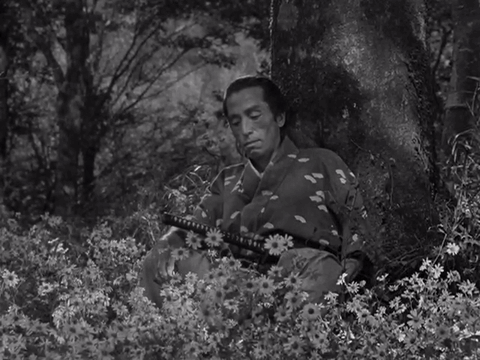
Kyuzo in Seven Samurai (1954)
Samurais are Sticklers. They follow strict guidelines and view themselves as honest and orderly. They really believe there is a perfect way to do anything and everything. In the film Seven Samurai, the samurai ‘Kyuzo’ initially refuses to join the team because ‘he’s not interested in killing, only in perfecting his skill.’ Once he comes onboard, he’s quiet and effective, but seems unsatisfied with his work. He comes across as the most judgmental and righteous of the bunch.
Sticklers get on each others nerves. It’s one thing to be punctual, but when everyone is punctual it’s a bit too much. It’s hard to rationalize all the neatness when they see someone else do it. They don’t want to be surrounded by neat-freaks, they prefer to keep their neat-freakness to themselves. I think that’s because it’s hard to feel like a saint when you are surrounded by them.
Sticklers feel guilty and freak out when they lose control over their saintly self-image. They can easily get angry, but since being angry isn’t very virtuous, they have trouble admitting to and owning that emotion. All that energy needs somewhere to go, and usually gets placed onto whatever is closet to them – A collegue, a partner or the tomato they are chopping up.
Sticklers can be angry, but even more so judgmental. The Stickler has weighed up, judged and critiqued every molecule of their being before they have even gotten out of bed. Once they have finished with themselves, they move onto anyone or anything else in their close vicinity. A housefly isn’t safe from the Sticklers’ endless campaign of criticism. By midday, they can feel like a broiling cauldron of negativity and are not that fun to be around.
The Stickler is happy if they can avoid anything that makes them look bad. It’s healthy if a Stickler can get in the habit of sharing something quickly, roughly and ultimately imperfect. If a Stickler has retreated into private and is working on getting something ‘just right’, you know they need to come back to reality. For designers, showing your work all the time is critical to a good design process. As Bob Baxley, a former design leader at Apple says, “If you ever found yourself sitting at your desk by yourself with your headphones on, stressing ’cause you felt like you had to figure it out on your own, something was really broken.” This is good advice for Sticklers.
Is there any hope for someone like this? Nature can serve as a partial antidote for a Stickler. If they can occasionally ignore their neat-freakiness and step outside, they’ll find a whole bunch of leaves, dirt, mud and water that ultimately can’t be ordered in any ‘right’ way. A tree can only be a tree. Same goes with a mouse or a stick insect. Nature, as Jung puts it, “harbors no intention to deceive, but expresses something as best it can, just as a plant grows or an animal seeks its food as best it can.”
August 28, 2024 @ 5:56pm – Mount Martha, Australia
Reality is always far nobler than any projection. – Robert A. Johnson
The other day I saw a cyclist speed past a dog walker, almost hitting the dog. I wanted to yell out. How could someone ride so recklessly? Couldn’t he see how close he was? That’s anger. Like a strong tonic, one sip focuses your attention and fills you with energy and motivation to act.
I’d know. It’s very easy to make me frustrated. When I run late for a meeting, I can melt down over the most minor inconveniences. I find myself smoldering at a friendly colleague who wants to chat in the hallway. I’m even angry at the guy waiting behind me as I make my coffee. Interrupt me at your peril.
I think frustration tends to be more of a problem for those of us who need everything to be fair, good and orderly. When you place high standards on yourself and on others, you’re setting yourself up for disappointment. If you’re sensitive to fairness and justice, you’ll easily feel wronged all the time.
Putting a lid on it
It’s challenging to handle anger. Most of us can’t get a grip on it because we avoid looking at it directly. It gets habituated; we react to the same things over and over again. And like a deranged law officer, we justify our actions as righteous. They deserved it. They were wrong. They were out of line. The more we try and control anger with rules and regulations, the more likely it is to explode unexpectedly.
That’s because like fear, sadness, joy or any other emotion, anger has to get out.
When you shove anger away, it has an uncanny ability to find its way back to you. It grinds in your jaw, pulses in your skull or creaks your neck. It leaps out of your throat in a snarky, hurtful comment. It ricochets through your conscious mind with sounds and images or leaps out at you as a snarling dog or cocked gun in your dreams.
Anger can also present itself as reality itself, as a projection. Unconscious of how angry you’ve become, you feel certain that someone is trying to push your buttons, or purposely avoiding you. Like a bad hallucination, a friendly smile appears to be mocking. “While we are caught up in a maelstrom of anger… everything seems confusing, out of control, overwhelming, and unpredictable.”1In this state, we are essentially possessed by the emotion. This is painful for you, who feels as if the whole world is angry and everyone around you too, who has to deal with your responses. “You have no choice, you’ll be angry as long as you’re angry and the people around you, who don’t like it, just have to figure out some way to put up with you.”2
Any action we take in a confused, frustrated, disordered state is unlikely to help much. Instead, it’s more useful to take stock and question what’s actually happening:
Look inside: Instead of blaming the people around you, what’s the flavor, the temperament and general attitude of your thoughts? If you notice anger there, it’s worth it wait until that passes. Grandma was right – Walk it off
Get specific: What or who exactly is making you angry?
Take some responsibility: What’s the likelihood that every single person in the office is annoying you? Is it more likely that it’s something that you’re doing?
Anger and frustration are powerful, useful emotions. They give us energy and agency to stand up to unfairness, fight injustice and protect our personal boundaries. But the dose make the poison. Too much anger, too quickly, for too long, makes it literally dangerous.
Tranquility is nothing less than the good ordering of the mind
Marcus Aurelius
Thoughts like to be believed
You’re staring at a computer screen. There’s an important task you need to do, but you’ve been avoiding it. It needs to get done. And you should have finished it yesterday.
Thoughts, images and sounds, rush through your head.
This is just like the last time I did something like this, you think, remembering something you’d rather forget.
It’s normal to think about the future. But it’s a shame that doing so can makes us feel bad.
Many of the thoughts we have can be negative and self-referential. “I can’t do this” or “I always do badly when I do things like this.” These might feel like truths, but usually are vague, black and white generalizations. The words always, nobody, never are good tells someone is generalizing.
And if you believe these thoughts, ta-da, you’ve magically created a belief.
If you start to look out for them, you’ll hear this sort of thing everywhere. Here are a couple I overheard at my local triathlon club:
I can’t run that fast anymore.
That’s it, I’ve done my hour.
I can’t go fast, it’s all moderate.
I couldn’t help but swim butterfly, now I’m dead.
I’m done.
Beliefs drive behavior
If you know the belief, it doesn’t take a lot of imagination to figure out what the behavior will be.
For example, if you’re absolutely certain you’re bad at public speaking, you might decline invitations to speak or present. You’ll make up all sorts of intelligent excuses and stories to avoid doing it. You might speak less in meetings, even if you have good ideas. You might depend more on notes. If there’s no way out of this ‘unpleasant’ task, you might get stressed, sad, angry. Hours before the presentation you get more and more irritated until you need to ‘take a walk and clear your head’.
Now there’s nothing inherently wrong with preparation, organization, or de-stressing. And maybe you really do need more time. But these sorts of thoughts tend to get whisked into the foamy, fearful feeling of dread that has been generated by an unconscious, negative belief: ‘this is not going to go well.’
In comparison, someone without that belief, might approach the same task calmly, cooly and confidently. They might not be smarter, or any better at doing the job, they’re simply not talking to themselves in such a negative way.
A task is easier if you’re not thinking ‘this is going to be a pain’ or ‘I have no time to do this.’
There’s no rushing around, because who’s telling them to rush?
There’s no endless revisions and re-work, because who’s telling them it’s not good enough?
There’s no impatience when they are interrupted, because who’s telling them they ‘can’t stop working’?
If belief does seem to drive our behavior, should we all try to be more positive? It likely doesn’t hurt. And since it was popularized by Norman Vincent Peale in the 50’s, positive thinking has been claimed to solve everything from shyness to world peace.
We can also practice challenging beliefs. Pronouncing that you’re ‘ugly’, might sound and feel like a truth, but with some light challenges we can uncover that it’s just a transient opinion.
Are you always ugly?
Who says? According to whom?
Compared to who?
How do you know?
What do you mean by that?
But to do a good job, we don’t need to be filled with positivity. We just need to stop telling ourselves it’s going to be bad.





 Buddha Bike