If you had today’s spice rack in the year 1400, you’d be famous.
Ceylon cinnamon, black pepper, hot paprika—back then, these would’ve been like a garage full of Lamborghinis. Exotic, rare, wildly valuable.
Pepper, once known as ‘black gold’, was prized by the Greeks as early as the fourth century BCE, reserved only for the very wealthy. Even Buddhist monks were allowed to carry it, believed to cure everything from insomnia to sunburn. Today, science still recognize its antioxidants and anti-inflammatory properties.1
Which got me wondering.
Why and how does something so obviously good for us become so seemingly inconsequential and mundane?
One big reason is status.
Author W. David Marx describes status as a “zero-sum commodity whose desire is near universal.”2
Everyone wants it, even if we get after it in different ways.
New money buy it conspicuously. Old money signal it in much subtler and harder to fake ways. The rest of us follow along blindly, trying to keep up.
Status is a bit like a spotlight. In the realm of fashion and fast-changing technology it swings around wildly, never staying in one spot for long. It’s fluid, exciting and dynamic. It’s a game where the rules are constantly re-written. What’s tired was once wired.
Now at a few points in history, especially before global trade routes opened up, pepper enjoyed this spotlight too.
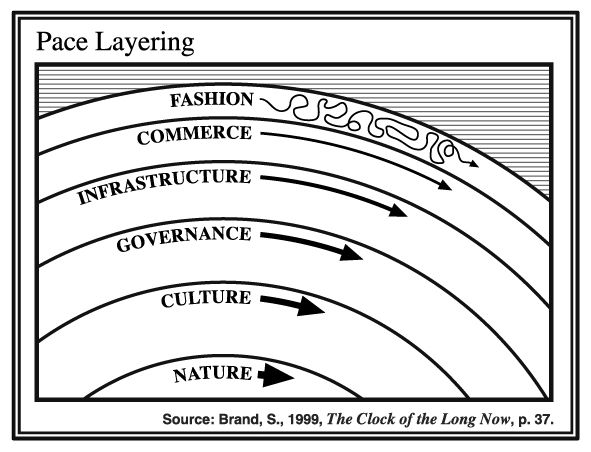
But pepper, like a lot of things, isn’t really designed to keep up with fashion trends. It doesn’t really fit the culture beat of April 2025, alongside Ultrathin models and reading retreats. It belongs to nature, the slowest changing ‘pace layer’ we know of. It grows on a vine. It responds to the sun and rain. From that perspective, status makes no sense.
Status games are fun, but ultimately say nothing about the inherent goodness or even utility of something. We can run from it, take advantage of it but would be wise to look through it less than we do. For when “we have been cursed to understand the mechanisms of culture too well (it makes) earnest taste nearly impossible.”3
- “Black pepper” – Wikipedia, https://en.wikipedia.org/wiki/Black_pepper ↩︎
- W. David Marx, Status and Culture: How Our Desire for Social Rank Creates Taste, Identity, Art, Fashion, and Constant Change ↩︎
- W. David Marx, Status and Culture: How Our Desire for Social Rank Creates Taste, Identity, Art, Fashion, and Constant Change ↩︎
 Buddha Bike
