Sensory deficit
I’m a knowledge worker, and by definition, I rely on my brain rather than my body. Most days I’m practically stationary at my desk, staring unblinking at text on a bright liquid crystal display. Even when I move around, I don’t pay much attention to my body. I’m often bumping into things as my brain chugs on multiple trains of thought. It’s not uncommon for me to suddenly realize I possess a working bladder, stomach or set of legs, as they scream for my attention after a meeting runs over.
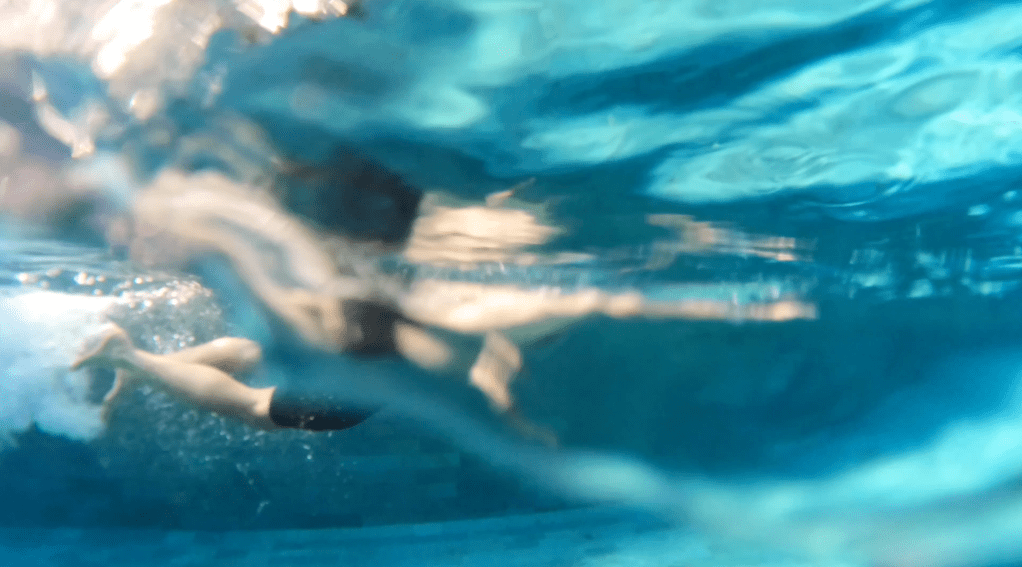
After a busy day ignoring my body, if I’m lucky enough with my time and energy, I head to the pool. I swim for fitness, but it’s also a conscious attempt to balance out all the mind exercise. It doesn’t always work. As my body gleefully thrashes up and down the pool, covered in tantalizing sensations of water pressure and temperature, my mind is usually still behind the desk. I usually struggle with my form and can never remember how many laps I’ve done.
But I keep coming back for more. Which makes me wonder. Is there something else about swimming that my body craves? We know it’s healthy to get our heart rate up but I think there’s also an acknowledgment (conscious or not), that we are often operating in a sensory deficit and need to catch up.
When our senses line up, we can find ourselves in highly concentrated flow states. We seem to get a clearer, crisper view of reality. One memory of this happening for me was an early morning swim in Barton Springs, the beautiful outdoor swimming pool in Austin, Texas. I swum laps as the sun rose. The combination of the unfamiliar but visually stunning environment, cold water and early morning stillness left me feeling steadier and more comfortable in my own skin than usual.
Scrambled Senses
The importance of our senses working effectively can’t be overstated. At a basic level, when sensory modalities (such as sight, sound, touch, smell, self-motion, and taste) work in harmony together, it allows us to have “meaningful perceptual experiences.” When senses are not integrated together or are overly sensitive, we start to lose touch with reality.
Individuals with autism show us how difficult life can become when our ‘thinking’ brains receive inaccurate data from the brain stem. Author Temple Grandin covers many of these experiences in her book Thinking in Pictures. Rain can sound “like gunfire”. Blinding, flickering, and bouncing reflections from florescent lights can make a room look like “an animated cartoon.” When vision or sound fails them, a non-verbal person may categorize the world “by smell or touch because those senses provide more accurate information”. Even whole body parts can simply disappear from sight if they are not directly touched. One teenager summed up their life before they were able to communicate with others as “emptiness”.
With jumbled and distorted senses, it’s impossible to feel safe and calm. The nervous system is in a perpetual flight mode, inaccurately perceiving everything but the most familiar routines and places, like “the safe smell of pots of pans” as a dangerous threat. To help untangle these scrambled senses, therapists may prescribe vigorous aerobic exercise which can reduce aggression and helps to “stimulate both the tactile and vestibular systems”.
Strengthening our Senses
For the majority of us, our bodies work like it says on the tin. Although we may be often distracted, senses come and go and we enjoy a clear, stable perception, allowing us to reliably send emails, cross the road and rearrange our living rooms. And yet it’s likely, our sensory processing muscles are wasting away in the office or on the couch.
Swimming laps could help. Here are three ways that physical activity could help to strengthen your senses (along with your heart and bones):
- Soothe: When your nerves aren’t frazzled, you can sense better, and vice versa. Vigorous exercise can calm the nervous system.
- Sharpen: Even something simple like a kicking drill with flippers is a great exercise to connect with your tactile system.
- Sort: Sensory integration can be encouraged with healthy, stimulating inputs found in outdoor exercise. Consider the pressure, temperature changes, and rhythmic sensations of running through the woods.
Next time you move your body, it’ll thank you for the sweat – but especially for the sights, sounds and sensations.
 Buddha Bike
3 responses to “Keeping in touch”
[…] 2023, I wrote Keeping in Touch, inspired by Temple’s first book, Thinking in […]
LikeLike
[…] easily be woven into your week. Like gardening or camping, running serves a valuable function of connecting us to a simpler, uncomplicated world before alarm clocks and spreadsheets and […]
LikeLike
[…] Swimming laps is a simple way for me to get out of my head and in touch with sensations. I have to be more aware than usual of my body, how I use it and the sights, sounds and sensations around me. This is important for me to do, because it doesn’t come naturally to me. Sensing, is likely my weakest or most inferior of the four cognitive functions (thinking, feeling, intuition are the rest). […]
LikeLike